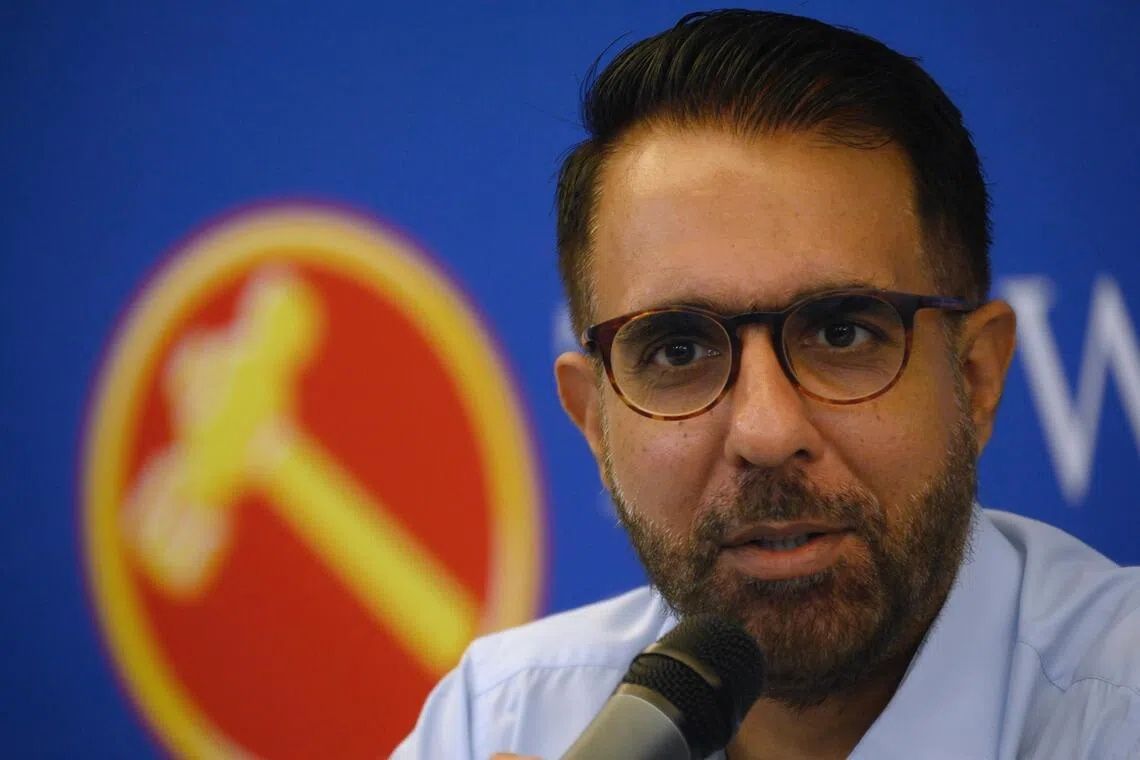
A leadership crisis is brewing within Singapore's Workers' Party as discontented cadres organise to remove Pritam Singh from his position as secretary-general at internal elections scheduled for June 28. The push to find a challenger has gained momentum following a High Court decision in December 2025 that upheld Singh's conviction for providing misleading information to a parliamentary committee, a ruling that has crystallised long-simmering frustrations within the opposition party's inner circle.
The drive to unseat Singh represents a significant moment for the Workers' Party, which has positioned itself as a beacon of integrity in Singapore's political landscape. The party's estimated 100-plus cadres, who form its decision-making core, are now deeply divided over whether Singh can credibly continue leading an organisation built on the promise of ethical governance. Party insiders have disclosed that overtures have been made to several senior MPs to contest the leadership position, though none have publicly committed to running. The names most frequently mentioned include Aljunied GRC MP Gerald Giam and Hougang MP Dennis Tan, alongside Sengkang GRC MPs He Ting Ru and Jamus Lim, creating an unusually broad pool of potential challengers.
The impetus for this challenge stems partly from events that unfolded over several years, centring on former Sengkang GRC MP Raeesah Khan's August 2021 parliamentary statement containing a fabricated anecdote. Khan did not publicly acknowledge the falsehood until November that year, and subsequent investigations determined that Singh had guided her in maintaining the deception rather than encouraging immediate correction. This handling of the affair has become the flashpoint for cadres who view it as a fundamental betrayal of the party's foundational commitment to transparency and honesty in public life. For many within the party, Singh's conviction symbolises a leadership failure that undermines the Workers' Party's competitive advantage—its reputation for principled opposition to the ruling People's Action Party.
The formal challenge process began in December 2025 when 25 cadres submitted a letter requesting a special conference at which Singh would be required to account for his actions. These cadres, drawn from former central executive committee members and election candidates, have called for Singh's resignation and, should he decline, for a secret ballot to determine his fate. The June 28 gathering will actually consist of two separate meetings: first the special conference to address the conviction matter, followed by the biennial ordinary cadres' conference where leadership positions, including the secretary-general role, will be contested. Singh received a formal letter of reprimand in April 2026 for breaching party constitution provisions, yet the party has confirmed that he faces no legal restrictions preventing him from seeking re-election.
The timing of this leadership challenge carries additional weight given recent political developments. In January 2026, Prime Minister Lawrence Wong removed Singh from his role as Leader of the Opposition, a prestigious parliamentary position. When invited to nominate another MP for the role, the Workers' Party declined and instead rallied around Singh, a decision that some cadres now regard as strategically misguided. By maintaining solidarity with their embattled leader, party members argue, the Workers' Party has weakened its parliamentary influence at a moment when a fractured opposition landscape demands maximum political presence. This self-imposed marginalisation has become another flashpoint in internal debates about Singh's fitness to lead.
The party's performance in the 2025 general election has compounded discontent. Several cadres have expressed disappointment that despite running a strong slate of candidates, the Workers' Party failed to capture any new constituencies, contrary to internal expectations. Additionally, Singh's decision to withdraw from Marine Parade-Braddell Heights GRC on Nomination Day has drawn criticism from party members who believe the retreat represented a missed opportunity. Collectively, these developments have created a narrative of stalled progress and diminished ambitions that contrasts sharply with the party's trajectory under previous leadership.
Central to the speculation about Singh's potential successor is the role of former party chief Low Thia Khiang, who led the Workers' Party from 2001 to 2018 and orchestrated its historic breakthrough by winning Aljunied GRC in 2011. Though Low remains a central executive committee member, party insiders report that he voted against Singh during CEC discussions of the disciplinary panel's findings, suggesting a possible shift in allegiances. If Low were to publicly endorse an alternative candidate, party analysis suggests sufficient support exists—combining roughly 30 unhappy cadres with those influenced by Low's considerable standing—to unseat Singh. The historical parallel is instructive: Low himself faced a leadership challenge in 2016 from former Aljunied GRC MP Chen Show Mao, backed by several veteran cadres who are now spearheading efforts against Singh.
The mechanics of the June contest remain fluid, with potential outcomes that could reshape the party's trajectory. Under party rules, any cadre in good standing may run or nominate another to run for secretary-general, requiring only a simple majority to win. Singh will need to secure majority support should challengers emerge, a considerably different prospect from his unopposed tenure over the past eight years. The first special conference could prove determinative: if Singh is voted out or wins by a narrow margin, the second ordinary conference could attract additional challengers prepared by his initial vulnerability. The outcome will depend partly on how Singh handles his public accounting at the special conference and whether he chooses to resign preemptively rather than face a contested ballot.
For Malaysia and the broader Southeast Asian region, the Workers' Party's internal turmoil offers insights into how opposition movements navigate crises of confidence. The challenge confronting Singh—sustaining party unity and public credibility when a leader's personal conduct contradicts the organisation's brand positioning—resonates across societies where opposition parties position themselves as more ethically rigorous alternatives to incumbents. The Workers' Party's handling of its leadership question will likely influence how other opposition movements in the region manage similar tensions between loyalty and accountability, between backing leaders for political survival and removing them to protect institutional integrity.
The cadres challenging Singh articulate a coherent critique that extends beyond personal grievance. Their argument—that Singapore voters chose the Workers' Party specifically because they believed it offered an alternative defined by integrity—frames the leadership question as fundamental to the party's electoral viability. A conviction for misleading Parliament, they argue, surrenders the party's most valuable political asset. Whether this argument persuades sufficient cadres to unseat Singh, and whether a credible alternative can crystallise around a challenger, will determine not only Singh's political future but the Workers' Party's strategic direction heading into the next election cycle. The June elections will test whether institutional integrity or factional loyalty proves the stronger force within Singapore's principal opposition movement.

