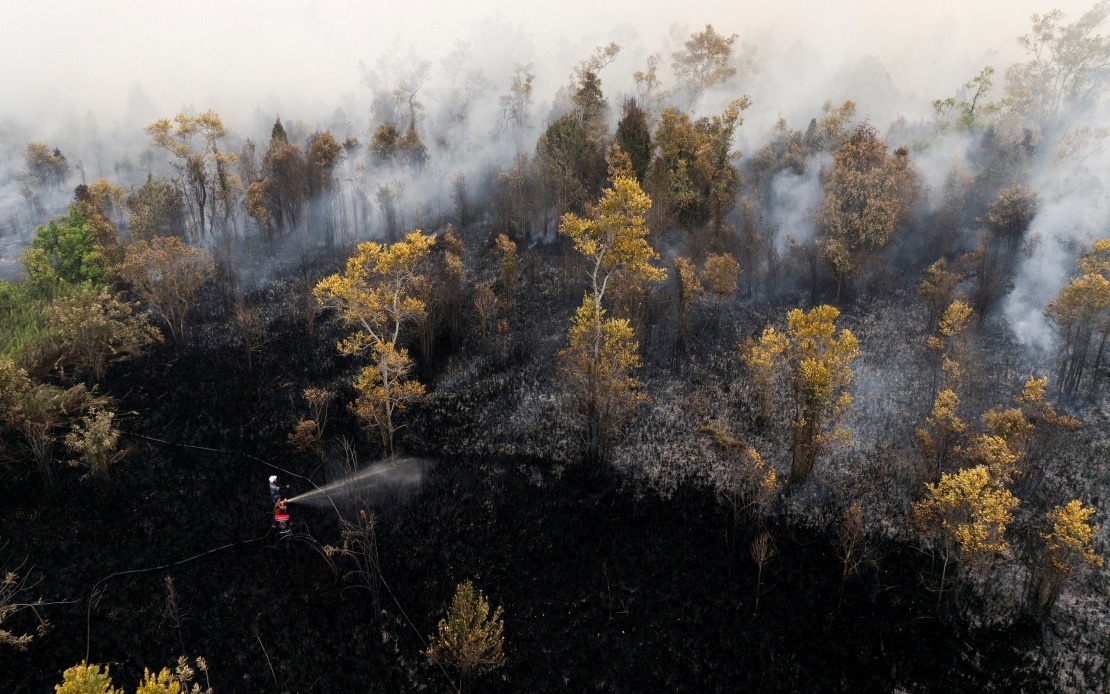
Singkawang Airport in Indonesia's West Kalimantan province suspended all flight operations on Saturday as thick haze from ongoing forest and land fires rendered visibility unsafe for aircraft operations. Located approximately 145 kilometres north of provincial capital Pontianak in the western reaches of Indonesian Borneo, the airport serves domestic routes connecting communities across the region. Authorities attributed the closure directly to safety concerns, urging affected passengers to coordinate with their airlines regarding rebookings and alternative travel arrangements.
The decision underscores mounting disruptions to transportation infrastructure across Kalimantan as fire-related smoke continues to degrade air quality across the island. Indonesia's Transport Ministry reported monitoring the smoke situation closely and coordinating with airport operators to manage cascading impacts on flight schedules. The suspension reflects the aviation sector's vulnerability to environmental hazards when atmospheric conditions fall below operational standards, a recurring challenge during Indonesia's dry season when fire incidents typically surge.
Director-General of Civil Aviation Lukman F. Laisa explained that visibility thresholds represent a non-negotiable safety parameter in aviation operations. When atmospheric conditions deteriorate beyond prescribed limits, airlines must implement protective measures including flight delays, route diversions, or complete cancellations. He emphasized that maintaining aviation safety constitutes the sector's foremost obligation, requiring operators to make real-time adjustments whenever weather or environmental conditions compromise visibility standards.
The Meteorology, Climatology and Geophysics Agency documented increasingly alarming fire activity across Kalimantan's three provinces. Satellite monitoring detected 56 high-confidence hotspots in Central Kalimantan, 51 in West Kalimantan, and 19 in South Kalimantan as of Friday evening. These measurements, gathered through NASA's Terra and Aqua satellites, indicate widespread simultaneous fire activity rather than isolated incidents. Parts of West and Central Kalimantan experienced air quality classified as very unhealthy, posing respiratory risks to residents and threatening to extend visibility problems to additional airports.
Beyond Singkawang, Indonesia's Transport Ministry emphasized it was monitoring smoke impacts on flight operations at multiple airports across the region, suggesting the haze crisis extended beyond a single facility. The coordination mechanisms between civil aviation authorities, airport operators, and meteorological agencies revealed the systemic nature of the challenge. Such widespread atmospheric contamination typically forces cascading disruptions across regional air travel networks, affecting passenger schedules and cargo logistics throughout Southeast Asia.
Countermeasures deployed by Indonesian authorities included ongoing ground and aerial firefighting operations combined with water-bombing sorties targeting active fire zones. Additionally, weather modification operations had been prepared and would commence once atmospheric conditions became suitable, representing an intervention strategy aimed at suppressing fire spread and clearing smoke. These multi-faceted approaches demonstrate the resource intensity required to combat large-scale forest fire incidents and their atmospheric consequences.
The criminal investigation dimension added another layer to this crisis. Central Kalimantan police had identified approximately twelve suspects connected to forest and land fire cases by mid-August, with Inspector-General Iwan Kurniawan confirming that all fire incidents were under investigation. Authorities were working to establish causes and identify responsible parties, ranging from negligence to deliberate arson. Prosecuting individuals involved in fire incidents represents an important deterrent mechanism, though investigation complexity often hampers rapid case resolution.
For Malaysian readers, this crisis carries significant implications given Malaysia's geographical proximity and historical experience with transboundary haze pollution. Indonesian forest fires have repeatedly generated atmospheric haze affecting Malaysia, Singapore, and Brunei, creating diplomatic tensions and public health concerns. The Singkawang airport closure exemplifies how Indonesia's domestic fire management challenges quickly cascade into regional problems affecting neighbouring nations' air quality and transportation sectors.
The timing of this incident during Kalimantan's dry season reflects seasonal vulnerability patterns that recur annually. Policymakers across Southeast Asia have long recognized that effective fire prevention and forest management in Indonesian Borneo requires sustained investment and enforcement. The recurring nature of these crises suggests that current mitigation strategies, while incorporating technological advances like satellite monitoring and weather modification, remain insufficient to prevent major incidents from disrupting regional operations.
Airlines operating in the region faced immediate operational challenges requiring rapid response to passenger notification, rebooking, and compensation protocols. The cascade of cancellations at Singkawang likely triggered knock-on effects at connecting airports and alternative routes as aircraft and crews repositioned. For travellers and cargo operators, such disruptions impose direct costs through delays and rerouting while highlighting aviation's dependence on stable environmental conditions.
Longer-term implications for Kalimantan's development and economic activity warrant attention. Repeated fire-related disruptions to air transportation undermine investor confidence and increase business operating costs. Regional economic integration depends partly on reliable connectivity, which environmental crises periodically compromise. Sustainable forest management practices and stricter enforcement against illegal land clearing represent essential foundations for preventing future recurrences.
Indonesia's Transport Ministry's coordination stance demonstrated recognition that aviation safety cannot be compromised despite commercial pressures. Clear communication between authorities and operators, combined with transparent public messaging, helps manage public expectations during environmental crises. However, such reactive crisis management ultimately addresses symptoms rather than underlying fire causation, suggesting that comprehensive solutions require addressing root factors driving forest and land conversion across Kalimantan.

