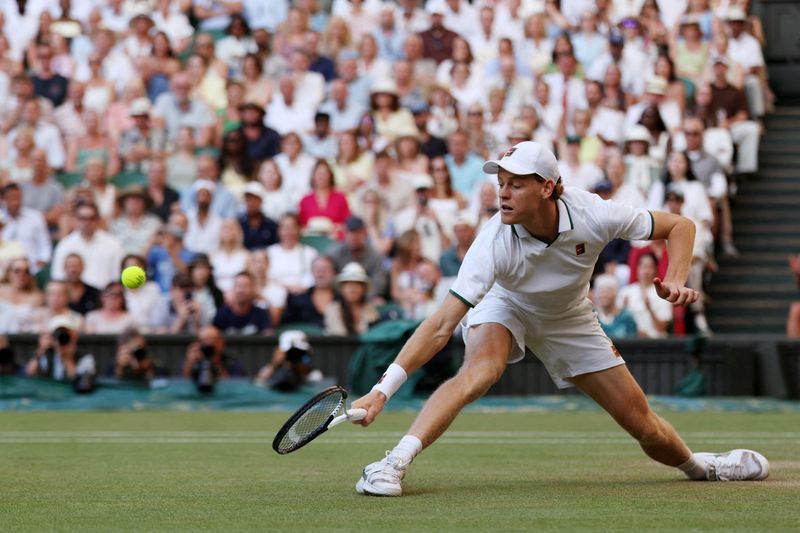
The professional tennis world has been dealt a significant blow with confirmation on Friday that Jannik Sinner, the world's top-ranked player, will not participate in the forthcoming US Open due to a troublesome right knee injury. The 24-year-old Italian's withdrawal removes one of the strongest challengers from the season's final Grand Slam tournament, substantially reshaping the competition landscape as the event prepares to commence in New York.
Sinner's decision to sit out comes after weeks of attempting to manage the injury through rehabilitation efforts coordinated with his medical team. The problem first emerged earlier in August, forcing him to withdraw from both the Cincinnati Open and Canadian Open—two crucial hard-court preparation tournaments that traditionally serve as ideal lead-ins to the US Open. His latest assessment, conducted during training sessions in Monte Carlo, revealed that the injury required additional recovery time before he could safely return to competitive play.
The announcement arrived just 24 hours after world number two Carlos Alcaraz declared his intention to compete at Flushing Meadows, marking his return to tournament play following a four-month competitive hiatus. This timing creates a notable shift in the tournament's competitive dynamics, as Alcaraz now assumes the status of highest-ranked competitor after Sinner's withdrawal. The Spanish player's return, despite recent injury concerns of his own, positions him as a frontrunner and favourite to claim the title at a venue where he has previously triumphed.
Alcaraz's track record at the US Open underscores his credentials as a formidable threat. The Spaniard vanquished Sinner in last year's final, demonstrating his capability to perform under pressure on hard courts—the surface favoured at Flushing Meadows. His quest for an eighth Grand Slam championship now proceeds without his most formidable challenger, potentially simplifying his pathway through the draw. The removal of Sinner from the equation eliminates the player who has most recently dominated rankings and earned five major titles, including the recent Wimbledon triumph achieved just weeks ago.
For Malaysian and Southeast Asian tennis enthusiasts, Sinner's absence underscores the unforgiving nature of professional tennis at the elite level. Despite his extraordinary talent and recent success, even the world's finest players must contend with injury management and the difficult calculations between competitive ambition and long-term career health. This reality resonates across the region, where rising players aspire to achieve top rankings but face similar vulnerabilities to physical breakdown.
The timing of Sinner's withdrawal carries implications for the broader tennis calendar. Having recently claimed his fifth major title at Wimbledon, the Italian demonstrated that he possesses the form necessary to compete at the highest level. However, injuries sustained during the intense competition schedule can quickly erode momentum and create cascading consequences for subsequent tournaments. His medical team's decision to prioritise recovery over a single Grand Slam event suggests confidence that the injury, while serious enough to warrant caution, need not derail his career trajectory entirely.
Alcaraz's return from his own injury layoff adds another compelling narrative to the US Open. His four-month absence represents a substantial period away from competitive tennis, raising questions about his match fitness and whether he can immediately contend for a major title. However, his swift confirmation of participation and positioning as a favourite suggests either that his recovery has progressed remarkably well or that his team believes competitive play will benefit his rehabilitation process. The Spanish champion's willingness to attempt a return to elite competition despite recent setbacks demonstrates the psychological pressures and commercial incentives that shape athletes' decisions.
The competitive field for the US Open, now without its number one ranked player, will undergo significant recalibration. While Alcaraz heads the remaining competitors, the tournament transforms into a more open contest where other high-ranked players gain enhanced opportunities to progress through the draw. This development illustrates how injury misfortune can unexpectedly reshape Grand Slam tournaments, sometimes creating pathways for athletes who might otherwise face insurmountable obstacles against the year's dominant competitors.
From a broader sports perspective, Sinner's situation exemplifies the physical toll of modern professional tennis. The calendar demands compressed scheduling, with major tournaments occurring in close succession and minimal rest periods between competitions. Players must navigate recovery timelines while maintaining ranking positions and tournament commitments—a balancing act that occasionally results in difficult decisions like withdrawal from prestigious events. His choice to prioritise healing over competing in New York suggests a mature approach to career management, recognising that a single tournament's absence proves less consequential than years of diminished performance caused by insufficiently treated injuries.
The US Open, running from August 23 through September 13, will proceed without its highest-ranked competitor but with Alcaraz positioned to capture the spotlight. The tournament's narrative has been fundamentally altered by Sinner's withdrawal, transforming what appeared to be a compelling showdown between the sport's elite competitors into a competition where the favourite operates without his most formidable rival. For tennis observers throughout Southeast Asia and beyond, the event now offers different storylines and opportunities for alternative competitors to claim the major title that has eluded them while the world's best remained fully healthy and engaged.

