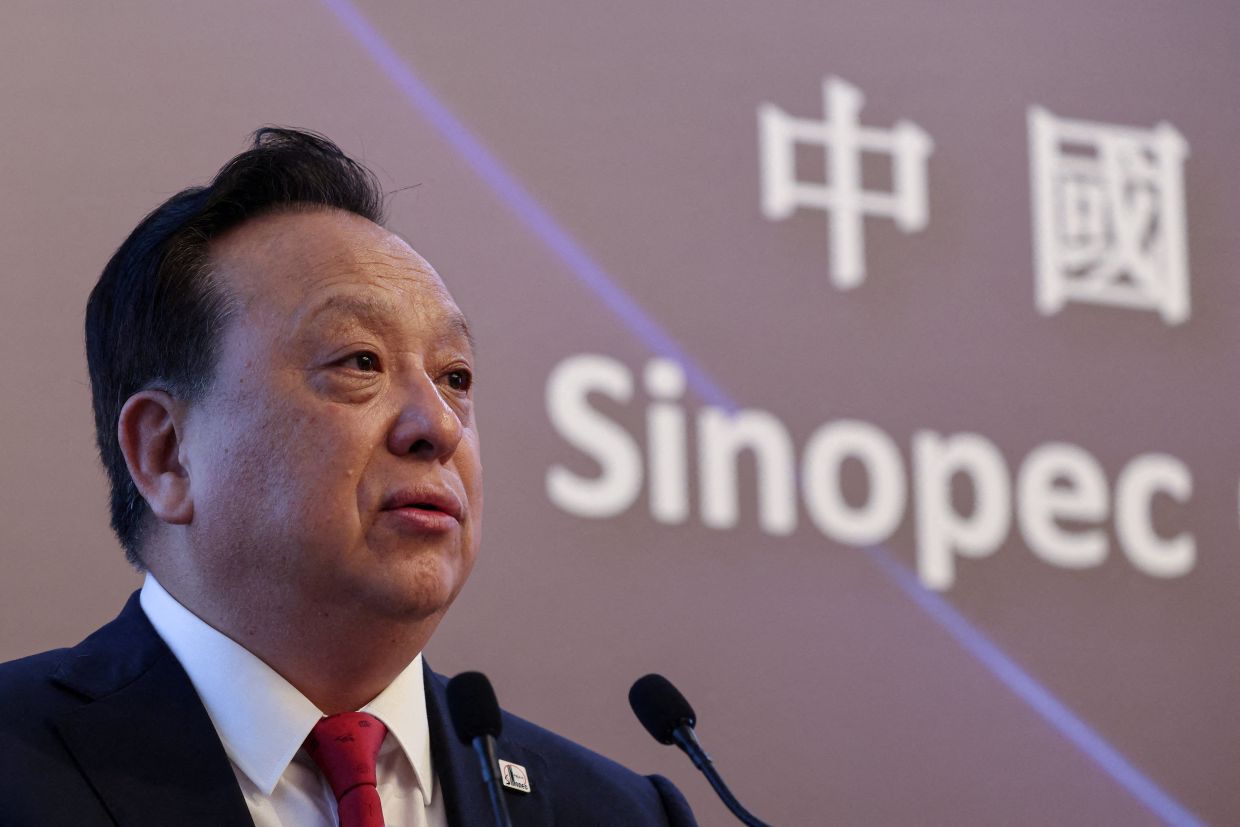
Hou Qijun is embarking on an uncommonly ambitious revamp of Sinopec, the planet's largest oil refinery operator, at a time when most executives at China's state-owned enterprises would be winding down toward retirement. Taking the helm just over a year ago, Hou has dismantled the company's traditional siloed structure and created four semi-autonomous profit centres focused on oil and gas production with new energy, refining operations coupled with chemicals production, financial services, and a combined unit overseeing global commodity trading alongside domestic fuel and chemical distribution networks. His appointment signals a departure from the cautious stewardship that has characterised many such transitions at China's energy giants, suggesting instead a determined push to modernise an institution struggling to remain relevant in an era of rapid technological disruption.
The structural overhaul reflects a candid assessment of Sinopec's fundamental vulnerabilities. Speaking through China's State-owned Assets Supervision and Administration Commission publication in July, Hou articulated an unusually frank diagnosis of the company's competitive position, identifying institutional rigidity rather than technological limitations as the principal impediment to transformation. He pointedly noted that Sinopec's expanding scale had paradoxically diminished its capacity to respond swiftly to market fluctuations, and that the "big company syndrome"—the organisational inertia characteristic of sprawling state enterprises—remained a persistent drag on operational agility. These observations carry particular weight coming from a sitting chairman of a major state firm, where public criticism of structural weaknesses remains relatively uncommon.
The urgency of Hou's mission becomes apparent when examining Sinopec's commercial trajectory. The company's fuel sales have regressed to 2017 levels, a concerning retreat that underscores deteriorating market conditions rather than temporary setback. With approximately 3.6 million barrels daily of petrol and diesel flowing primarily into the domestic market, Sinopec confronts a structural headwind: the rapid electrification of China's vehicle fleet has fundamentally altered fuel consumption patterns. Hou's stark formulation—"Half of new cars no longer need fuel"—crystallises the existential challenge facing traditional refiners. Yet the company reported a net profit increase of 19 percent during the first half of 2026, a performance achieved despite exposure to oil supply disruptions linked to conflict in Iran and government constraints on downstream price transmission that have squeezed refinery margins.
Hou's strategic response involves aggressive repositioning toward higher-value petrochemicals and emerging energy sectors. Between 2026 and 2030, Sinopec plans to dedicate approximately one-fifth of its capital budget—exceeding 30 billion yuan annually, equivalent to approximately 4.46 billion US dollars—toward new energy initiatives and advanced materials development. This commitment substantially exceeds typical upstream oil and gas investment patterns at comparable majors, signalling a genuine pivot rather than cosmetic diversification. The company targets completion of more than thirty projects by 2030, encompassing reserve development, shale crude extraction, sustainable aviation fuel production, and refining cost reductions. For Malaysian investors and policymakers monitoring regional energy trends, Sinopec's reorientation carries implications beyond China's borders, as the company's procurement and supply chain decisions ripple throughout Southeast Asian energy markets.
The shift toward high-margin petrochemicals confronts formidable competitive obstacles. Sinopec faces entrenched rivals including Wanhua Chemical, which benefits from local government support, and Satellite Chemical, a privately-managed competitor operating with greater operational flexibility. The sector itself grapples with chronic overcapacity in ethylene production, a foundational chemical employed across plastics and synthetic fibres, where margin compression has become endemic. Hou's plan to increase chemical output must therefore succeed against structural headwinds affecting the entire industry rather than merely overcoming Sinopec's own inefficiencies. This competitive intensity raises questions about whether increased investment alone can yield satisfactory returns, or whether the company requires technological breakthroughs to justify its capital allocation.
Hou's background substantially shapes his strategic priorities and execution style. A trained geologist who built his reputation across China's major oilfields, particularly at the flagship Daqing facility and subsequently as general manager at China National Petroleum Corporation, Hou brings genuine technical expertise grounded in petroleum geology and integrated energy operations. His appointment to lead PipeChina, the consolidated pipeline entity formed by consolidating infrastructure assets from China's three state oil majors between 2019 and 2021, demonstrated his capacity to navigate politically sensitive corporate restructuring involving multiple stakeholder interests. Colleagues describe him as a decisive, action-oriented leader capable of sustained engagement with strategic questions, qualities that appear increasingly rare among generational cohorts approaching traditional retirement thresholds. His geological background particularly informs his emphasis on shale resource development, an arena where China possesses vast reserves but has achieved only modest commercial progress relative to American operators.
A particularly significant undertaking involves commercial-scale shale crude development at the Jiyang trough within Sinopec's major Shengli oilfield. Hou has personally assumed responsibility as project commander, signalling institutional priority status. The Shengli field's conventional reserves are experiencing accelerating depletion, making shale exploitation technically and economically necessary for maintaining production levels. China's shale sector has historically underperformed expectations relative to early government initiatives, with production costs and technical challenges exceeding levels achieved in North American basins. Successful execution at Jiyang would validate Sinopec's technical capabilities and support the company's broader claim to competitive viability beyond traditional refining.
The company's positioning within China's energy policy framework represents a substantial advantage relative to private competitors. Hou can potentially mobilise government backing for commercially marginal but strategically significant investments spanning hydrogen energy, carbon capture technology, and sustainable aviation fuels. These emerging sectors face technical uncertainties and near-term profitability challenges that may constrain private capital participation. By leveraging state support during nascent technology development phases, Sinopec may establish competitive positions in markets that eventually achieve commercial maturity. However, as observers at institutions like the Oxford Institute for Energy Studies emphasise, the critical question concerns how effectively Sinopec and comparable state enterprises can compete against increasingly sophisticated private-sector actors as new energy markets mature and transition toward genuinely competitive conditions.
For Southeast Asian economies closely integrated with China's energy sector, Sinopec's transformation carries multilayered significance. The company represents a crucial downstream outlet for regional crude oil exporters and a major supplier of refined products throughout Asia. Structural changes at Sinopec—including potential contraction in fuel refining capacity and expansion in petrochemical production—will influence crude demand trajectories, refined product availability, and feedstock competition for regional chemical producers. Malaysia and other ASEAN members operating petroleum and petrochemical sectors must calibrate investment strategies accounting for Sinopec's evolving competitive positioning. Additionally, Hou's emphasis on new energy and sustainable aviation fuel may shape regional energy transition dynamics, potentially creating collaboration opportunities or intensified competition in emerging technology sectors.
The broader context of state enterprise reform in China lends additional importance to Sinopec's restructuring experiment. Hou represents a relatively rare category within China's SOE leadership: a senior executive approaching traditional retirement age who retains ambition to implement transformative change rather than preserve status quo arrangements. His willingness to articulate institutional problems publicly, challenge traditional hierarchies through profit-centre restructuring, and commit substantial capital to uncertain emerging technologies suggests either exceptional conviction about Sinopec's strategic imperatives or confidence in political support for his agenda. The success or failure of this transformation may influence how other state enterprises approach their own modernisation challenges, particularly regarding authority decentralisation and institutional innovation at scale.
Hou's appointment also reflects calculations about executive succession and institutional renewal within China's energy sector. The traditional retirement age of 63 that characterises most SOE executives creates predictable transition rhythms but potentially constrains strategic ambition during terminal career phases. By elevating someone willing to undertake genuine reform, Sinopec's stakeholders—including SASAC and the company's board—signalled that institutional preservation requires substantial change rather than incremental adjustment. Whether this bet on transformative leadership succeeds remains uncertain, contingent upon technology development, market evolution, competitive dynamics, and the durability of political support for commercially challenging investments. Yet the strategic stakes are sufficiently consequential that the outcome will merit sustained observation from industry analysts, policymakers, and investors throughout East and Southeast Asia.

