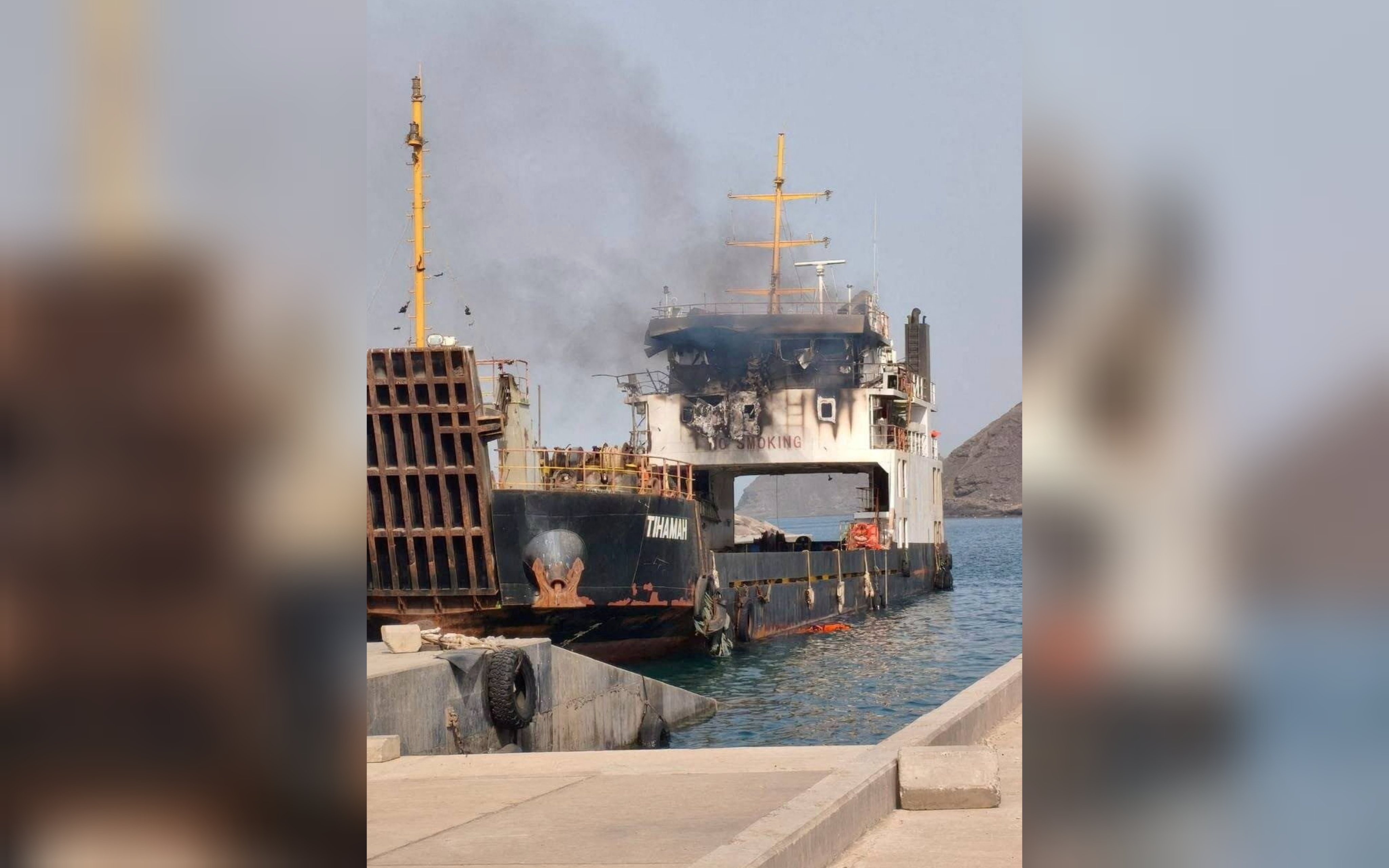
An armed attack in one of the world's most strategically important shipping routes has left six people dead and ten others wounded after Yemen's Houthi group targeted a commercial vessel carrying food supplies. The incident occurred Tuesday in the Bab al-Mandeb Strait, a narrow waterway connecting the Red Sea to the Indian Ocean that handles millions of tonnes of cargo annually. Yemen's Coast Guard confirmed the casualties, which included crew members and military personnel, while also noting that eleven sailors from Pakistan and Indonesia were successfully rescued from the stricken vessel.
The Yemeni-flagged ship Tihamah sustained multiple direct hits from ballistic missiles as it transited the contested waterway, according to the country's Transportation Ministry. The impact ignited fires aboard the vessel and caused extensive structural damage. Among those killed were three Pakistani crew members, one Indonesian sailor, and two members of Yemen's armed forces 2nd Naval Brigade. The wounded comprised seven crew members, two coast guard personnel, and another member of the naval brigade, reflecting the multi-national character of operations in these waters.
Witnesses to the attack indicated that the Houthi assault did not cease once the vessel was struck. As rescue teams mobilised to reach survivors in the water, the armed group launched an additional missile strike, apparently aimed at preventing or hampering evacuation efforts. This pattern of escalation underscores the group's apparent intent not merely to disrupt shipping but to inflict maximum human cost. The Transportation Ministry characterised the operation as a deliberate "terrorist crime" designed to compound civilian casualties and destabilise regional commerce.
The Tihamah was carrying humanitarian food supplies bound for civilian populations—a detail that draws attention to the humanitarian dimension of such attacks in a country already facing severe economic collapse and famine conditions. Yemen's government linked this assault to a broader pattern of Houthi operations targeting ports, civilian infrastructure in government-held territories, and the commercial vessels that service those areas. This systematised approach suggests a strategic effort to sever lifelines to regions outside Houthi control, effectively weaponising maritime trade as a means of political pressure.
For Southeast Asian shipping interests and maritime nations with workers in global supply chains, the incident carries particular significance. Malaysian shipping operators, Indonesian sailors, and regional trading houses regularly route vessels through the Red Sea corridor bound for Europe and beyond. The presence of Pakistani and Indonesian crew members aboard the Tihamah reflects the international nature of modern merchant fleets, with seafarers from developing economies comprising a substantial proportion of personnel in global maritime commerce. When such workers are killed or injured in geopolitical conflicts, the ripple effects touch communities across South and Southeast Asia.
The Bab al-Mandeb Strait serves as the critical gateway to the Red Sea from the Arabian Peninsula, positioning it opposite the more widely known Strait of Hormuz in geopolitical importance. Approximately twelve percent of global maritime trade passes through these waters annually, making disruptions here economically significant well beyond the Middle East. Insurance premiums for vessels transiting the region have climbed substantially, and shipping companies face mounting pressure to choose longer, more expensive routes around Africa to avoid the risks posed by regional conflicts.
The Houthi movement has intensified attacks on maritime traffic since 2023, claiming to act in solidarity with Palestinians amid regional tensions. However, the indiscriminate nature of such strikes—targeting commercial vessels carrying food and other essential goods—raises serious questions about the humanitarian implications of using merchant shipping as a battleground. Yemen's government warned that these operations pose a direct threat to food security for millions of Yemenis across all territory, whether controlled by government forces or held by the Houthis themselves, suggesting that civilian populations in areas aligned with the armed group may also suffer from disrupted supply chains.
At the time of reporting, the Houthi movement had not issued any statement regarding the attack or their rationale for targeting this particular vessel. The silence from the group stands in contrast to their pattern of releasing statements after previous strikes, leaving some ambiguity about whether this operation proceeded according to their tactical doctrine or represented an escalation. International maritime authorities and naval forces operating in the region continue to monitor the situation closely, with several countries maintaining naval presences in the Red Sea to protect shipping.
The incident reflects a broader pattern of maritime insecurity that has transformed regional waters into a contested domain where commercial interests, geopolitical rivalries, and humanitarian concerns intersect. For Malaysian and Southeast Asian policymakers, the attack underscores the vulnerability of open supply chains to disruption by non-state actors and the potential costs of regional instability on global trade. As the maritime industry grapples with mounting security challenges, questions arise about the sustainability of current shipping patterns and whether alternative routes and security arrangements may need to be developed to protect vital international commerce.

