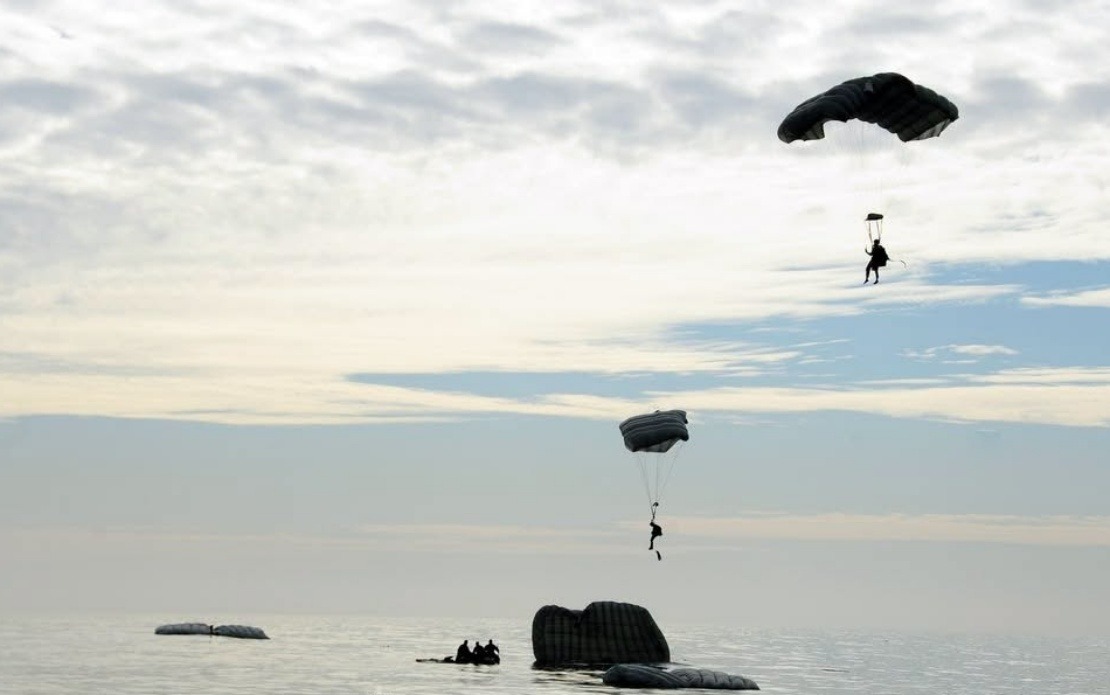
Six members of the Royal Malaysian Navy's elite Naval Special Warfare Forces, commonly known as PASKAL, have been safely recovered after an incident during a free-fall parachuting exercise in the South China Sea on August 12. The personnel drifted at sea after failing to reach their intended landing zone, prompting a swift rescue operation that saw all six brought to safety by an RMN vessel.
According to a statement released by the Royal Malaysian Navy, the incident occurred when sudden shifts in weather conditions severely compromised visibility during the training exercise. These unexpected atmospheric changes disrupted the personnel's ability to navigate accurately towards their designated touchdown point, forcing them to land in open water instead. The navy's rapid response and recovery capabilities demonstrated the effectiveness of its maritime operations framework in the strategically important waters of the South China Sea.
PASKAL, Malaysia's equivalent to elite naval commando units found in other regional navies, routinely conducts challenging training exercises designed to push personnel beyond conventional limits. These operations are deliberately conducted in demanding environments to simulate real-world operational scenarios that commandos may encounter during actual deployments. The parachute exercise that resulted in this incident represents the type of high-risk training that forms the backbone of PASKAL's preparation regimen.
The navy's official response to the incident framed the occurrence as validation of PASKAL's comprehensive training philosophy. Rather than treating the mishap as a failure, the RMN characterised it as evidence that the unit's rigorous and realistic preparation methods effectively equip personnel to navigate unexpected crises. The statement emphasised that beyond developing combat proficiency, the training programme successfully cultivates resilience, discipline, and survival capabilities necessary for operating in extreme and unpredictable conditions.
This perspective reflects broader principles within military special operations training globally, where controlled exposure to adversity and uncertainty serves as a crucible for developing operator effectiveness. The South China Sea's challenging maritime conditions—including its variable weather patterns, strong currents, and vast expanses of open water—provide an authentic testing ground for personnel who may eventually operate in similar or more hostile environments during actual missions.
For Malaysian readers, the incident underscores the persistent demands placed on the nation's defence personnel as they maintain operational readiness across the maritime domain. The South China Sea remains strategically vital to Malaysia's interests, with overlapping territorial claims, significant shipping traffic, and ongoing geopolitical tensions making sustained naval capability essential. PASKAL's role in protecting Malaysian sovereignty in these waters requires personnel of the highest calibre, capable of functioning effectively even when circumstances deteriorate unexpectedly.
The RMN's statement also reaffirmed the institution's commitment to balancing the imperative for combat readiness against the equally important responsibility to safeguard personnel welfare. This duality—pushing operators to their limits while maintaining safety protocols—represents a fundamental tension in military training. The navy indicated that both objectives remain central to its operational philosophy, with the recovery of all six personnel without injury demonstrating the effectiveness of this balanced approach.
PASKAL's motto, "Sentiasa yang Terbaik" (Always the Best), encapsulates the unit's cultural commitment to excellence across all dimensions of its work. This incident, viewed through the lens of that motto, illustrates how challenging situations can reinforce the qualities the unit seeks to develop: quick thinking, mutual support among team members, and the psychological fortitude to remain composed during emergencies. The successful outcome of this exercise, despite its unplanned complications, likely strengthens these attributes among the personnel involved.
The incident also highlights the broader challenge facing maritime nations operating in the South China Sea. Weather patterns in the region can shift rapidly, and the sea's physical environment presents inherent hazards that demand respect and preparation. Military operations in these waters require not only tactical and technical proficiency but also intimate knowledge of environmental factors that can rapidly render standard procedures ineffective. PASKAL's experience during this training exercise provides valuable lessons that will inform future operations and training protocols.
From a regional perspective, the maintenance of elite naval special operations capabilities by ASEAN nations like Malaysia contributes to the stability and security architecture of Southeast Asia. As maritime threats evolve—ranging from piracy and human trafficking to territorial disputes and unconventional warfare—nations require highly trained personnel capable of responding to diverse challenges. PASKAL's continued development and readiness therefore carry implications that extend beyond Malaysia to influence regional security dynamics.
The incident underscores that even within meticulously planned military operations, unforeseen circumstances inevitably arise. The value of rigorous training becomes apparent precisely in such moments, when personnel must rely on their preparation and judgment to navigate crisis situations. The successful recovery of all six PASKAL commandos demonstrates that investment in training—and in the safety systems supporting it—yields tangible returns when personnel face genuine emergencies.
Moving forward, this incident will likely inform refinements to existing protocols for parachute operations in the South China Sea. The navy will presumably analyse the specific weather conditions encountered and incorporate lessons learned into future exercise design and risk assessment procedures. Such continuous improvement cycles ensure that training remains relevant and that safety margins account for the region's actual operational environment.

