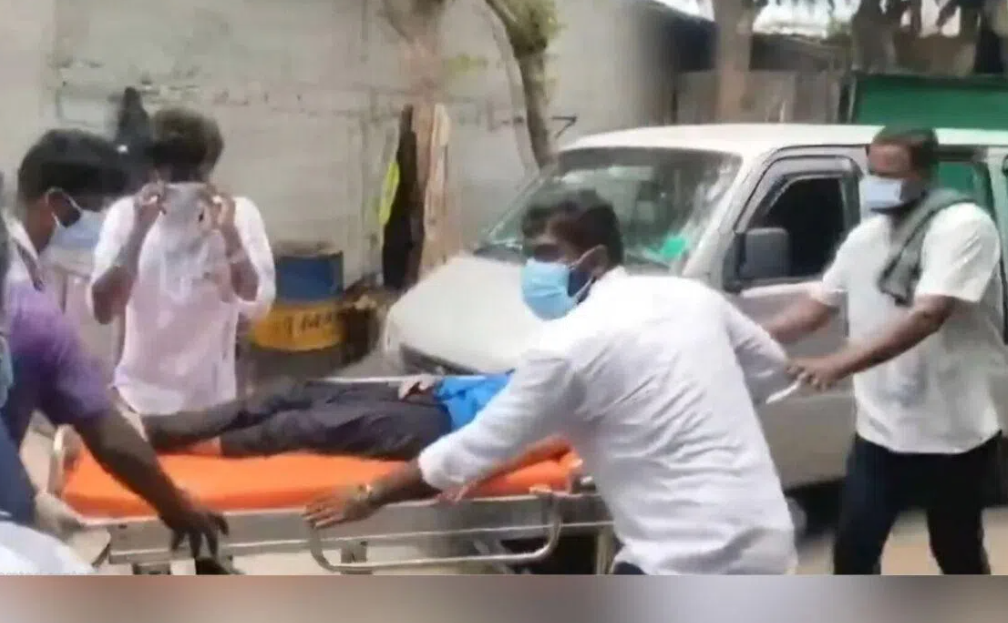
A catastrophic industrial accident unfolded on Sunday at a seafood export processing facility near Periyapalayam village in Tamil Nadu's Thiruvallur district, where a suspected ammonia leak claimed the lives of at least six workers and sent scores more to hospital. The incident has revived serious questions about occupational safety standards in India's food processing sector, an industry that employs hundreds of thousands of migrant workers across the country and generates billions in export revenue.
The facility was operating at near-capacity with approximately 120 migrant workers present when the gas escape was reported. The workforce comprised predominantly women labourers from economically disadvantaged states including Assam, Odisha and Jharkhand—a demographic profile typical of India's processing plants, where migrant employment allows operators to maintain lower wage structures while often compromising on safety infrastructure and worker protections.
Authorities have determined that the ammonia leak emanated from the unit's refrigeration or processing system, essential equipment in any seafood operation where maintaining cold chains is fundamental to export compliance. The gas rapidly diffused throughout sections of the facility, creating an environment of immediate danger that workers had limited time to escape. The speed of dispersal suggests either a catastrophic system failure or absence of containment measures that might have localised the hazard.
Workers exposed to the escaping gas experienced acute physical trauma. Many reported severe respiratory distress and vertigo, while some displayed alarming symptoms including epistaxis—bleeding from the mouth and nose—a sign indicating high-concentration exposure to ammonia. These symptoms reflect the chemical's corrosive properties when inhaled in gaseous form, causing damage to mucous membranes and respiratory tissue. The intensity of reactions reported suggests insufficient warning systems or poor facility design that allowed workers insufficient early warning.
Scenes of chaos ensued as panicked workers attempted escape, with some collapsing from gas inhalation before reaching safety. The absence of coordinated emergency procedures became evident as rescue operations unfolded, with first responders arriving to find workers in varying states of distress scattered across the premises. Emergency medical teams, police personnel and local authorities mobilised quickly, though the initial response period appears to have been chaotic and uncoordinated.
Hospitalisation of affected workers revealed the severity of exposure, with authorities indicating that several cases reached critical condition. Medical teams faced the challenge of treating acute ammonia inhalation injuries—a condition requiring specialist respiratory support and intensive monitoring. The burden on local healthcare infrastructure became immediately apparent, raising questions about whether facilities in industrial districts maintain adequate capacity for mass casualty scenarios involving chemical exposure.
Tamil Nadu Chief Minister C. Joseph Vijay responded swiftly to the tragedy, directing officials to mobilise all available medical resources for affected workers. His intervention reflected the political pressure surrounding worker safety incidents and the potential reputational damage to state administration when industrial disasters occur. Beyond immediate medical response, the Chief Minister took the significant step of constituting a three-member inquiry committee tasked with investigating the circumstances that enabled the gas leak.
The inquiry framework established by the Chief Minister represents a substantive intervention, with the committee mandated to complete preliminary investigation and submit detailed findings within 24 hours. This compressed timeline suggests recognition of the incident's severity and public concern. The investigation will scrutinise multiple dimensions of facility operations: maintenance protocols governing refrigeration systems, inspection schedules, staff training on emergency procedures, and documentation of safety compliance.
Police have formally registered a case regarding the incident, initiating criminal investigation procedures that may implicate facility management. The investigation trajectory will examine whether documented violations of industrial safety regulations contributed to the disaster—a critical distinction between systemic negligence and isolated system failure. Given India's substantial body of industrial safety legislation, investigators will assess compliance status with statutory requirements regarding hazard identification, worker training, emergency response planning and equipment maintenance.
The Thiruvallur district incident carries broader implications for seafood processing across South India, a region that dominates India's seafood export sector and supplies premium products to European, Japanese and North American markets. The tragedy highlights the precarious working conditions endured by migrant workers in export-oriented industries, where cost competitiveness often displaces investment in safety infrastructure. Malaysian stakeholders in the regional seafood supply chain should note that competitive pressures affecting Indian processors similarly shape workplace conditions across Southeast Asia's processing facilities.
The incident also underscores regulatory challenges in India's industrial oversight system, where enforcement mechanisms remain inconsistent across districts and states. While Tamil Nadu's immediate response demonstrates governance capacity, variations in safety compliance between facilities remain significant. For Malaysian companies sourcing from or competing with Indian seafood exporters, the incident serves as a reminder that supply chain integrity increasingly encompasses labour and safety standards beyond mere product quality.
As investigations proceed, the focus on systemic safety failures rather than individual worker error will prove crucial in determining whether the tragedy results in substantive regulatory improvements or remains merely another industrial accident in India's development narrative. The three-member committee's findings may establish precedent for how Tamil Nadu addresses workplace safety across its substantial seafood processing sector, potentially influencing standards across the broader region.