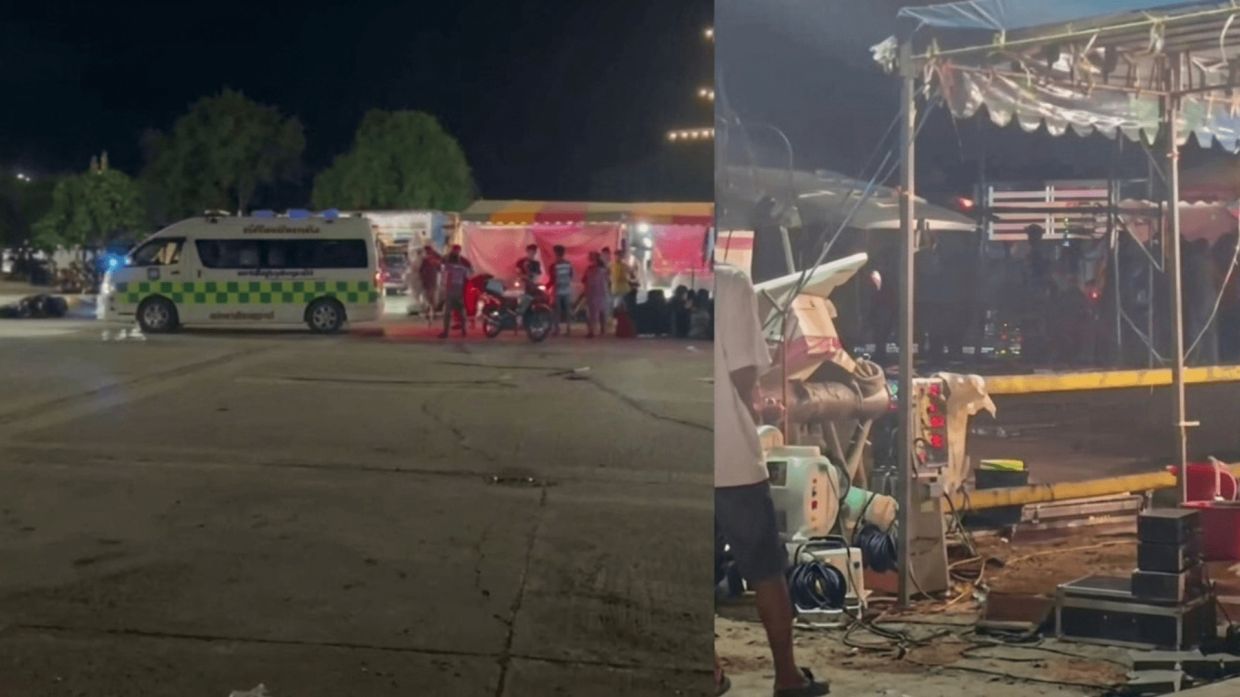
A shopping fair in Dan Khun Thot district, Nakhon Ratchasima province, became the scene of violence on Wednesday night when a gunman and associates launched an armed assault that left six people injured. The incident unfolded around 10.30pm at the "Chim Shop Chai" fair, where vendors were concluding their operations for the evening and packing away merchandise when attackers wielding both knives and an improvised firearm descended upon the gathering.
According to Prakob Patin, the organiser of the fair, the attack struck during the event's final hour as business activity was winding down. All six victims were initially transported to Luang Pho Koon Parisuttho Dan Khun Thot Hospital for emergency care. However, the severity of injuries sustained by two of the wounded necessitated their transfer to the larger Maharat Nakhon Ratchasima Hospital, where medical staff continue treating one victim who has fallen into a comatose state.
Police have arrested a 32-year-old male suspect in connection with the assault, with investigators recovering a homemade firearm at the scene. The investigation team, directed by Pol Lt Col Akom Chutkhunthot, deputy investigation inspector at Dan Khun Thot Police Station, is now working to apprehend additional suspects believed to have participated in the coordinated attack.
According to preliminary police findings, the incident appears to have originated from a petty crime attempt that escalated dramatically. The suspect allegedly attempted to steal a motorcycle parked at the fair grounds, but was confronted by the vehicle's owner. Rather than submitting to apprehension or fleeing alone, the confrontation prompted the suspect to escape the immediate vicinity and then return with reinforcements armed with weapons.
This tactical escalation—retreating to gather accomplices and returning with greater firepower—suggests a degree of planning and coordination rather than a spontaneous outburst of violence. The deployment of both knives and firearms by multiple assailants indicates that those involved had made deliberate preparations to cause harm, transforming what began as a suspected theft into an assault on multiple innocent people.
Authorities have charged the arrested suspect with attempted joint murder using a firearm, a serious criminal charge that reflects the gravity of the attack. Meanwhile, police investigations remain active in tracking down the remaining perpetrators who escaped during the chaos. The manhunt continues in the province as law enforcement agencies attempt to locate and question those who fled the scene.
The incident marks a deeply troubling pattern of gun violence across Thailand in recent days. This shopping fair attack becomes the third shooting incident to occur within a single week in the kingdom, signalling an alarming spike in armed violence. The escalation began on August 7 when a shooter opened fire at Debsirin Nonthaburi School, resulting in nine fatalities and shocking the nation. Just days later, on Monday, a former Thai lawmaker was accused of shooting the president of the Nakhon Nonthaburi Provincial Administrative Organisation, further demonstrating the reach of armed violence across both rural and urban settings.
For Malaysian readers and Southeast Asian observers, this sequence of incidents underscores the ongoing security challenges facing neighbouring Thailand. The variety of attack locations—schools, government facilities, and now commercial events—suggests that no public venue appears immune to such violence. The apparent ease with which homemade firearms are being deployed in attacks raises questions about weapons control and the proliferation of improvised weapons in the region.
The clustering of these violent incidents within a brief timespan has elevated public concern and prompted discussions about public safety across Thai communities. Both urban and rural areas have been affected, indicating that the phenomenon is not geographically contained. For business owners, event organisers, and ordinary citizens planning gatherings, the attacks have created an atmosphere of uncertainty about personal security in public spaces.
The fact that the Dan Khun Thot incident originated from a motorcycle theft attempt highlights how minor criminal incidents can rapidly deteriorate into mass violence when weapons are easily accessible. This progression—from attempted petty theft to armed assault injuring six people—illustrates the potential for seemingly isolated criminal moments to metastasise into broader public safety threats when those involved have access to weapons.
These developments carry implications for the broader Southeast Asian region, particularly for countries grappling with similar challenges of armed crime and public safety. Malaysia, which has worked systematically to maintain stricter firearms regulations and control, presents a contrasting security environment. The contrast underscores the importance of effective weapons control policies and law enforcement coordination in preventing isolated criminal incidents from escalating into mass casualty events.
As Thai authorities pursue their investigations and attempt to apprehend the remaining suspects, the focus will likely turn toward addressing the underlying factors that have fuelled this recent spike in shooting incidents. Security analysts and policymakers in Bangkok will be examining whether these attacks represent isolated incidents or symptoms of deeper societal tensions requiring comprehensive intervention.

