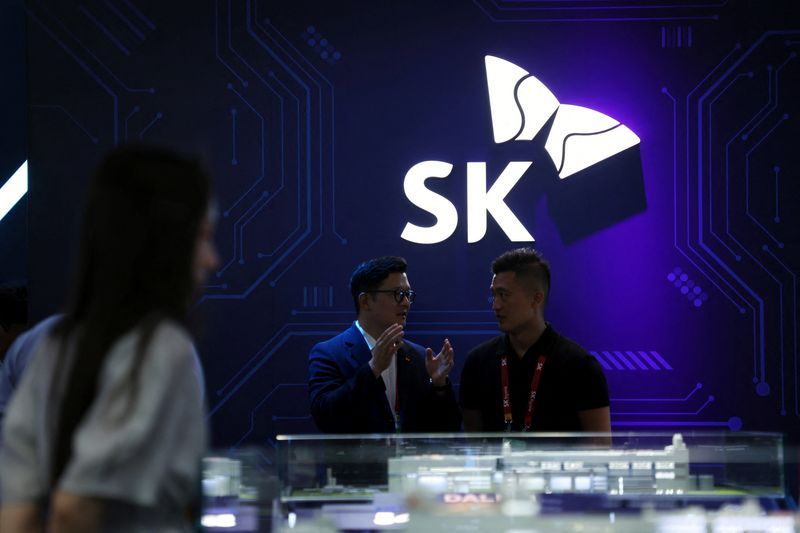
South Korea's SK Hynix, the world's second-largest memory chipmaker, announced plans on Wednesday to raise as much as 45.45 trillion won ($29.43 billion) through a listing of American Depositary Receipts on the Nasdaq, marking an aggressive push to strengthen its financial position amid surging global demand for artificial intelligence chips. The Seoul-based semiconductor giant intends to issue 17.79 million new shares to support the ADR listing scheduled for July 10, with each ADR representing ten common shares, according to regulatory filings submitted to South Korean authorities.
The proposed capital raise would represent a watershed moment for the chipmaking industry, potentially eclipsing the $21.8 billion that Chinese e-commerce behemoth Alibaba generated from its 2014 New York initial public offering to claim the title of the largest-ever ADR offering. However, SK Hynix cautioned that the final amount may differ from the indicated target following the bookbuilding process, during which institutional investors indicate their demand for shares at various price points. The company has enlisted a heavyweight consortium of investment banks to manage the offering, with BofA Securities, Citigroup Global Markets, Goldman Sachs, and JP Morgan Securities leading the effort.
SK Hynix has outlined an expansive deployment strategy for the capital raised through this listing. The proceeds will finance construction of a new chip fabrication facility in Yongin, establish an advanced packaging manufacturing plant in Cheongju, and underwrite procurement of cutting-edge semiconductor production equipment, including Extreme Ultraviolet Scanners—the most sophisticated tools available for manufacturing next-generation chips at the smallest scales. This multi-pronged investment programme reflects management's conviction that the semiconductor industry is entering a sustained growth phase driven by artificial intelligence applications across computing, data centres, and enterprise systems.
The timing of SK Hynix's ADR listing aligns with the company's meteoric rise in valuation and strategic importance. Just days before announcing the capital-raising plan, SK Hynix surpassed Samsung Electronics to become South Korea's most valuable company, a remarkable milestone that underscores the technological and financial significance of memory chips in the artificial intelligence era. This shift in market capitalisation rankings carries profound implications for Korea's industrial landscape, signalling that specialised semiconductor manufacturers focused on high-value segments have overtaken diversified conglomerates in investor esteem.
The company's ascendancy reflects its dominant market position in high-bandwidth memory chips, the specialised semiconductors that power artificial intelligence systems developed by technology leaders such as Nvidia and Google's parent company Alphabet. As the global artificial intelligence infrastructure buildout accelerates—driven by cloud providers, technology giants, and enterprises seeking to deploy large language models and machine learning applications—demand for high-bandwidth memory has intensified dramatically. SK Hynix has positioned itself as an indispensable supplier within this ecosystem, with its products critical to the functioning of the most advanced AI computing clusters deployed worldwide.
For Malaysian and Southeast Asian investors and technology stakeholders, SK Hynix's Nasdaq listing carries significant ramifications. The region's burgeoning technology sector, encompassing software development, digital services, and emerging semiconductor clusters, stands to benefit from proximity to and partnership opportunities with a financially strengthened SK Hynix. Malaysia's own semiconductor manufacturing base, particularly in assembly and testing operations, could see increased investment flows and knowledge transfer as SK Hynix expands its global footprint. Additionally, the success of this listing may encourage other regional chipmakers and technology companies to pursue capital markets financing on international exchanges, potentially establishing new precedents for regional companies seeking to access global investment capital.
The geopolitical dimensions of SK Hynix's expansion also merit consideration. South Korea's emergence as a dominant force in artificial intelligence semiconductor manufacturing—alongside Taiwan's TSMC—represents a significant concentration of critical technology production in East Asia. For economies throughout Southeast Asia, this underscores both the opportunities and risks associated with dependence on regional semiconductor suppliers. The strategic importance of memory chips to military and civilian artificial intelligence applications means that any disruption to SK Hynix's operations could reverberate across global technology supply chains, a reality that governments throughout the region are increasingly cognisant of as they develop technology strategies and supply chain resilience initiatives.
SK Hynix's aggressive capital-raising strategy also reflects broader competitive dynamics within the semiconductor industry. The company faces intense competition from Samsung Electronics domestically and from manufacturers in Taiwan, the United States, and increasingly China. By securing substantial capital through an international listing, SK Hynix aims to fund research and development, expand production capacity faster than competitors, and secure its position as a premier supplier to the most demanding customers in the artificial intelligence sector. The scale of the proposed fundraising suggests management confidence in sustained demand for memory chips and the company's ability to maintain technological differentiation and manufacturing superiority.
The ADR structure employed by SK Hynix offers strategic advantages beyond simple capital-raising. By listing on Nasdaq, the company gains access to the world's largest pool of institutional investment capital, improves the liquidity of its shares for international investors, and raises its profile among the technology-focused investor community that dominates equities trading in the United States. The depositary receipt mechanism also simplifies share ownership and trading for foreign investors who might otherwise navigate regulatory complications associated with direct share ownership in South Korean securities. For SK Hynix, enhanced access to global capital markets positions the company to make future acquisitions or strategic investments without requiring additional elaborate fundraising exercises.
The semiconductor sector's transformation under the influence of artificial intelligence demand offers important lessons for Malaysian policymakers and business leaders contemplating the country's technological future. SK Hynix's success demonstrates the outsized returns available to companies that occupy specialised but critical positions within global technology supply chains. For Malaysia, which has historically concentrated on assembly and testing operations, the challenge lies in developing sufficient technological capability and investment to move up the semiconductor value chain, potentially capturing higher margins and greater strategic importance in the emerging artificial intelligence economy. SK Hynix's capital-raising success may serve as a catalyst for regional technology companies to pursue more ambitious growth strategies and international capital markets financing.