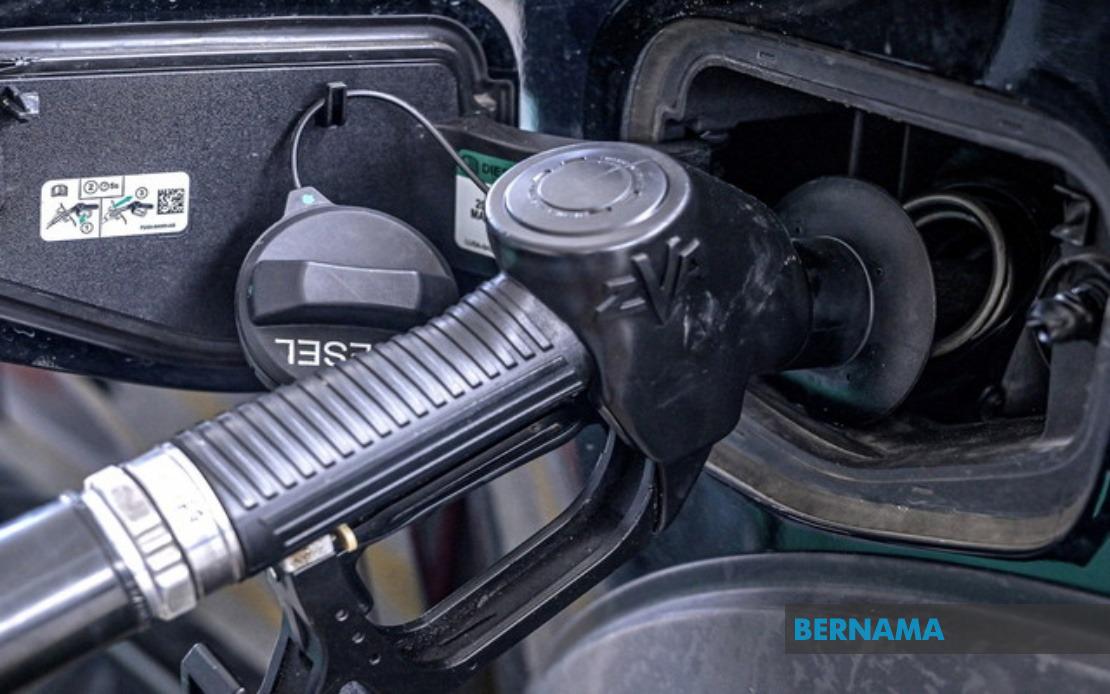
The Malaysian government has formally launched its Subsidised Diesel Control System (SKDS) applications for commercial and private-use vehicles operated by micro and small enterprises, Domestic Trade and Cost of Living Minister Datuk Armizan Mohd Ali announced on Wednesday. The expansion represents a broadening of the subsidy scheme to reach a wider segment of the business community, particularly those operating sole proprietorships and partnerships that depend on fuel-intensive operations.
Vehicles eligible for the subsidy must satisfy specific registration requirements within Malaysia's regulatory framework. To qualify, the vehicles in question must be formally registered as business vehicles within the Company Private Use category under designation AE in the Road Transport Department's MySikap system. This classification distinguishes these vehicles from personal-use automobiles, ensuring the subsidy reaches enterprises that genuinely require them for commercial purposes rather than individual ownership.
Beyond vehicle registration specifications, applicants face additional business registration requirements that serve as gatekeeping mechanisms. The owning business must be formally registered either as a sole proprietorship or partnership with the Companies Commission of Malaysia in Peninsular Malaysia, or with the equivalent relevant local authority in Sabah and Sarawak. These prerequisites ensure that only legitimately constituted businesses with documented structures can access the subsidy, preventing misuse and maintaining programme integrity.
Approved applicants will become eligible to draw on diesel subsidies beginning July 15, contingent upon successful application approval and the issuance of a fleet card by programme administrators. The fleet card system functions as both an access mechanism and a monitoring tool, allowing the government to track subsidy utilisation and prevent diversion to unauthorised users. This phased implementation provides a transition window for successful applicants to arrange their fleet management systems before subsidy activation.
The SKDS programme itself represents part of a broader governmental strategy to manage transportation costs for businesses dependent on fuel consumption. By targeting specific vehicle categories and business structures, policymakers aim to deliver targeted relief to segments deemed most vulnerable to fuel price volatility. The expansion to include company-owned jeeps and pickup trucks addresses demand from businesses operating in logistics, services, and rural commerce where such vehicles predominate.
This latest extension follows previous expansions of SKDS eligibility to encompass public land transport operators and the consumer goods transportation sector. The incremental expansion approach suggests policymakers are calibrating the programme's scope while monitoring its fiscal impact. Each successive enlargement of eligible categories increases government subsidy obligations, requiring careful balance between supporting businesses and maintaining budgetary sustainability.
For Malaysian enterprises in the micro and small business segment, accessing SKDS represents meaningful cost relief in an environment where fuel constitutes a significant operational expense. Many such businesses operate with limited profit margins, making fuel cost management central to viability. The subsidy effectively reduces operational overheads, potentially allowing price competitiveness or improved margins. This has particular significance for rural businesses and smaller logistics operators who often face higher relative fuel costs due to distance and operational inefficiencies.
Applications are being processed through the MySubsidi portal, the government's centralised online application platform designed to streamline access to various subsidy programmes. This digital-first approach reduces administrative friction and enables real-time application tracking. Business owners are encouraged to submit applications expeditiously, as the official guidance emphasises early application to facilitate timely approval and fleet card issuance before subsidy commencement. Processing queues may extend into July, making prompt action advisable for those seeking July 15 eligibility.
The practical implications for Malaysia's small business ecosystem are considerable. Transport-dependent micro enterprises, particularly those operating in distribution, installation services, and regional commerce, gain access to predictable fuel cost structures. This can catalyse business expansion, employment creation, and investment in fleet modernisation. However, the subsidy's targeting requirements mean businesses must maintain formal registration documentation and MySikap compliance, necessitating engagement with administrative systems that some informal operators may resist.
For regional Southeast Asian observers, Malaysia's expanding subsidy programme illustrates broader governmental responses to fuel price pressures affecting business competitiveness. Several neighbouring economies employ similar targeted subsidy mechanisms, though design and scope vary considerably. Malaysia's approach emphasises formal business structures and digital administration, reflecting both capacity and policy preference. The programme's evolution may influence regional discussions regarding optimal subsidy design for supporting small business sectors while containing fiscal costs.

