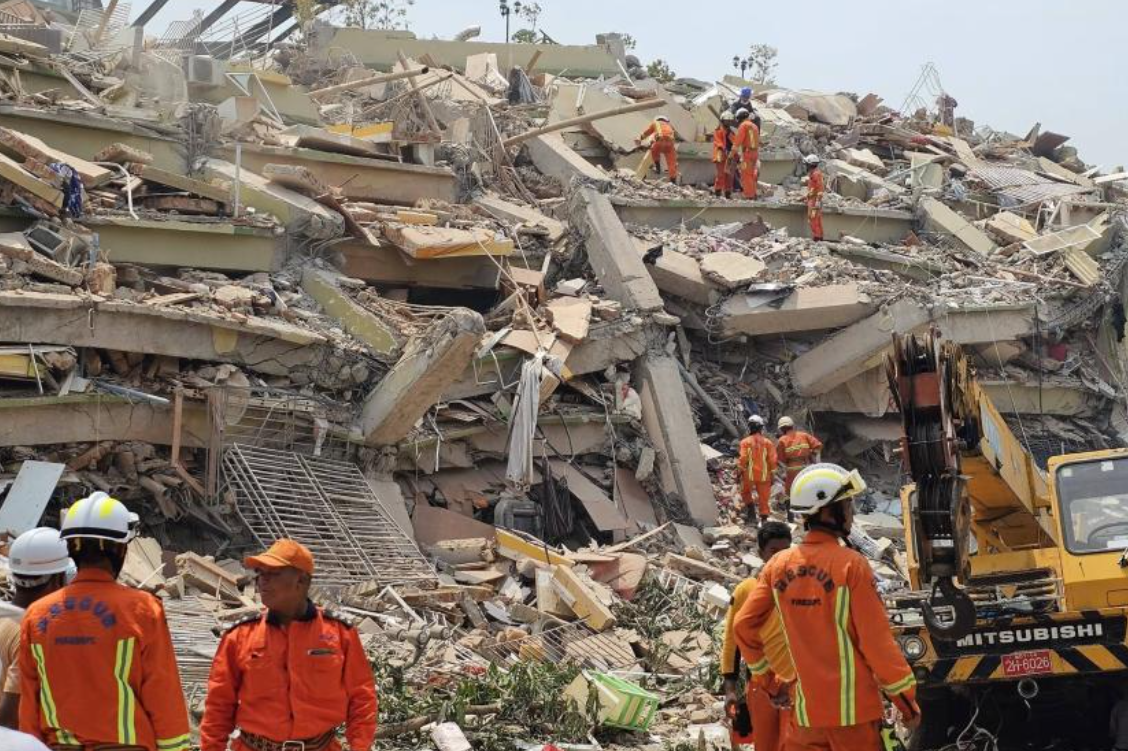
U Naing Htun Lin, proprietor of Sky Villa Condominium in Mandalay, has been convicted and sentenced to five years imprisonment with hard labour by the Aungmyaythazan Township Court for his role in a catastrophic building collapse that killed more than 200 people during a seismic event. The June 23 verdict concludes a legal process that began earlier this year when authorities charged him under Section 304-A of the Penal Code, which addresses death caused by negligence. The case represents a significant moment in Myanmar's building safety accountability, marking one of the few instances where a property owner has faced criminal prosecution following a major structural failure.
The legal proceedings against U Naing Htun Lin commenced on February 10 when the Aungmyaythazan Township Court heard the initial charges. In the early stages of the trial, the court granted him bail, permitting him to remain free while defending himself against allegations. However, the judicial approach shifted dramatically on March 17 when authorities revoked his bail status. He was subsequently remanded into custody, a transition that indicated the court's growing concerns about flight risk or the severity of the charges. The reversal in bail conditions underscored the gravity with which Myanmar's justice system regarded the disaster and its aftermath.
The investigation that led to charges originated from the No. (1) Area Police Station in Aungmyaythazan Township, which filed the case under Section 304-A of the Myanmar Penal Code. U Zaw Moe Aung, a staff officer from the Special Investigation Department, acted as the formal plaintiff in prosecuting the matter. This institutional framework reflects Myanmar's approach to building-related disasters, treating them as potential criminal matters rather than purely civil or administrative issues. The involvement of a specialised investigation department suggests that authorities undertook a comprehensive examination of circumstances surrounding the collapse.
The Sky Villa condominium, an eleven-storey residential complex situated between 21st and 22nd Streets on 60th Street in Aungmyaythazan Township, became emblematic of the earthquake's destructive power when it crumbled during the tremor. Among the numerous structures damaged or destroyed, Sky Villa emerged as particularly catastrophic, with recovery efforts yielding more than 200 bodies from the rubble. The death toll made it one of the most lethal single building collapses associated with the earthquake, compounding the already devastating human cost of the natural disaster across Mandalay.
Beyond the criminal conviction, U Naing Htun Lin's company, NTL Construction Company, which had overseen the building's construction, faced scrutiny regarding structural integrity and construction standards. His wife, Daw Thet Thet Khine, and other members of the family's circle subsequently organised commemorative ceremonies at a monastery pavilion on 19th Street to honour those who perished. These gatherings served dual purposes: acknowledging responsibility for the tragedy and extending financial support to bereaved families. The compensation offered—10 million kyats per deceased individual—represented a substantial commitment, though such monetary gestures cannot address the profound loss experienced by survivors and relatives.
The case has not concluded with the June 23 sentencing, as both prosecution and defence teams have lodged appeals and initiated revision proceedings to contest the verdict. The Aungmyaythazan District Court formally requested the complete case file for review under Criminal Revision Case No. 39Ka/2026, indicating that higher judicial authority intends to examine whether the initial conviction and sentence meet legal standards. This appellate process will likely consume considerable time and resources as Myanmar's court system processes competing arguments about culpability, negligence, and appropriate sentencing in a disaster context.
The prosecution of U Naing Htun Lin carries broader significance for Myanmar's construction industry and public safety frameworks. The conviction establishes a precedent that building owners may face criminal consequences for structural failures, potentially incentivising stronger adherence to construction codes and safety protocols across the nation. However, observers note that a single five-year sentence, even with hard labour provisions, may represent a modest consequence for a catastrophe claiming over 200 lives, raising questions about whether existing legal frameworks adequately address the scale of disaster-related deaths. The case simultaneously highlights both Myanmar's willingness to pursue accountability and the limitations of its criminal justice system in addressing infrastructure failures.
Construction standards and enforcement mechanisms in Myanmar remain areas of significant concern. The collapse of Sky Villa during an earthquake prompts broader examination of building codes, inspection procedures, and compliance monitoring across the country. Whether the structure failed due to inferior materials, inadequate design, poor workmanship, or a combination of factors remains a subject of technical investigation. International building safety experts have occasionally noted that Myanmar's regulatory environment for construction oversight lacks the comprehensive institutional capacity found in more developed nations, potentially contributing to vulnerabilities in high-risk structures.
For Malaysian readers and regional observers, the Sky Villa case illustrates challenges that extend beyond Myanmar's borders. Southeast Asian nations, many situated in seismic zones or vulnerable to natural disasters, grapple with balancing rapid urbanisation against adequate building safety enforcement. The incident underscores the importance of robust regulatory frameworks, regular structural inspections, and accountability mechanisms that hold developers and contractors responsible for public safety. As the region continues experiencing construction booms driven by economic growth and urbanisation, ensuring that safety standards keep pace with development remains a critical policy consideration across ASEAN nations.

