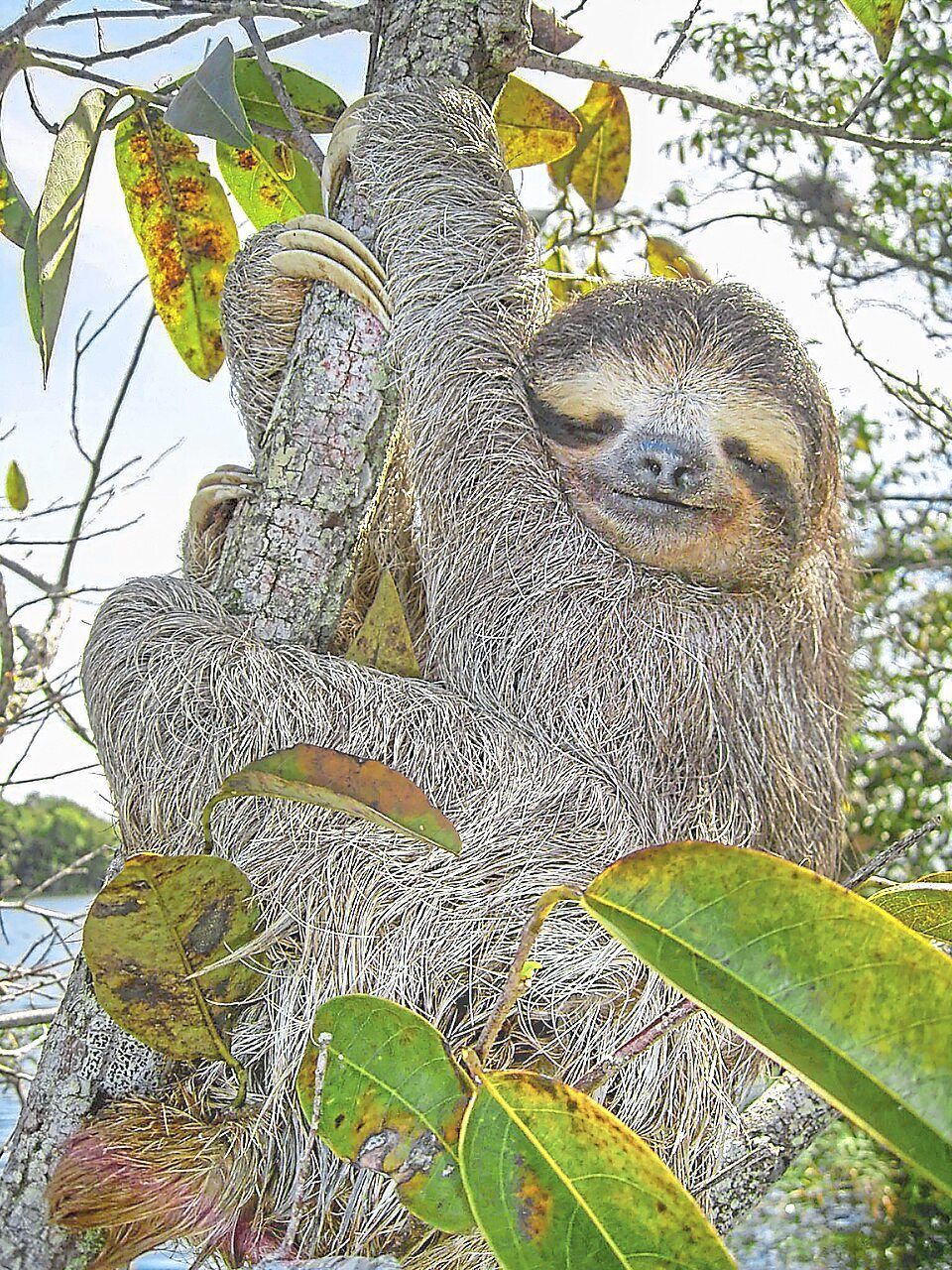
An international team of geneticists has uncovered a remarkable feature in the sloth genome that may fundamentally change how scientists understand human ageing and metabolic disease. By sequencing and analysing the DNA of tree-dwelling sloths, researchers have identified a class of ancient genetic elements called transposons or "jumping genes" that have been conserved throughout sloth evolution and could offer fresh insights into why some organisms age more slowly than others and maintain health despite extremely low metabolic rates.
The groundbreaking research, conducted by scientists from the Wellcome Sanger Institute, the Leibniz Institute for Zoo and Wildlife Research (IZW), the Hospital Sirio Libanes, and collaborating institutions, represents the first comprehensive genomic analysis of this unusual mammal. The team extracted DNA tissue samples from a captive sloth and sent them to the Max-Planck Institute for Molecular Cell Biology & Genetics in Germany for sequencing. Using comparative genomics—a technique that identifies differences and similarities across species—the researchers then compared the sloth genome systematically with those of other mammals to isolate what makes sloths biologically distinct.
The comparison group included the anteater and armadillo, creatures that share a common ancestor with sloths within the clade Xenarthra, the only group of placental mammals that originated in South America. This carefully chosen comparison allowed researchers to distinguish which genetic features emerged specifically in sloths rather than being inherited from their broader mammalian lineage. The analysis revealed that sloths possess multiple copies of active transposons—short DNA sequences capable of moving from one location to another within the genome—a feature that distinguishes them dramatically from most other mammals, including humans, where such elements are typically ancient and non-functional.
The evolutionary history of these jumping genes proved particularly revealing. By tracing the genetic record backwards through time, the team determined that these active transposons first appeared in the common ancestor of all sloth species roughly 30 million years ago. Unlike in other mammals where transposons have gradually accumulated mutations and become dormant, sloths have maintained these elements in a fully active state throughout their evolutionary history. This preservation across millions of years suggests that these genes provide a significant survival advantage rather than being merely tolerated genetic baggage.
What makes this discovery especially intriguing is the location and function of these conserved transposons. The research revealed that many of these jumping genes are directly connected to mitochondria, the cellular powerhouses responsible for generating energy and regulating metabolic pathways throughout the organism. This connection illuminates a crucial aspect of sloth biology: how they maintain health and vitality despite having the lowest metabolic rate of any mammal on Earth. Their bodies appear to have evolved sophisticated genetic backup systems that compensate for their extraordinarily relaxed approach to energy consumption, allowing them to thrive in an energy-restricted state that would prove debilitating to other animals.
The implications for human medicine are potentially transformative. Many prevalent human conditions—including type 2 diabetes, age-related neurological decline, neurodegenerative diseases, and progressive muscle wasting—fundamentally involve problems with cellular energy production and mitochondrial dysfunction. Dr Pedro Galante, co-lead researcher at the Hospital Sirio Libanes in São Paulo, Brazil, emphasised that sloth cell lines could serve as a natural laboratory for understanding how organisms successfully navigate low-energy states. By studying how sloths maintain robust health under conditions of severely limited energy availability, scientists may unlock mechanisms that could prevent or reverse the energy-metabolism failures underlying human disease.
The potential applications extend far beyond treating terrestrial human ailments. Dr Galante highlighted that this research could ultimately inform approaches to tissue preservation and critical care medicine, where maintaining cellular function during periods of extreme stress or resource scarcity becomes crucial. Even more speculatively, the research opens pathways for understanding how astronauts might maintain health during extended space missions, where metabolic efficiency and the ability to function optimally with limited resources become paramount survival challenges. The sloth, an animal that accomplishes the seemingly impossible by thriving on minimal energy intake, may offer nature's proven solution to these demanding scenarios.
Dr Marcela Uliano-Silva, senior bioinformatician and co-lead author at the Wellcome Sanger Institute, articulated the broader scientific philosophy underlying this work. She noted that evolutionary processes have essentially conducted countless biological experiments across millions of species and billions of years, with unsuccessful adaptations being eliminated through natural selection. By studying organisms that have evolved along unusual pathways—like sloths—scientists sometimes discover biological solutions that human genetics never independently developed. This approach treats nature as a vast library of tested solutions, accessible to those willing to look beyond the conventional model organisms typically studied in laboratories.
Dr Camila Mazzoni, head of evolutionary and conservation genomics at the IZW in Berlin, emphasised that understanding the mechanisms enabling sloths to maintain vitality despite their metabolic constraints could reveal new principles about how cells efficiently manage energy consumption. The discovery that sloths appear to have evolved genetic backup systems suggests a redundancy and resilience in their cellular machinery that allows them to compensate for their relaxed metabolic demands. This redundancy—the presence of multiple genetic pathways achieving the same biological goal—represents a fundamentally different approach to cellular organisation than that typically observed in humans, where many functions depend on singular, optimised pathways.
For Malaysian and Southeast Asian researchers, this discovery carries particular significance given that the region's tropical biodiversity includes numerous unusual species whose genomes remain largely unsequenced and unexplored. The methodological approach employed here—taking an organism with distinctive biological traits, sequencing its genome comprehensively, and comparing it systematically with related species to identify key innovations—could be applied to Southeast Asian fauna. Indigenous knowledge about which regional animals display unusual longevity, disease resistance, or metabolic efficiency could guide future genomic investigations, potentially yielding discoveries of global medical importance while simultaneously advancing the scientific value of the region's natural heritage.
The research agenda moving forward requires substantial additional investigation to translate these genomic discoveries into practical medical applications. Researchers must determine whether the genes and pathways active in sloths can be safely activated or enhanced in human cellular systems, whether through gene therapy, pharmacological intervention, or other means. The fundamental challenge lies in extracting general principles about metabolic efficiency and cellular resilience from sloth biology without triggering the unintended consequences that might accompany radical alterations to human metabolism. Nevertheless, the identification of these preserved jumping genes in sloths provides a crucial new direction for researchers seeking to understand why some organisms age gracefully while others deteriorate rapidly, and why metabolic disease remains one of the most intractable medical challenges of our era.

