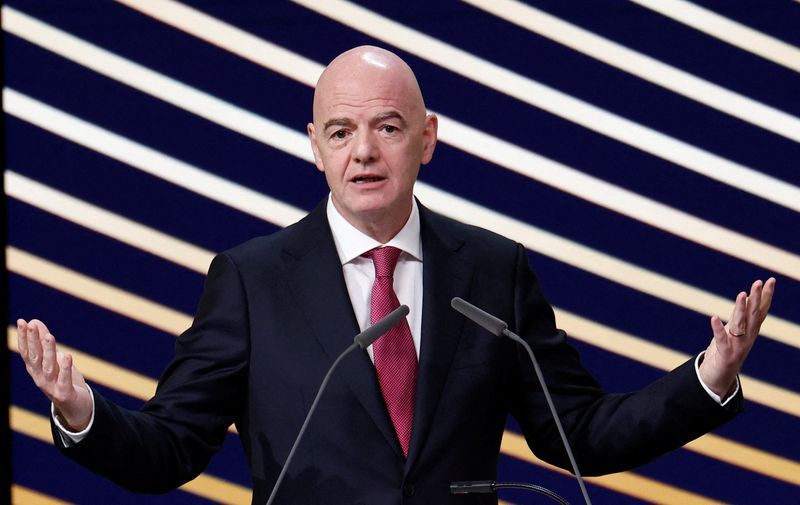
Gianni Infantino's bid to secure a fourth term as FIFA president increasingly hinges not on appeasing soccer's traditional powers but on maintaining backing from the world's smaller and developing football nations, many of whom depend significantly on financial support from the sport's governing body. The Swiss administrator faces unprecedented pressure following the failed private equity proposal for the World Cup, which triggered formal withdrawals of support from Wales, and provoked UEFA and the North American confederation CONCACAF to signal their opposition to his continued leadership.
The structural vulnerability of Infantino's position lies in FIFA's democratic mechanics. Although the organisation comprises 211 member associations with vastly different resources, football infrastructure, and global influence, each nation commands precisely one vote at FIFA's Congress. This equality of voting rights fundamentally alters the calculus of internal politics, rendering traditional football powerhouses like France, Spain, and England less influential in a numerical showdown than a coalition of smaller nations acting in concert. Infantino has already declared his intention to contest the April Congress elections for a fourth term, though the timeline may accelerate if opponents trigger an Extraordinary Congress through the signatures of 20 per cent of FIFA's membership.
The constitutional pathway to Infantino's removal exists but remains procedurally demanding. A successful challenge would require gathering written requests from at least 43 member associations to convene an Extraordinary Congress, which would then need to occur within three months. Even UEFA, representing 55 European nations whose members voted unanimously to boycott FIFA tournaments if the private equity stake sale proceeded, technically possesses the power to force such a congress through its own unanimous action. Yet triggering removal requires more than destabilising an incumbent—it demands marshalling sufficient support from other confederations to achieve an outright majority vote against him when the moment arrives.
Herein lies Infantino's greatest asset and the source of his political resilience. Emerging and smaller nations, particularly those without World Cup experience or established professional football infrastructure, have benefited substantially from his tenure. The current 2023-26 World Cup cycle made available development grants reaching three million dollars per nation, an increase of one million dollars from the preceding cycle. For wealthy confederations with established professional leagues and commercial revenues, such sums represent marginal additions to existing budgets. For struggling football associations in the Pacific, Caribbean, parts of Africa, and smaller Asian nations, these resources represent transformative opportunities to advance their sporting ambitions.
Vanuatu exemplifies this dynamic. The island nation of approximately 340,000 people occupies 160th place in FIFA's world rankings, yet its football association president secured a seat on FIFA's Executive Council as one of eight vice-presidents—a position of considerable prestige within the organisation's hierarchy. More tangibly, FIFA funded a four-million-dollar-plus development grant enabling the construction of a 6,500-seat stadium in Port Vila, completed in 2022. For a nation with limited domestic revenue sources, such capital investment would otherwise remain aspirational. Brian Kaltak, Vanuatu's first professional player currently based in Australia with Perth Glory, articulated the sentiment widespread among smaller nations' football communities. He credited Infantino specifically with creating pathways for emerging nations to participate meaningfully in international football and with channelling development resources toward countries that would otherwise struggle to finance basic infrastructure.
This pattern extends broadly across multiple confederations. African nations, Asian associations, Caribbean federations, and Pacific island football communities have collectively received FIFA grants financing training facilities, gymnasium construction, coaching development programmes, and competitive opportunities that national associations could not independently sustain. The visible infrastructure improvements, enhanced international competitive participation, and institutional capacity-building funded through Infantino's distribution model have cultivated genuine goodwill among constituents who perceive tangible benefits flowing directly from his stewardship.
Critical observers contend that this funding architecture operates as an implicit exchange mechanism: FIFA governance provides financial resources in exchange for political loyalty. The system, viewed through this lens, creates structural impediments to coalition-building against an incumbent president, as many member associations possess institutional interests in maintaining positive relations with the organisation dispensing development capital. Smaller nations cannot easily afford the political luxury of alienating FIFA's administration when their football programmes depend substantially on continued financial support. This dynamic asymmetry—whereby wealthy confederations possess greater independence but proportionally smaller voting influence, while smaller nations possess significant voting leverage but greater financial vulnerability—fundamentally shapes the political economy of FIFA governance.
The coming months will test whether traditional football powers can overcome this structural disadvantage. UEFA's position matters significantly, particularly regarding the coordination capacity of European confederations. However, unseating Infantino ultimately requires penetrating the developing world's voting bloc and persuading a substantial proportion of smaller nations to prioritise governance concerns over institutional self-interest. Any movement to force an Extraordinary Congress must therefore construct a narrative appealing not merely to elite confederations but to the broader membership, particularly those nations for whom FIFA support remains pivotal to their football development ambitions.
The political outcome remains genuinely uncertain. Infantino's vulnerabilities are genuine and his opponents possess legitimate governance concerns regarding the private equity proposal's implications. Yet his capacity to mobilise support among nations that have benefited materially from his presidency provides ballast against removal efforts that fail to address the interests of FIFA's numerically dominant smaller membership. The coming year will demonstrate whether governance reform can overcome the gravitational pull of financial incentives embedded within the organisation's operational model.

