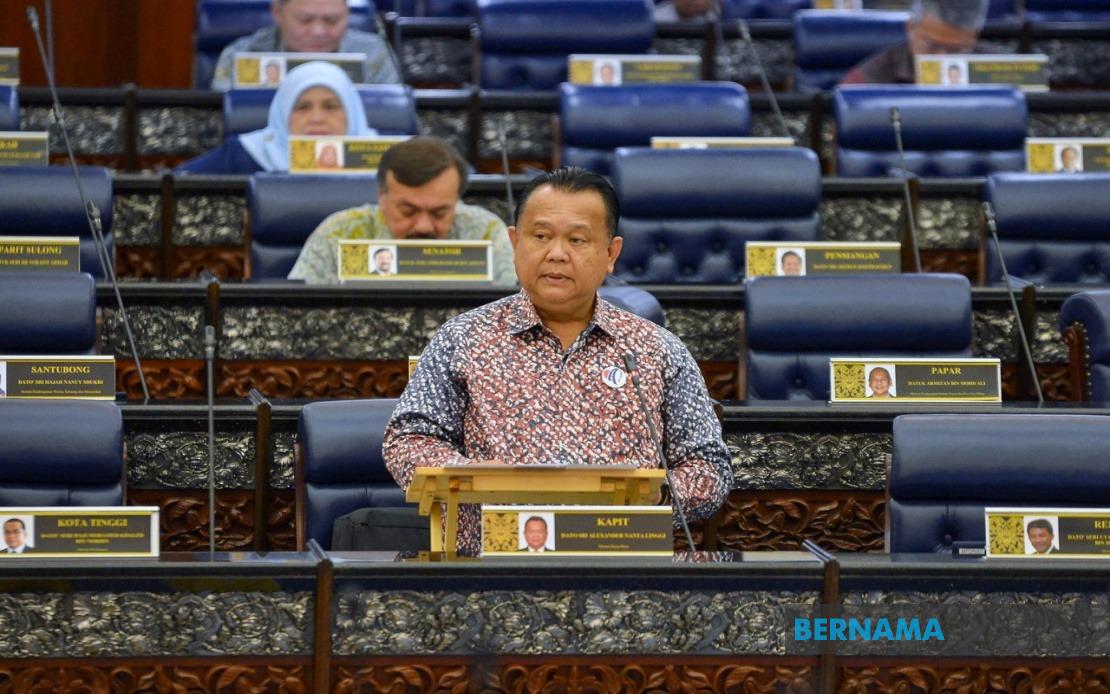
Works Minister Datuk Seri Alexander Nanta Linggi has reported substantial success for the Smart Lane initiative deployed across sections of the North-South Expressway, with data showing congestion reductions ranging from 30 to 50 percent since the scheme's introduction in 2023. The declaration came during parliamentary questions in the Dewan Rakyat, where the minister outlined how the innovative traffic management system has proven effective during both regular peak hours and major festive travel periods, while maintaining rigorous safety oversight to protect all highway users, particularly motorcyclists who share the designated lanes.
The Malaysian Highway Authority (LLM) has been continuously monitoring Smart Lane performance across multiple stretches of PLUS, generating empirical evidence that supports the initiative's continued expansion and refinement. According to the minister's account to parliament, the monitoring data accumulated over the past eighteen months demonstrates measurable improvements in traffic flow that have translated into tangible benefits for millions of commuters traversing the country's major expressway corridor. This performance assessment holds particular significance as Malaysia grapples with persistent urban congestion challenges, positioning Smart Lane as a potentially scalable model for alleviating traffic pressure on other major routes.
The safety record in Smart Lane zones has emerged as a critical advantage, with accident statistics revealing a surprisingly low incident rate relative to the volume of traffic passing through these sections. Between January and May of this year alone, only 36 accident cases were documented across 12 Smart Lane locations on regular weekdays, a finding that contradicts concerns that motorcyclists would face heightened risks from sharing designated lanes with larger vehicles. This data proves particularly noteworthy because it challenges assumptions that mixed-vehicle lane usage inherently compromises rider safety; preliminary analysis suggests that awareness of operating within a monitored Smart Lane actually encourages more cautious behaviour among motorcyclists compared to their conduct on conventional highway sections.
The question regarding Smart Lane implementation was raised by Zakri Hassan, the PN-Kangar representative, who specifically sought clarification about whether the system adequately protected motorcyclist safety and comfort. His parliamentary inquiry reflected ongoing public concerns about the initiative, even as performance metrics have accumulated in favour of the scheme. The minister's detailed response, drawing on concrete accident statistics and safety audit findings, represented an attempt to build confidence among an initially skeptical parliamentary cohort and the riding public more broadly.
Analysis conducted on accident causation within Smart Lane zones has identified user behaviour as the predominant factor in most incidents, rather than inherent design flaws or lane-sharing complications. Recorded accidents typically stemmed from violations of established safety protocols, including improper use of emergency lanes, reckless lane changes, and unauthorised vehicle stops—infractions that would generate similar consequences on any expressway segment. This distinction between system-design problems and individual driver failure provides important context for understanding the initiative's actual safety profile and points toward enforcement and education as the most effective interventions.
To strengthen safety monitoring beyond existing surveillance mechanisms, the LLM has implemented a comprehensive five-year cycle of independent road safety audits for all Smart Lane locations, a requirement now mandated for expressway concessionaires. These stage 5 safety audits examine the full spectrum of potential risks within Smart Lane operations rather than focusing narrowly on motorcycle-specific concerns, thereby generating holistic assessments of system performance. The ministry has committed to implementing improvement measures based on audit recommendations, creating an adaptive management framework that responds to identified vulnerabilities and evolving traffic patterns.
Enhancing real-time traffic coordination and detection capabilities represents another dimension of the Smart Lane system's technological sophistication. The Malaysian Highway Authority and KKR are progressively deploying closed-circuit television systems enhanced with artificial intelligence functions across Smart Lane corridors, enabling the detection of traffic density fluctuations as they occur. This investment in AI-enabled monitoring infrastructure supports more responsive traffic management, allowing authorities to adjust lane operations dynamically in response to immediate congestion indicators rather than relying on historical patterns or delayed reporting.
For Malaysian commuters and businesses dependent on reliable expressway transit, the Smart Lane programme addresses a genuine national pain point, as traffic congestion on major corridors creates substantial economic costs through lost productivity and increased fuel consumption. The 30 to 50 percent reduction in congestion represents considerable relief, particularly during peak commuting windows and holiday periods when the North-South Expressway typically experiences severe bottlenecks. Regional travellers passing through Malaysia and international supply chains dependent on PLUS corridors also benefit from improved traffic predictability and reduced delays.
The Smart Lane initiative carries implications extending beyond mere traffic management statistics, reflecting a broader shift toward technology-enabled solutions for infrastructure challenges that have historically proven resistant to conventional approaches. As Southeast Asian nations seek to accommodate rapidly growing vehicular populations within existing transportation networks, the Malaysian experience with Smart Lane offers a tested model that other countries might study or adapt. The relatively low cost of implementation compared to expanding physical infrastructure makes the approach particularly attractive for densely populated regions where space and budgetary constraints limit traditional expansion options.
Moving forward, sustained monitoring and periodic public reporting on Smart Lane performance will remain essential to maintaining confidence in the system and building the case for expansion to additional PLUS sections or other major expressways. The minister's parliamentary testimony suggests that the government intends to pursue broader deployment, pending continued demonstration of safety and congestion-reduction benefits. As more data accumulates and additional Smart Lane stretches come online, Malaysian policymakers and highway users will gain clearer insights into optimising shared-lane configurations and maximising the system's potential to transform expressway performance across the nation.

