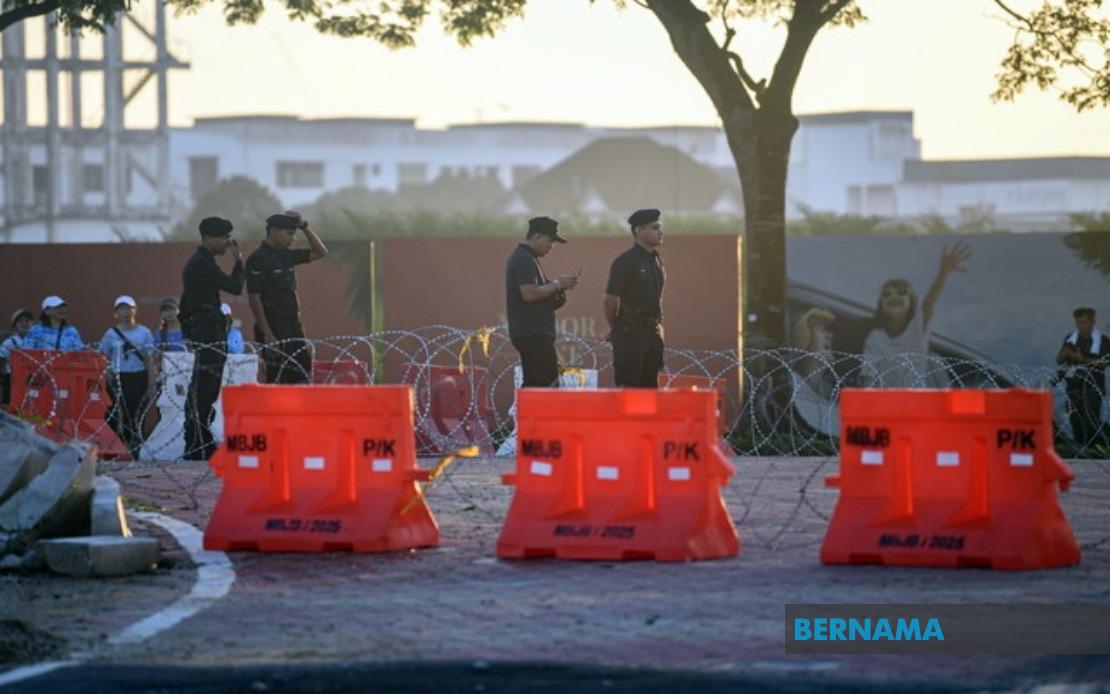
The nomination process for Johor's 16th state election proceeded without disruption on June 27, as favourable weather conditions greeted candidates and supporters gathering at 56 polling centres throughout the state. Election Commission officers had stationed themselves at each venue from early morning, completing final preparations and beginning to receive nomination documents from 9am onwards. The orderly atmosphere reflected institutional readiness for what represents a significant democratic exercise in Malaysia's most populous peninsula state.
Party supporters demonstrated their enthusiasm by arriving at nomination centres as early as 7.30am, keen to show backing for their chosen candidates at the outset of the campaign trail. This early mobilisation underscores the competitive dynamics within Johor politics, where the race for control of the 56-seat state assembly carries implications extending beyond the state capital of Johor Bahru. The visible presence of security personnel across all centres ensured that proceedings remained secure and orderly throughout the critical document submission window, which extended until 10am at most venues.
The Malaysian Meteorological Department provided weather forecasts suggesting that most districts would experience dry conditions through the morning hours, with thunderstorms anticipated only in select areas during afternoon periods. This cooperative weather pattern allowed nomination activities to proceed without the logistical complications that heavy rainfall might have introduced. For election administrators and candidates alike, the clement conditions facilitated the movement of supporters and the smooth operation of nomination processes that would determine which contenders could proceed to the campaign phase.
The Johor State Legislative Assembly itself comprises 56 seats, a significant parliamentary cohort that makes this state election a critical juncture in Malaysia's broader political landscape. The assembly was formally dissolved on June 1, triggering the electoral calendar that now structures the process through to polling day. This dissolution marked the formal beginning of the electoral cycle, though speculation and positioning had preceded it for months as various factions within Johor's political ecosystem prepared for this moment.
Election Commission statistics reveal the scale of democratic participation at stake, with 2,727,926 registered voters entered on the rolls. This figure comprises 2,703,175 ordinary voters forming the bulk of the electorate, supplemented by 12,041 military personnel and their spouses, along with 12,710 police personnel and their spouses. These latter categories reflect Malaysia's constitutional provisions allowing security force members to participate in the electoral process, a practice that distinguishes the Malaysian system from some other democracies where serving military and police personnel face voting restrictions.
The electoral timeline compressed several critical dates into a narrow window, creating an accelerated campaign schedule. Early voting was fixed for July 7, providing advance polling opportunities for those unable to vote on the primary polling day. The main election itself follows just four days later on July 11, meaning that candidates and parties would have approximately two weeks from nomination day to conduct their campaign activities. This relatively condensed timeframe requires efficient organisation and strategic communication from political organisations competing for voter attention.
For Malaysian readers, the Johor election carries particular significance given the state's economic importance and its role as a gateway to Singapore and the wider region. Results will inevitably be parsed as indicators of broader sentiment within the Malay heartland and among urban voters who constitute substantial portions of Johor's electorate. The state has long served as a testing ground for political trends, making its outcomes relevant not merely to state governance but to the calculation of momentum ahead of potential federal elections.
The smooth conduct of nomination day itself suggests institutional capacity within Malaysia's election administration. The Election Commission's ability to manage logistics across 56 distinct centres, coordinate security presence, and process nomination documents reflects operational competence developed through successive electoral cycles. For voters observing the early phases of this election, orderly administration at nomination stage may engender confidence in the integrity of the process extending through to polling day.
The presence of various party supporters at nomination centres reflects the competitive intensity that characterises contemporary Johor politics. Multiple political organisations, spanning both peninsula-wide coalitions and state-specific vehicles, fielded candidates at these centres. The contest ahead would test which messages resonated with an electorate encompassing urban professionals, rural communities, and increasingly significant ethnic-Chinese constituencies whose electoral behaviour has shifted notably in recent years.
As candidates began their formal campaigns following successful nomination, the attention of political observers fixed upon demographic trends and voter sentiment across different regions of Johor. The state encompasses diverse constituencies ranging from highly urbanised centres to agricultural heartlands, and from areas with large Chinese and Indian communities to those with overwhelming Malay-Muslim majorities. These variations meant that campaign strategies would necessarily differ significantly across constituencies, with national themes adapted to local preoccupations around development, employment, and service delivery.
The election commission's management of voter rolls and the provision for special voting categories demonstrated institutional attention to inclusivity principles. Military and police families participate within a framework acknowledging their service while maintaining electoral participation rights. The resulting voter roll size of 2.7 million individuals underscored the substantial democratic exercise that this state election represented, with implications for governance extending into multiple policy domains from education and healthcare to infrastructure and economic development.
Looking forward to July 11, the trajectory established by nomination day's smooth conduct suggested that administrative preparations had reached an advanced stage. Candidates now possessed their formal authorisation to campaign, nomination documents had been submitted, and the state had entered the intense phase of political competition preceding the poll. For Johor voters, the weeks ahead would determine representation in the state assembly and the direction of state governance through the coming legislative term.

