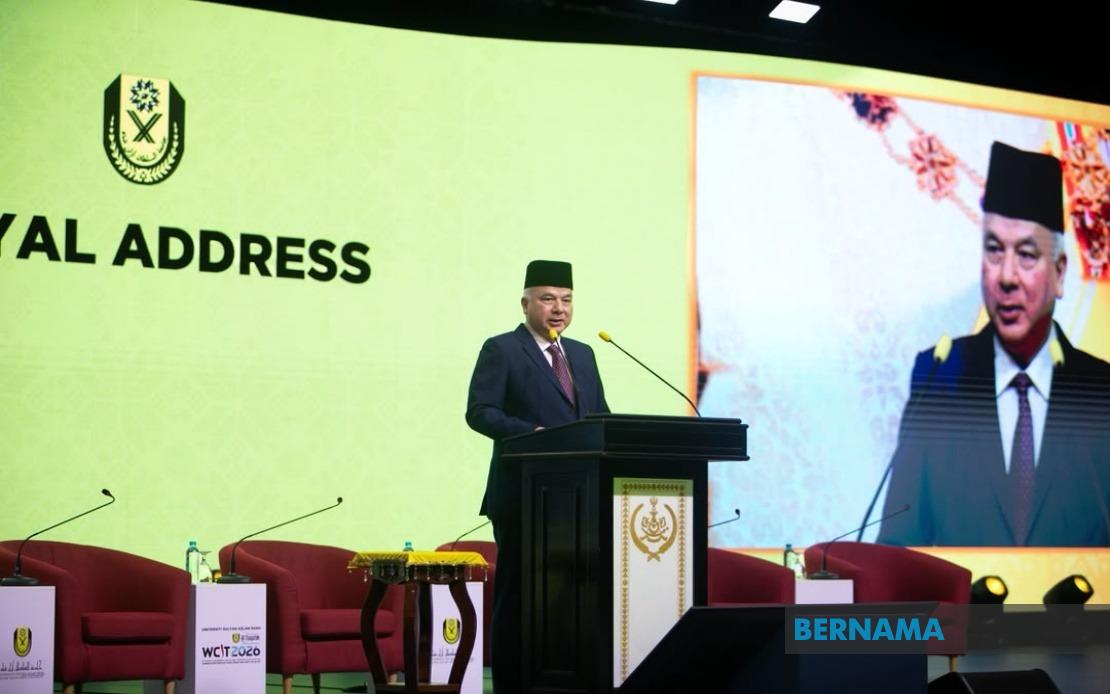
The Sultan of Perak, Sultan Nazrin Shah, has articulated a fresh perspective on national security that prioritises social cohesion over traditional defence mechanisms. Speaking at the 8th World Conference on Islamic Thought and Civilisation held in Ipoh on July 21, His Royal Highness argued that whilst physical defence and counterterrorism remain important, the most enduring safeguard for any nation is the binding force of shared belonging among its citizens. This message carries particular significance for Malaysia, a multiethnic and multireligious nation grappling with questions of integration and national identity in an increasingly fractious global environment.
Central to Sultan Nazrin's thesis is a distinction between defensive security and foundational security. A state may fortify its borders and develop sophisticated cyber capabilities, yet if its internal fabric is weakened by corruption, injustice, or feelings of marginalisation among key segments of the population, no amount of security apparatus can prevent eventual instability. The Sultan emphasised that true national integrity requires citizens across all ethnic and religious backgrounds to perceive themselves as genuine stakeholders in their country's trajectory. Without this sense of authentic ownership and belonging, the social contract itself becomes fragile, creating vulnerabilities that no military budget can remedy.
The gathering brought together senior government figures, including Deputy Prime Minister Datuk Seri Fadillah Yusof, who holds the Energy Transition and Water Transformation portfolio, Perak Menteri Besar Datuk Seri Saarani Mohamad, and Higher Education Minister Datuk Seri Dr Zambry Abd Kadir. Their attendance underscored the government's engagement with the themes raised, suggesting policy implications across multiple domains from defence to education to resource management.
For Malaysia and the broader Islamic world, Sultan Nazrin identified a particular vulnerability: the weaponisation of religious identity for narrow political purposes. He warned against the manipulation of faith to create division and exclusion, rather than advancing the unity that the conference explicitly sought to promote. This observation cuts to the heart of recurring tensions in Malaysian politics, where religious sensibilities have periodically been invoked to mobilise constituencies or justify exclusionary policies. The Sultan's framing suggests that such tactics ultimately undermine rather than strengthen national security, by eroding the inclusive governance structures upon which long-term stability depends.
The Sultan drew an important distinction between unity imposed through coercion and unity that emerges from genuine shared identity. Brittle unity—sustained only through suppression of dissent or concentration of power—contains within it the seeds of future conflict. Resilient unity, by contrast, develops when communities observe themselves reflected fairly across multiple institutional domains: the legal system, economic opportunities, educational institutions, and political leadership. Malaysia's experience with periodic communal tensions suggests the relevance of this framework; real stability may require more deliberate investment in inclusive representation and genuine power-sharing across lines of ethnicity and religion.
Education emerged as a crucial variable in Sultan Nazrin's analysis. He advocated for a comprehensive approach to human capital development that transcends the traditional distinction between academic and vocational training. The Sultan argued that in an era of rapid technological change, societies must cultivate foundational capacities—critical thinking, ethical reasoning, creativity, and adaptability—rather than relying on standardised testing and rote memorisation suited to earlier industrial models. This analysis has direct implications for Malaysian education policy, where ongoing debates about curriculum priorities, the balance between STEM and humanities, and the status of technical education continue to shape student outcomes and workforce readiness.
Particular emphasis fell on the inadequacy of conventional educational models for an age of artificial intelligence. When information retrieval has become instantaneous and nearly costless, educational value resides increasingly in capacities that machines cannot easily replicate. The Sultan noted that Islamic education, properly understood, has long balanced revealed knowledge with rational inquiry, positioning it to develop precisely these distinctly human capabilities. This framing offers a conceptual resource for reconciling religious education with modern skill requirements—a synthesis that remains contested in many Southeast Asian contexts.
The vocational education dimension carries special weight for Malaysia, where social mobility aspirations run high but access to quality technical training remains unequally distributed. By insisting that skilled trades deserve equal dignity and investment as academic pathways leading to medicine or engineering, Sultan Nazrin challenged entrenched status hierarchies that channel ambition exclusively toward university credentials. Such reorientation could reshape access to economic opportunity, particularly for students from less advantaged backgrounds who might flourish in hands-on technical fields.
Beyond education, Sultan Nazrin's security framework has implications for how Malaysia approaches economic justice and regional equity. National cohesion depends partly on whether citizens believe the economic system operates fairly and offers genuine opportunity regardless of background. Persistent regional disparities, sectoral inequalities, and questions about the distribution of natural resource revenues all bear on whether all communities experience authentic stakes in national success. The Sultan's analysis suggests that Malaysia's security challenges cannot be adequately addressed through police or military spending alone; they require sustained attention to inclusive economic development.
The conference theme itself—"Everyone Matters: Pride and Unity in Islam"—reflects underlying tensions within contemporary Islamic discourse between universalist principles and particularistic political projects. Sultan Nazrin's intervention positioned inclusive national security within an authentically Islamic framework, suggesting that true fidelity to Islamic values demands pluralism rather than monopolistic control. This framing has potential to reshape Malaysian debates about the relationship between Islam and governance, offering intellectual resources to those arguing for more inclusive approaches.
For Malaysia's neighbours across Southeast Asia, Sultan Nazrin's analysis offers relevant lessons. The region encompasses multiple multicommunal societies wrestling with similar questions about national integration, the role of religion in public life, and the relationship between security and social cohesion. Indonesia, Singapore, Thailand, and the Philippines all navigate comparable tensions, suggesting that the Sultan's framework might inform broader regional discussions about sustainable stability and inclusive governance.
The immediate policy implication centres on investing in institutional structures and policy frameworks that cultivate genuine belonging across sectional lines. This extends beyond token representation to substantive measures ensuring equitable access to education, economic opportunity, and political voice. It requires vigilance against manipulation of religious identity, whether by politicians seeking narrow advantages or by extremist movements exploiting grievances rooted in exclusion. Most fundamentally, it demands recognition that authoritarian security measures, divorced from distributive justice and inclusive governance, offer only temporary respite rather than enduring protection.
Sultan Nazrin's intervention thus reframes the security agenda, shifting focus from external threats and internal surveillance toward the foundational question of whether all citizens genuinely feel they belong and possess stakes in their nation's future. In an era of transnational terrorism, climate disruption, and technological disruption, this socially anchored conception of security may prove more relevant than conventional defence paradigms. For Malaysia and the wider region, the challenge lies in translating such insights into institutional redesign and policy reform.

