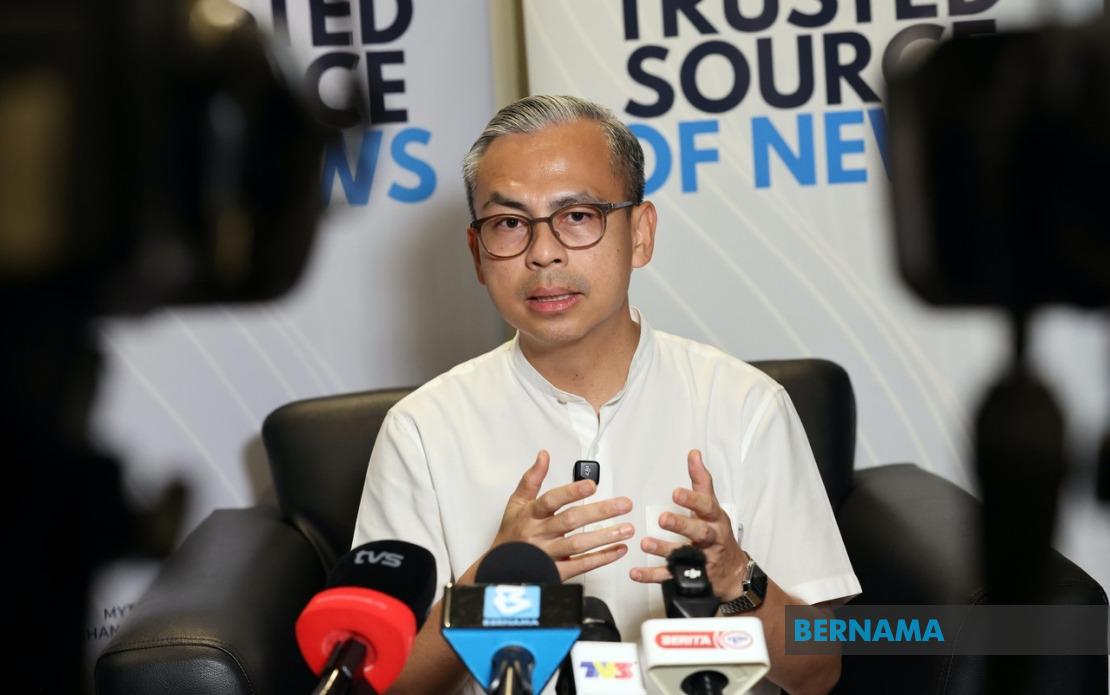
As Malaysia prepares for the 16th Johor state election this Saturday, Communications Minister Datuk Fahmi Fadzil has issued a stark warning to social media platforms: their existing policies against false information are insufficient without robust enforcement on the ground. Speaking at the Bernama operations centre in Johor Bahru on July 7, Fahmi emphasized the critical need for proactive monitoring and swift action, particularly during the evening hours when election results begin circulating and voter sentiment can shift dramatically based on unverified claims.
The minister's concerns touch on a vulnerability that has become increasingly apparent across Southeast Asian democracies. While major platforms have publicly committed to preventing the spread of disinformation, the gap between policy and practice remains substantial, especially during high-stakes political moments when engagement and viral spread accelerate exponentially. Fahmi specifically highlighted polling night as a period of heightened risk, when incomplete results or claims about individual constituency outcomes could rapidly spread confusion and undermine public confidence in the electoral process. The window between voting closure and official verification offers a dangerous opportunity for malicious actors to shape narratives before fact-checking can take hold.
Fahmi's approach reflects a broader recognition within Malaysia's government that combating election-related falsehoods requires a multi-stakeholder response. He stressed that social media platform providers must establish closer working relationships with the Malaysian Communications and Multimedia Commission, creating channels for rapid reporting and removal of problematic content. This coordination represents an attempt to bridge the traditional divide between regulatory bodies and private technology companies, acknowledging that government agencies alone cannot monitor the billions of daily posts across multiple platforms.
The minister identified two distinct categories of misinformation that demand different interventions. One involves the misuse of established media logos and graphics to manufacture fake news reports, a tactic previously highlighted by both the MCMC and Malaysian Media Council. These fabrications carry particular weight because they leverage the authority and visual credibility of recognized news organizations, making them more persuasive to casual social media users who may not scrutinize sourcing. However, Fahmi noted this represents only half the problem. The other, potentially more difficult challenge involves original content generated by ordinary citizens—whether graphic designs, written posts, or commentary—that contains false claims about the election. This user-generated disinformation proves harder to regulate because it originates from dispersed sources rather than organized misinformation operations, and distinguishing between genuine expression and deliberately false claims requires careful judgment.
The timing of Fahmi's intervention is significant given that the MCMC has reported no complaints regarding campaign misconduct on social media platforms so far. This apparent calm may suggest either genuine restraint among campaigners and their supporters, or more likely, that complaints mechanisms remain underutilized or ineffective at capturing the full scope of problematic content. Fahmi's proactive stance indicates the government recognizes that waiting for complaints to arrive may prove too passive an approach, particularly in the final week of campaigning when momentum and emotional engagement typically peak.
Beyond the misinformation challenge, Fahmi outlined the Pakatan Harapan coalition's final campaign strategy, which centers on mobilizing outstation voters—Johoreans who have migrated or are temporarily located outside the state. This demographic focus reflects demographic realities in modern Malaysia, where economic opportunities draw significant populations away from their home states. Transportation companies have reportedly responded by offering special packages for returning voters, suggesting a recognition that logistical barriers can suppress turnout among this potentially decisive segment. Fahmi's appeal to employers in the retail and food and beverage sectors to grant employees flexibility on voting day attempts to remove workplace-related obstacles that might otherwise prevent people from casting ballots.
The government has also worked to facilitate student participation through arrangements at the Youth and Sports Skills Training Institute, granting leave to trainees so they can travel home to vote. These efforts reveal a deliberate strategy to overcome structural barriers to turnout, operating on the premise that voting rates significantly influence election outcomes. Fahmi expressed hope that overall turnout would exceed 60 percent, framing this as both a civic imperative and a meaningful reflection of genuine public preference for the state's future direction.
The appeal to parents to encourage their children to return represents another layer of the mobilization effort. By framing voting as a responsibility that extends beyond individual choice to encompass family obligation and community participation, Fahmi attempts to embed electoral participation within traditional social structures and values. The emphasis on determining "choices for the next four or five years" underscores the stakes involved—state elections shape policy on devolved matters including education, local development, and public services that directly affect daily life for residents.
For Malaysian readers and broader Southeast Asian observers, this sequence of events illustrates the ongoing tension between maintaining electoral integrity and navigating the realities of modern communication technology. The challenge of preventing misinformation does not require choosing between open discourse and security; rather, it demands developing institutional capacity to distinguish between legitimate political disagreement and deliberate falsehood. Fahmi's emphasis on platform cooperation with regulatory bodies suggests Malaysia is attempting to develop an approach that respects both private sector autonomy and public interest protections, though questions remain about whether such cooperation will prove sufficiently nimble to address emerging misinformation in real time during the critical hours of polling night.

