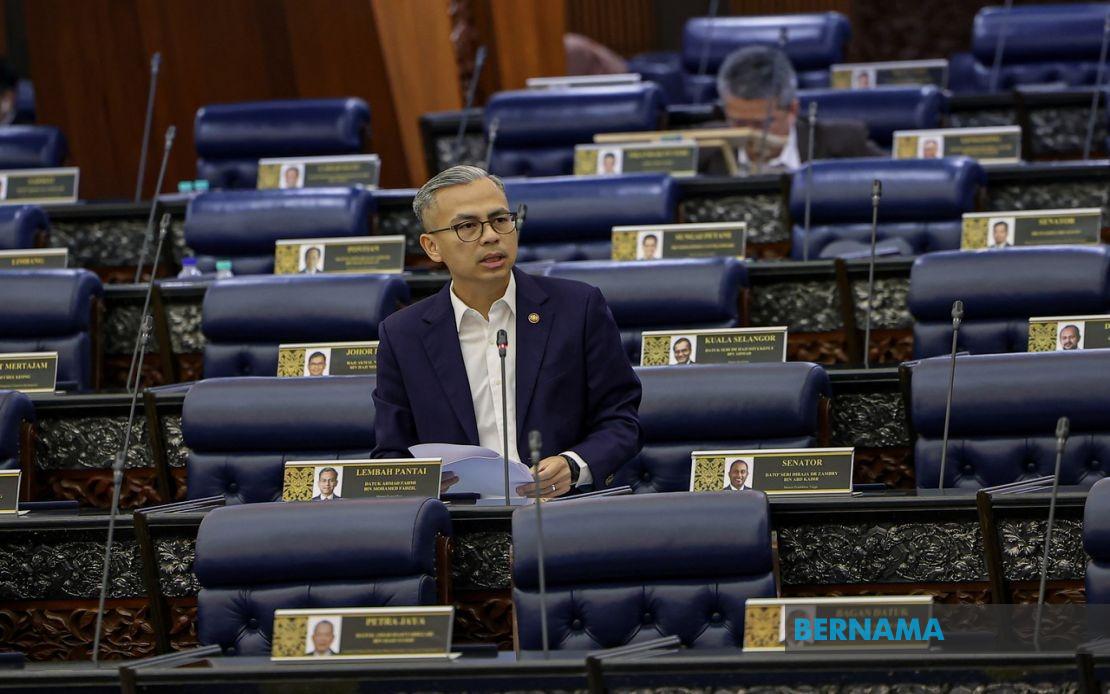
Social media platforms operating in Malaysia face substantial financial consequences if they do not comply with age-verification requirements mandated by the Online Safety Act 2025, Communications Minister Datuk Fahmi Fadzil warned during parliamentary proceedings. The penalties can reach RM10 million under the legislation, which represents one of the strictest enforcement measures in Southeast Asia targeting user authentication on digital platforms. Fahmi's statement underscores the government's determination to tighten regulations around online content accessibility, particularly for minors, as part of a broader digital safety agenda that has gained momentum globally.
The Malaysian Communications and Multimedia Commission (MCMC) holds enforcement authority under Part III of Act 866, empowered to issue non-compliance notices to application service providers that neglect their obligations. Licensed service providers receiving such notices must either accept the financial penalty prescribed by the legislation or lodge formal representations with the MCMC requesting a review of their case. This two-track approach provides platforms with an avenue to contest determinations, though the regulatory framework clearly prioritizes compliance over negotiation. The structure reflects international best practices where telecommunications regulators maintain discretionary review powers whilst preserving the underlying enforcement mandate.
Beyond the RM10 million penalty framework, the legislation contains additional punitive measures designed to ensure sustained compliance. Section 30 of Act 866 grants the MCMC authority to issue written directives to licensed service providers regarding implementation of any provision within the legislation. Platforms that ignore these directives commit an offence that can result in fines reaching RM1 million upon conviction, with an additional daily penalty of RM100,000 for each day non-compliance continues post-conviction. These escalating penalties effectively incentivize rapid remediation once regulatory action commences, preventing platforms from prolonging disputes or delaying implementation through administrative channels.
The government has pursued a consultative pathway before imposing full enforcement, reflecting awareness of the technical and operational challenges platforms face when implementing age-verification systems at scale. Since January, Malaysian authorities have conducted more than 30 engagement sessions with social media companies, conducted both collectively and in bilateral format, to discuss age-verification mechanisms. This regulatory sandbox approach acknowledges that different platforms operate under distinct business models and face varying technical constraints. By maintaining dialogue, the government demonstrates flexibility whilst maintaining its core requirement, a strategy that differs markedly from outright prohibition or sudden enforcement actions that characterize some regional regulatory responses.
The age-verification requirement positions Malaysia within a growing international consensus on digital child safety. Fahmi noted that more than 25 countries worldwide have already adopted comparable age-verification practices, indicating that Malaysia's regulatory direction aligns with established precedent rather than representing an isolated intervention. Countries including the United Kingdom, Australia, and several European Union member states have implemented similar mechanisms, though enforcement rigor and technical specifications vary considerably. Malaysia's adoption of this approach signals an effort to harmonize domestic standards with developed markets, potentially smoothing compliance for multinational platforms that already operate verification systems elsewhere.
The Online Safety Act 2025 represents a significant expansion of Malaysia's digital governance framework, moving beyond traditional content moderation to address structural platform design. Age verification strikes at the technical architecture of social networks, requiring platforms to implement robust identity confirmation processes before granting access to minors. This represents a departure from self-regulatory industry approaches that historically relied on terms-of-service agreements requesting user-declared ages, mechanisms widely acknowledged as ineffective. The legislative mandate acknowledges that voluntary compliance has failed to protect younger users from inappropriate content and algorithmic amplification of harmful material, necessitating regulatory intervention with genuine enforcement teeth.
Implementation challenges remain substantial despite the collaborative engagement undertaken thus far. Platforms must balance age-verification requirements against privacy concerns, user retention pressures, and technical feasibility across diverse demographic segments and geographic markets. In developing economies with limited digital identity infrastructure, verification becomes particularly complicated, as platforms cannot reliably cross-reference user data against government registries. Malaysia's relatively advanced telecommunications infrastructure provides better conditions than some neighbours, yet platforms operating regionally must develop solutions that accommodate varying technical capabilities across different markets. This creates incentives for platforms to implement systems compatible with Malaysia's requirements whilst remaining functional in less digitally developed jurisdictions.
The regulatory framework also addresses a persistent tension between protecting minors and preserving access for legitimate younger users seeking age-appropriate content. Over-aggressive age-verification mechanisms risk locking out legitimate teenage users, potentially violating their rights to participate in digital public discourse. Conversely, insufficiently stringent verification permits precisely the harmful exposure the legislation aims to prevent. This balance reflects sophisticated policymaking that recognizes the complexity of digital child protection, avoiding blanket prohibitions whilst establishing credible accountability mechanisms. Malaysia's approach suggests regulatory maturity in acknowledging trade-offs rather than pursuing absolutist solutions that create perverse implementation outcomes.
The enforcement framework operates within Malaysia's broader regulatory architecture governing licensed service providers, creating potential coordination challenges and opportunities. The MCMC already oversees telecommunications licensing, spectrum allocation, and content-related complaints through existing statutory powers. Age-verification requirements extend the commission's remit into platform governance, effectively positioning telecommunications regulators as arbiters of social media design principles. This institutional choice reflects confidence in the MCMC's capacity to evaluate technical compliance documentation and assess platform-specific circumstances, though it also concentrates significant power in a single regulatory entity. Future amendments may require clarification regarding the MCMC's technical expertise in evaluating age-verification methodologies, particularly as verification technologies evolve.
The practical timeline for implementation remains somewhat undefined, presenting ongoing compliance uncertainty for platforms. Whilst the government has been engaging platforms since January, no explicit deadline appears to have been announced for mandatory compliance. This ambiguity may reflect intentional regulatory flexibility, allowing the government to phase implementation in response to platform progress reports. Alternatively, it may indicate that enforcement begins immediately upon notice, placing platforms in a reactive posture rather than prospective compliance mode. Clarification regarding timelines and technical specifications acceptable to regulators would substantially improve platform certainty and potentially accelerate implementation across the Malaysian market.
Regional implications of Malaysia's regulatory approach warrant consideration, as neighbouring countries observe whether enforcement generates compliance or precipitates platform resistance. Should social media companies successfully implement age-verification mechanisms in Malaysia without substantial user-base erosion or technical failures, other Southeast Asian jurisdictions may adopt comparable legislative frameworks. Conversely, if platforms withdraw services or implement partial compliance, neighbouring regulators may reconsider enforcement intensity. Malaysia's positioning as a relatively sophisticated digital market with credible regulatory institutions creates conditions where enforcement proves sustainable, potentially establishing precedent that influences regulatory development throughout the region. The comparative success or failure of Malaysia's age-verification mandate will likely inform digital governance debates in Thailand, Vietnam, the Philippines, and Indonesia as these countries grapple with comparable child-protection objectives.