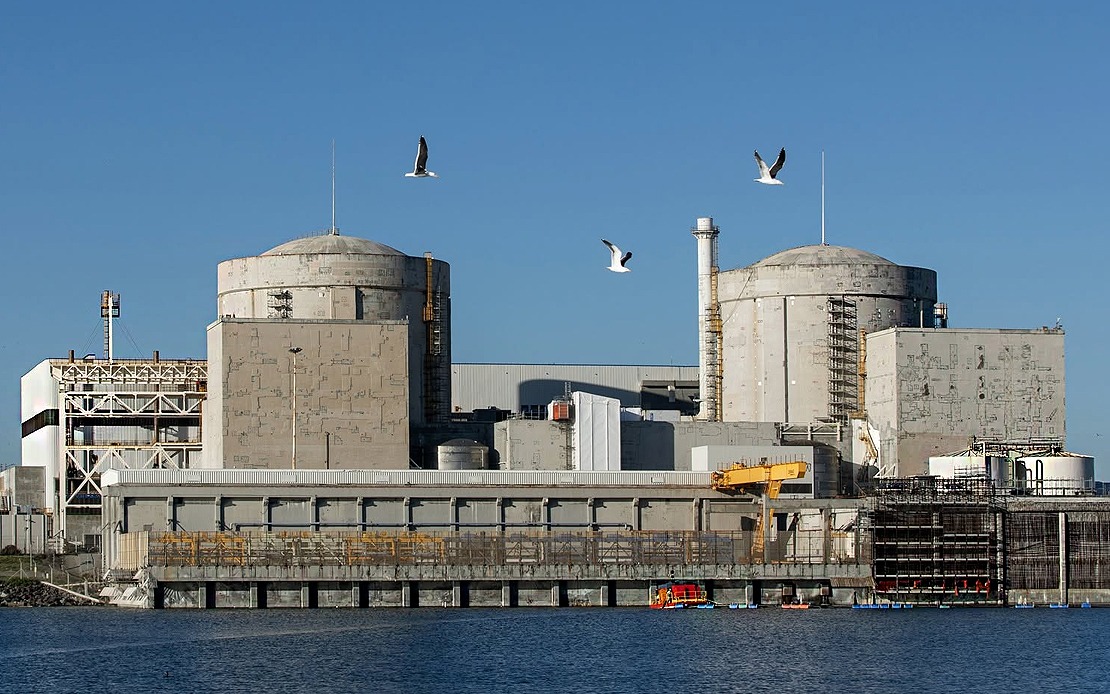
South Africa has disclosed that workers at its sole operating nuclear facility, the Koeberg Nuclear Power Station, sustained radiation exposure across three distinct incidents during maintenance activities in the latter half of July. Energy Minister Kgosientsho Ramokgopa made the announcement during a media briefing on Sunday, providing the first public acknowledgment of the exposures that occurred on June 30 and again on July 2 and 7 at the plant situated roughly 30 kilometres north of Cape Town.
The minister's statement emphasized that each incident had been swiftly contained without any measurable release of radioactive material into the surrounding environment. Government officials stressed that residents in adjacent communities faced no discernible danger from these occurrences, framing the events as isolated operational challenges rather than systemic safety concerns. The measured tone of the official response reflects South Africa's determination to maintain public confidence in nuclear energy as it charts an ambitious expansion of atomic power capacity.
According to Ramokgopa's account, the underlying cause of the three episodes stemmed from a temporary disruption to the facility's electrical supply, which subsequently compromised the operational integrity of the plant's ventilation systems. These systems ordinarily function to manage and contain any radioactive particles that might be generated during maintenance or normal operations. The ventilation failure created the conditions under which workers encountered elevated radiation levels, though the minister characterized the actual doses absorbed as modest by medical standards.
To contextualize the radiation exposure for public understanding, Ramokgopa drew a comparison to common diagnostic procedures, asserting that the doses received by the affected workers were materially lower than the radiation encountered during a routine dental X-ray examination. This analogy, while potentially reassuring to lay audiences, also reflects a communications strategy aimed at normalizing the incident within familiar health frameworks rather than portraying it as an unusual or alarming event.
Velaphi Ntuli, who oversees South Africa's nuclear safety regulatory division, offered an additional perspective by indicating that the incidents did not satisfy the classification criteria for reportable nuclear safety events under the country's regulatory framework. This determination suggests that according to domestic regulatory standards, the exposures remained beneath thresholds that would ordinarily trigger mandatory public disclosure or formal regulatory investigation procedures. The assertion carries implications for how South Africa's nuclear oversight functions and what level of incidents are deemed sufficiently serious to warrant external scrutiny.
For Southeast Asian nations monitoring nuclear energy development in the African continent and globally, South Africa's handling of this disclosure offers instructive lessons about transparency, incident management, and regulatory communication. The country's approach—acknowledging the incidents while simultaneously emphasizing their containment and minimal consequence—reflects a broader tension within nuclear policy between maintaining operational credibility and managing public perception during expansion phases.
South Africa's nuclear ambitions extend considerably beyond its existing Koeberg facility. The government has committed to augmenting the nation's nuclear generating capacity by 5.2 gigawatts by 2039, representing a substantial acceleration of atomic power deployment. This expansion strategy reflects official recognition that nuclear energy must constitute a pivotal component of the country's future electricity architecture, particularly as South Africa grapples with an energy crisis that has severely compromised economic productivity and household stability across the nation.
The country's contemporary electricity predicament has created political and economic pressure for rapid alternative energy development. Years of rolling blackouts and severe supply constraints have elevated nuclear power from a peripheral concern to a focal point of energy policy discussions. Government planners regard atomic generation as essential infrastructure for stabilizing the electrical grid and enabling economic recovery, even as the expansion encounters resistance from environmental advocates and communities concerned about waste management and safety protocols.
South Africa's energy profile remains profoundly shaped by coal dependency, with thermal power stations generating the preponderance of national electricity supply. This reliance has created both energy security vulnerabilities and substantial environmental burdens, prompting the government to articulate a decarbonization trajectory. Officials envision that by 2050, the country will transition substantially away from fossil fuel generation, with nuclear power positioned as a critical bridge technology during this prolonged transition period.
The Koeberg incidents underscore persistent operational challenges within aging nuclear infrastructure and raise questions about South Africa's readiness to manage substantially expanded nuclear capacity. Ventilation system failures, even temporary ones, represent the category of operational anomalies that can rapidly escalate into more serious scenarios if supporting infrastructure proves inadequate or if response protocols falter. For neighboring African nations and other developing economies considering nuclear expansion, the South African experience illustrates the sophistication of regulatory oversight and technical infrastructure demanded by nuclear operations at scale.
International nuclear safety standards have evolved substantially since Koeberg commenced operations, and the gap between legacy facility capabilities and contemporary regulatory expectations continues narrowing. South Africa's commitment to nuclear expansion will necessitate investments not only in new reactor construction but also in regulatory modernization, personnel training, and safety culture enhancement across the nuclear enterprise. The Koeberg incidents, while officially characterized as minor, serve as a reminder that successful nuclear expansion requires unwavering attention to operational fundamentals and transparent communication with stakeholders.

