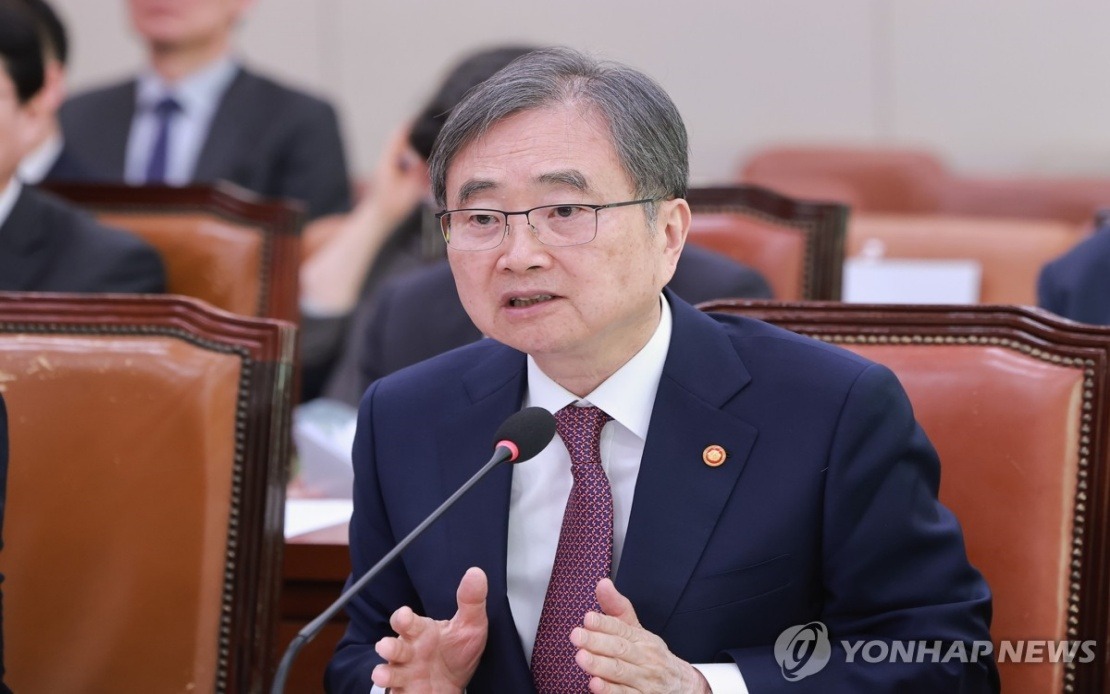
The South Korean government found itself in an unusually awkward diplomatic position when it learned of planned reductions to a crucial joint military exercise not through official channels, but through a social media announcement by US President Donald Trump. Foreign Minister Cho Hyun disclosed to a parliamentary committee on unification and foreign affairs that neither Seoul nor Washington's official representatives had been forewarned of the decision, underscoring a breakdown in the typical diplomatic protocols that usually govern such significant defence matters between allied nations.
Trump's announcement on August 16 instructed the Pentagon to substantially scale down the scale of joint South Korea-US military operations, a move that rippled through defence establishments on both sides of the Pacific. The decision carried substantial strategic implications for a peninsula where security arrangements hinge on coordinated military readiness against potential threats from the North. For Malaysian observers and other regional security watchers, the episode highlighted how even the most established military partnerships can be subject to sudden policy shifts driven by individual leadership preferences rather than institutional consensus.
The practical consequences of Trump's directive became immediately apparent when South Korea's Joint Chiefs of Staff announced that the Ulchi Freedom Shield exercise would be compressed from its originally scheduled ten-day duration spanning August 17-27 down to a five-day window concluding on August 21. This compression represented a significant modification to one of the peninsula's most important defence coordination mechanisms, yet the modification was unveiled to the public before proper diplomatic consultation could occur between allied capitals.
Ulchi Freedom Shield itself represents a cornerstone of South Korea-US military coordination, incorporating diverse operational elements including field manoeuvres across varied terrain, computer-simulated command post exercises designed to test decision-making under pressure, and comprehensive civil defence drills engaging civilian populations. The exercise serves multiple purposes beyond mere military readiness, functioning also as a reassurance mechanism for South Korean citizens regarding the credibility of the alliance's deterrent capability. Reducing its scope therefore carries psychological and strategic dimensions that extend well beyond the military realm into broader questions of alliance credibility.
While Cho acknowledged that Defence Minister Ahn Gyu-back had initiated intensive consultations with the US side following Trump's announcement, he clarified that this post-hoc engagement should not be characterised as a unilateral notification by Washington. Instead, he framed it as evidence of active diplomatic engagement designed to manage the fallout from the surprise announcement. This distinction, though subtle, attempted to preserve the appearance of allied coordination despite the underlying reality that Seoul had been presented with a fait accompli through public announcement rather than confidential diplomatic channels.
The timing of Commander Xavier Brunson's visit to South Korea's defence ministry building on the day following Trump's announcement appeared to serve as damage control, enabling direct military-to-military dialogue aimed at clarifying implementation details and minimising friction between the two defence establishments. Such high-level visits typically occur within the framework of planned consultations, not as emergency responses to unexpected policy announcements, suggesting the unusual nature of this particular engagement.
For regional observers, particularly those in Southeast Asia monitoring great power dynamics and alliance structures, the episode illustrates broader patterns in how the Trump administration approached long-standing security partnerships. The incident underscores the degree to which major geopolitical decisions affecting multiple nations can be subject to immediate reversal or modification based on presidential decision-making without extensive bureaucratic or diplomatic consultation. This unpredictability introduces an element of uncertainty into alliance relationships that have historically derived their strength from institutional consistency and predictable protocols.
South Korea's position as a frontline state in regional security arrangements places it in a uniquely vulnerable position when major allies make sudden defence policy adjustments. Unlike many Southeast Asian nations that can maintain strategic flexibility across multiple partnerships, South Korea's security architecture depends fundamentally on the credibility of the United States commitment to joint operations and coordinated deterrence. Any suggestion that this commitment might be subject to impulsive revision carries profound implications for Seoul's threat assessment and defence planning.
The incident also carries implications for how allied nations might need to recalibrate their expectations regarding advance consultation on defence matters. Traditionally, major military exercise modifications would be negotiated through established channels, allowing both governments to prepare public messaging, adjust force deployment plans, and coordinate political narratives. The social media announcement format bypassed these standard procedures entirely, creating an information vacuum that prompted urgent clarifications from officials scrambling to understand and explain policy shifts to their domestic audiences and international partners.
From a Malaysian and broader Southeast Asian perspective, the episode reinforces the reality that alliance structures and security partnerships, regardless of their apparent permanence or institutional depth, ultimately rest on individual leadership decisions and strategic preferences that can shift with surprising rapidity. Nations throughout the region that maintain defence partnerships with major powers must contend with this underlying volatility, recognising that even the most established agreements remain subject to reinterpretation or modification based on shifting priorities in Washington or other great power capitals.
The compression of the Ulchi Freedom Shield exercise from its planned duration represents a concrete manifestation of this policy shift, with practical consequences for troop deployments, logistical arrangements, and the training objectives that both militaries had presumably prepared to accomplish during the full ten-day window. The five-day condensed version, while maintaining core elements of the exercise, necessarily sacrifices some operational objectives and comprehensive training outcomes that the longer format would have enabled.
Looking forward, the incident raises questions about whether Seoul will seek to institutionalise advance notification requirements for future defence policy modifications, potentially through formal amendments to alliance protocols or mechanisms for enhanced consultation. The episode demonstrates that even in relationships characterised by decades of military integration and strategic alignment, the absence of explicit commitments to advance consultation can create diplomatic friction and undermine the predictability that both nations require for effective defence planning.

