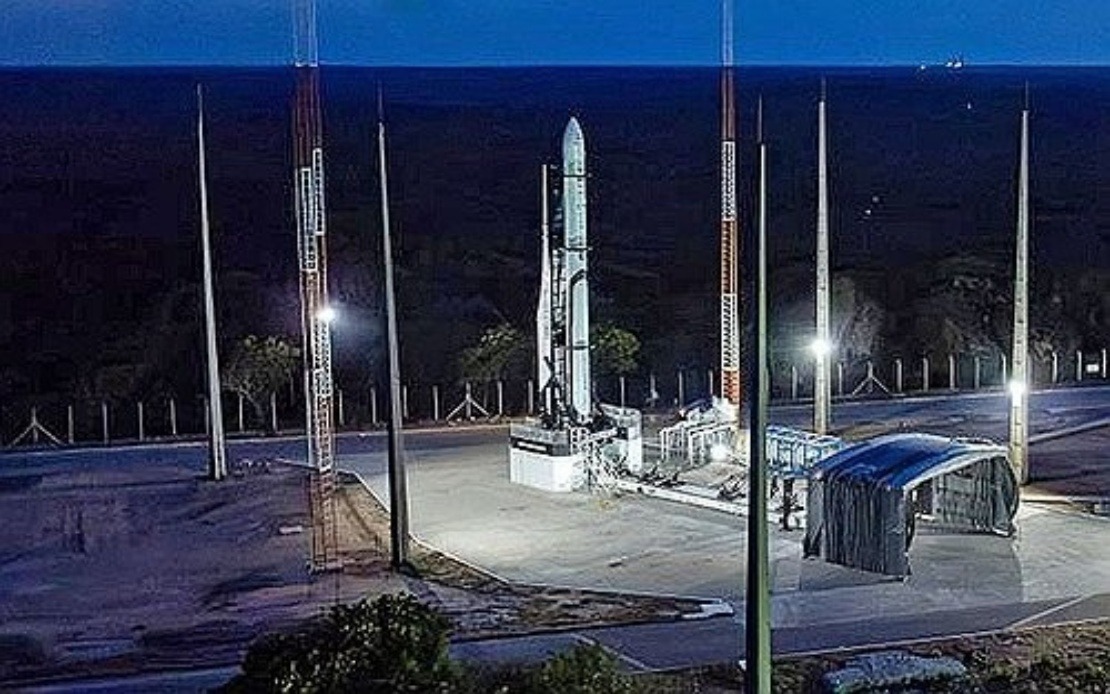
South Korea's defence ministry announced on Tuesday that it was shelving plans to launch the Mir solid-fuel space rocket, citing unspecified safety issues that surfaced during the final stages of launch preparation. The unmanned vehicle, originally scheduled to lift off at 2 pm from a barge positioned off Jeju Island's southern coast, will now be rescheduled for a future date to be determined by officials. The decision underscores the technical challenges inherent in developing advanced aerospace capabilities, even for technologically advanced nations with considerable resources.
The postponed launch represented a significant milestone in South Korea's space ambitions. It was to have been the first operational flight of the Mir platform in its complete four-stage configuration, following a series of test flights conducted throughout 2022 and 2023 that deployed only three-stage variants. Each earlier test had focused on validating specific components and systems in isolation, meaning the full integrated vehicle had never been subjected to an actual launch environment. The decision to delay rather than proceed despite discovered anomalies reflects a cautious engineering philosophy, particularly important when establishing new space infrastructure.
Understanding the strategic rationale behind South Korea's solid-fuel rocket programme reveals the country's geopolitical imperatives. Developed since 2021, the Mir system is designed to insert compact surveillance satellites into sub-500-kilometre low-Earth orbits, enabling persistent monitoring capabilities over the Korean Peninsula and surrounding regions. This indigenous launch capacity addresses a longstanding vulnerability in South Korean national security doctrine—the historical dependence on American intelligence assets for real-time threat assessment of North Korean military activities. Solid-fuel propulsion offers distinct advantages over liquid-fuel alternatives, including simpler mechanical design, multi-year storage capability without performance degradation, and the critical ability to achieve rapid launch readiness when strategic circumstances demand immediate deployment.
The Mir programme operates within a broader context of South Korean military modernisation. Parallel to solid-fuel rocket development, Seoul has successfully conducted five reconnaissance satellite launches aboard SpaceX's Falcon 9 vehicles, with the most recent occurring in November of the previous year. These larger satellites form the backbone of current surveillance capacity. However, the government envisions an integrated constellation approach, planning to deploy up to 60 smaller satellites domestically by 2030 under the Mir initiative. This hybrid strategy combines the persistent coverage advantages of multiple smaller platforms with the high-resolution capabilities of the larger reconnaissance spacecraft, creating redundancy and comprehensive geographic coverage that existing systems cannot achieve alone.
For Southeast Asian observers, South Korea's pursuit of independent space capabilities carries important implications. The region has watched with interest as countries pursue technological self-sufficiency in strategic domains. South Korea's experience demonstrates both the aspiration and the complexity of developing advanced military technologies domestically. The postponement also illustrates that setbacks are routine even in nations with mature space programmes and defence industries. Malaysia and other regional nations considering similar technological pathways should note that such programmes require sustained commitment across multiple test cycles, substantial capital investment, and sophisticated engineering expertise that accumulates only through persistent effort and accumulated experience.
The broader geopolitical context shapes Seoul's space initiatives. North Korea's accelerating missile and nuclear weapons development has compelled the South to seek comprehensive surveillance networks that reduce reliance on allied intelligence sharing. American satellite intelligence has historically provided critical early warning of threatening activities, but strategic doctrine increasingly emphasizes reducing dependencies that could create vulnerabilities during crises. A fully domesticated reconnaissance architecture, supported by indigenous launch vehicles, offers psychological and operational independence that shapes how leaders perceive their strategic options. This motivation drives investment decisions even when technical challenges impose delays and costs.
Solid-fuel rocket technology occupies a distinctive position in global space industry development. The simpler engineering compared to liquid-fuel systems makes it technically more accessible for developing nations, yet achieving reliable performance remains demanding. South Korea's experience with the Mir programme will inform approaches taken by other countries considering similar developmental pathways. The transparency with which Seoul has disclosed both progress and setbacks provides valuable lessons for the broader international space community. Southeast Asian nations tracking these developments gain empirical data about the true costs and timelines involved in establishing indigenous launch capabilities.
The technical issues detected during final preparations remain unspecified in official disclosures, which is customary for military space programmes. However, the decision to pause rather than launch suggests the discovered anomalies were substantial enough to warrant additional analysis and correction. This conservative approach contrasts with commercial space industry culture, where rapid iteration and learning from failures characterise development philosophy. Military space applications, involving national security implications and potential weapons system integration, naturally impose higher safety and reliability standards before operational deployment.
Looking forward, South Korea's postponement of the Mir launch illustrates the persistent challenges of space technology development. The revised launch timeline remains undisclosed, reflecting the uncertainty inherent in resolving technical issues of unknown magnitude. Successfully conducting the full four-stage vehicle test will validate the integrated system and mark a decisive step toward realising the broader constellation objective. For regional observers, the programme's trajectory—combining setbacks with ultimate technical achievement—offers instructive precedent about the realistic pathway toward space sovereignty in an era when such capabilities increasingly define strategic autonomy.

