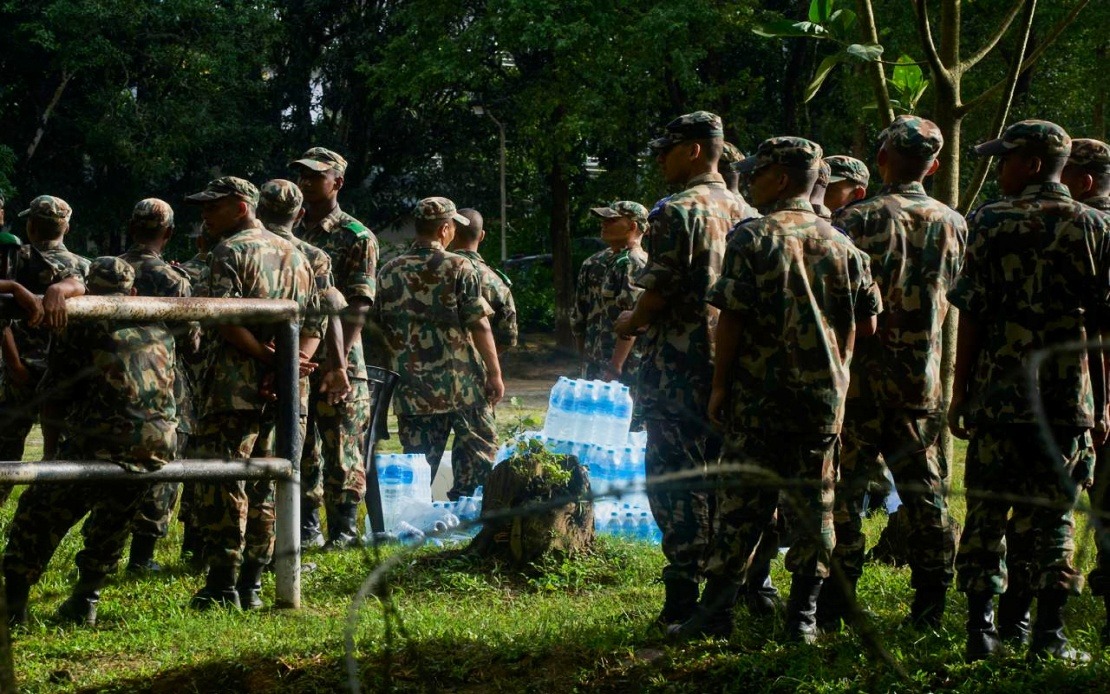
The South Korean government has mobilised a dedicated rescue operation in Nepal after nine of its citizens disappeared during catastrophic flooding that swept through the Himalayan nation's north-central region. An 11-member emergency response team comprising Foreign Ministry officials alongside police and fire authorities left Seoul on Thursday, expected to arrive in Kathmandu by evening to coordinate search efforts with local authorities and international partners engaged in the unfolding humanitarian crisis.
The missing Koreans comprise six employees from Doosan Enerbility Co., an industrial plant construction firm, and three staff members from Korea South-East Power Co., a state-controlled power generation entity. All nine were stationed at a hydropower plant construction site in Rasuwa district when a massive flash flood combined with destructive mudslides devastated the area on Wednesday, cutting off access routes and overwhelming rescue capabilities. The disaster struck with little warning, catching workers and equipment across multiple international projects in the region.
Beyond the nine missing personnel, the situation remains precarious for other Korean nationals in the vicinity. Ten additional Doosan employees who became trapped following the flooding have been confirmed alive but remain awaiting evacuation from the affected zone. These workers were among approximately 200 foreign nationals engaged in the construction effort who managed to evacuate to safer ground, though the process has been complicated by destroyed infrastructure and ongoing dangerous conditions throughout the mountainous terrain.
The scale of the disaster extends well beyond the Korean contingent. Official reports indicate the flooding and mudslides have claimed at least 160 lives across the broader affected region, with a further 403 people classified as missing. Of those unaccounted for, 341 are foreign nationals from various countries, highlighting how the disaster has impacted international teams working simultaneously across multiple projects in one of Asia's most challenging geographic environments.
The Upper Trishuli-1 hydropower plant, where the missing Koreans were stationed, sits approximately 70 kilometres northwest of Kathmandu on the Trishuli River and represents a significant bilateral infrastructure investment. The 216-megawatt facility, jointly developed by the two Korean companies, commenced construction in January 2022 with anticipated completion by year-end 2024. However, industry analysts predict the catastrophic flooding will impose substantial delays on the project timeline, disrupting schedules and requiring comprehensive reassessment of site conditions and reconstruction approaches.
The response from Seoul's political leadership underscores the gravity officials attach to the situation. President Lee Jae Myung has issued direct orders to government ministries to mobilise all available resources toward locating and rescuing the missing nationals, reflecting both diplomatic protocol and genuine concern for citizen welfare abroad. Foreign Minister Cho Hyun announced intentions to engage directly with Nepal's foreign ministry to secure cooperation and facilitate rapid access for the Korean rescue team to affected areas.
Beyond government deployment, the two Korean companies themselves have activated their own emergency response infrastructure. Doosan Enerbility and Korea South-East Power Co. have established parallel emergency coordination teams and plan to dispatch specialized field response units to the construction site. This dual-track approach—combining official diplomatic rescue efforts with corporate resources—aims to maximise effectiveness given the remote location and infrastructure damage complicating conventional rescue operations in mountainous terrain.
For Malaysian and Southeast Asian readers, this incident carries particular significance given the region's expanding hydropower development agenda. Nepal, like Malaysia, Indonesia, and other regional nations, has increasingly pursued large-scale hydroelectric projects to meet rising energy demands whilst transitioning toward renewable sources. However, this disaster vividly illustrates the environmental hazards inherent in constructing major infrastructure in monsoon-affected and seismically active mountain zones, where sudden weather patterns can trigger catastrophic cascading failures affecting workers and equipment across wide areas.
The presence of substantial South Korean investment in Nepali hydropower infrastructure also reflects broader patterns of international capital flowing into Southeast Asian energy development. Korean firms have established themselves as significant players across the region's construction and power generation sectors, meaning incidents affecting Korean workers and projects inevitably attract political attention from Seoul. This incident will likely prompt discussions among Korean companies and government agencies about strengthening safety protocols and emergency preparedness for personnel stationed at remote international construction sites across Asia.
The disaster simultaneously highlights the vulnerabilities facing foreign workforces positioned at frontier development projects throughout the Himalayan and broader Asian region. Construction at high-altitude hydropower sites combines inherent geographic risks with logistical challenges that complicate rescue operations. Future incidents will likely prompt Korean authorities and companies to reassess site selection criteria, invest in enhanced early-warning systems, and improve emergency evacuation infrastructure to protect personnel deployed to similarly challenging environments across South and Southeast Asia.

