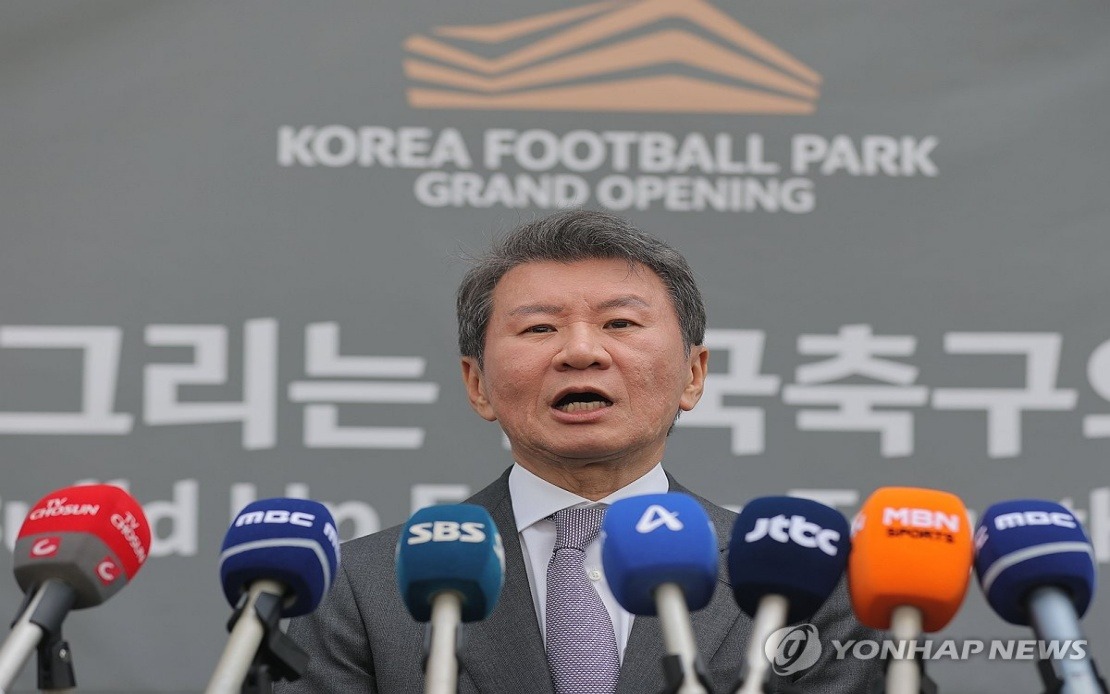
Korea Football Association president Chung Mong-gyu formally stepped down from his position on Monday, submitting his resignation letter at the KFA's headquarters in Cheonan, located approximately 90 kilometres south of Seoul. The departure came two weeks earlier than his previously announced timeline, accelerating his exit in response to the national team's disappointing performance at the World Cup.
Chung had initially indicated in late May that he would relinquish the presidency once the World Cup concluded on July 20. However, the early elimination of South Korea from the tournament's group stage prompted him to accelerate his departure. The national squad, managed by Hong Myung-bo, accumulated only three points from their group matches, securing a third-place finish in Group A with one victory and two defeats, which proved insufficient to advance among the tournament's eight best third-place finishers. Hong subsequently resigned immediately upon confirmation that his team's participation had ended.
The departure represents the culmination of sustained criticism directed at Chung's stewardship of Korean football, particularly regarding the appointment of Hong as national team coach in July 2024. Critics highlighted what they characterised as a non-transparent selection process that lacked adequate oversight. The Ministry of Culture, Sports and Tourism launched an extensive examination of KFA operations during that period, ultimately concluding that Chung and other senior administrators warranted disciplinary action for multiple procedural breaches and governance irregularities. The KFA subsequently became embroiled in legal disputes with the ministry, which indicated intentions to conduct additional audits prompted by the World Cup failure.
Under existing KFA protocol, one of the organisation's four vice presidents will assume interim leadership pending a formal election process. The timeline for selecting a successor depends on how much of Chung's term remained incomplete. Since Chung had nearly three years left on his fourth term as chief, KFA regulations mandate that a replacement must be elected within 60 days of his departure. The election will involve members of an electoral college comprising heads of regional football associations, chief executives of K League clubs, active players, coaching staff, and match officials. Last year's presidential election saw participation from 183 of 192 eligible voters.
However, significant questions linger regarding the future election framework itself. Culture Minister Chae Hwi-young recently signalled dissatisfaction with the existing electoral system, suggesting that the government intends to push for institutional reform. He remarked that if the KFA genuinely understood "the desperate wishes of the people feeling dejected" by the World Cup outcome, the organisation would need to reconsider its current election procedures. This implicit criticism suggests potential government intervention in how the KFA selects its leadership.
These governance concerns have prompted the Korean Sport and Olympic Committee, which serves as the nation's apex sports authority, to schedule a general meeting for July 16 to review electoral frameworks across its member organisations. Officials indicated that discussions will examine extending the standard 60-day election window and potentially implementing a direct election system that would involve broader participation beyond the current electoral college model. Such changes would represent a significant shift in how Korean football leadership is determined and could serve as a template for other national sports bodies.
In his formal statement, Chung acknowledged the mixed nature of his tenure, expressing gratitude to football supporters while apologising for moments when he failed to meet expectations. He emphasised that his primary objective as KFA president involved advancing Korean football's development and international standing. He attributed organisational successes to the contributions of players and supporters, while accepting personal responsibility for administrative shortcomings. Chung maintained that he would continue following Korean football as a devoted fan and expressed confidence that the sport would recover from its present difficulties and eventually attain renewed heights.
For Malaysian and Southeast Asian observers, Chung's resignation underscores the broader tensions confronting sports administrators across the region. The intersection of government oversight, public accountability, and sporting performance has become increasingly fraught in recent years. The South Korean experience demonstrates how World Cup disappointments can trigger comprehensive institutional reviews and demand leadership changes that extend beyond the playing field. The governance concerns that dogged Chung's final months reflect evolving expectations regarding transparency in coach selection and administrative operations within national sports bodies.
The situation also highlights the precarious political positioning of sports federation leaders. Unlike professional club administrators, heads of national sporting organisations operate at the intersection of government interests, athlete welfare, public expectations, and international sporting obligations. When performance falters, particularly at marquee events like the World Cup, these leaders often face scrutiny that encompasses both on-pitch results and off-field governance practices. The convergence of poor sporting outcomes with pre-existing questions about administrative procedures created an unsustainable position for Chung.
Looking forward, South Korea's football community faces the dual challenge of identifying successor leadership while potentially restructuring its electoral and governance frameworks. The proposed reforms to the election process could either strengthen institutional legitimacy or generate new controversies if stakeholders perceive them as excessive government interference in sporting autonomy. Other national football associations across Southeast Asia may observe these developments closely, as similar tensions between administrative transparency, sporting performance, and government involvement characterise football governance throughout the region.

