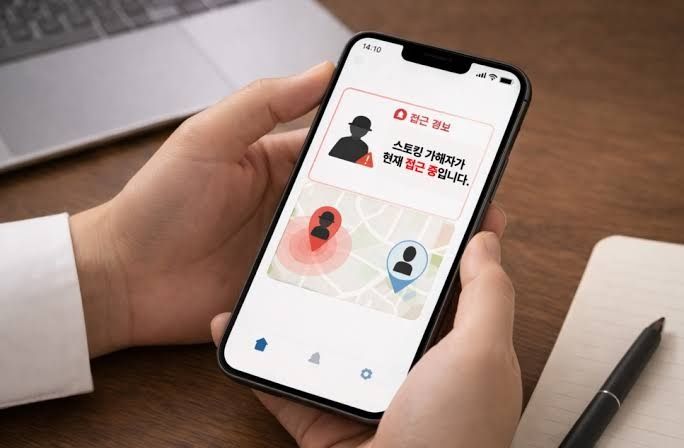
South Korea introduced a groundbreaking mobile alert system on June 24 designed to strengthen protections for individuals targeted by stalkers through live location tracking of monitored suspects. The Ministry of Justice developed and operates the application, which fundamentally transforms how victims can respond to potential threats by granting them immediate visibility into a suspected stalker's whereabouts and direction of travel. This technological intervention marks a significant shift in the country's approach to intimate partner violence and harassment crimes, moving from reactive emergency systems toward proactive surveillance tools that empower victims with real-time intelligence.
The timing of this launch reflects mounting public concern regarding the adequacy of South Korea's existing anti-stalking infrastructure. Despite previous safety measures being in place, the government acknowledged that current protections had proven insufficient to prevent serious harm in numerous documented cases. The new application builds upon electronic monitoring technology that was only recently mandated in 2024 for high-risk stalking situations determined by courts to require enhanced supervision of offenders. Prior to that, victims had access to smartwatch-style emergency alert devices that allowed them to trigger alarms and alert authorities, yet these passive systems were unable to prevent determined perpetrators from locating and attacking their targets.
The sobering statistics underlying this policy decision reveal the scale of the problem facing South Korea. Between 2021 and August 2025, at least 23 stalking victims were either murdered or survived attempted murder despite having been issued the emergency alert devices mentioned above. This tragic record indicates that reactive notification systems, no matter how sophisticated, cannot fully protect against motivated attackers. Representative Lee Gwang-hee of the ruling Democratic Party of Korea brought these numbers to public attention, highlighting the urgent need for more proactive intervention strategies. The deaths and attacks occurred across diverse circumstances and perpetrator profiles, suggesting the problem transcends simple categorization and demands multi-layered solutions.
Implementing a system that broadcasts suspect location data raises significant privacy and constitutional concerns that South Korea's government has taken seriously. The Ministry of Justice responded to these legitimate worries by revising the regulatory framework governing electronic monitoring in December 2025, establishing guardrails intended to prevent abuse or misuse of the location information. These revisions likely include restrictions on data access, penalties for unauthorized sharing, court oversight mechanisms, and limitations on how long location history is retained. Such protections are essential for maintaining public trust and ensuring the system targets only individuals judicially determined to pose stalking risks rather than becoming a tool for mass surveillance or discriminatory tracking.
The broader context of South Korea's stalking problem reflects challenges common across East Asia and beyond, where rapid urbanization, social media proliferation, and changing relationship dynamics have created new vulnerabilities. South Korea has experienced well-publicized cases of femicide linked to jealous ex-partners and obsessive fans, generating intense media coverage and public pressure on lawmakers. The country's relatively advanced digital infrastructure and tech-savvy population made it a logical candidate for pioneering mobile-based victim protection systems. However, the nation's experience also demonstrates that technology alone cannot resolve these crimes; adequate police training, court capacity, social awareness, and cultural attitudes toward gender-based violence remain equally critical components of any comprehensive anti-stalking strategy.
The electronic monitoring program that underpins this new application represents a comparatively recent development in South Korean criminal justice. Prior to 2024, electronic ankle monitors were not systematically used in stalking cases, despite their proven effectiveness in monitoring other categories of offenders. The judicial discretion to impose electronic monitoring in high-risk situations emerged from accumulated evidence that certain perpetrators require continuous supervision to prevent reoffending. Courts now weigh factors including the severity of prior violations, the victim's level of fear, the suspect's fixation patterns, and access to weapons when determining whether electronic monitoring is warranted. This graduated response allows authorities to concentrate resources on the most dangerous cases while avoiding blanket monitoring that could overwhelm law enforcement capabilities.
The planned expansion of victim rights in April 2027 will further reshape South Korea's institutional response to stalking. Under the new system, victims would gain standing to directly petition courts for restraining orders without requiring law enforcement intermediaries. This change addresses a critical bottleneck in the current system where victims depend on police willingness and capacity to file requests on their behalf. Some victims report experiencing delays, dismissals, or inadequate advocacy when police agencies fail to prioritize their cases. Direct petition mechanisms exist in many Western jurisdictions and have proven effective at accelerating protective orders and reducing repeat victimization. By eliminating this intermediary requirement, South Korea acknowledges that victims are the ultimate experts on their own safety needs and should have agency in pursuing court remedies.
For Malaysian readers, South Korea's evolving approach offers instructive lessons about victim-centered policy design and the limitations of pure technology solutions to intimate violence problems. Malaysia's own Digital Personal Data Protection Act 2010 and ongoing discussions about privacy protections suggest similar tensions between surveillance capabilities and civil liberties that South Korea navigated. The Malaysian legal system lacks comprehensive electronic monitoring provisions in stalking cases, and victims currently rely on police restraining orders and emergency alert systems comparable to South Korea's earlier safeguards. The South Korean experience indicates that expanding victim autonomy through direct court access mechanisms, combined with careful regulation of suspect location data sharing, represents an evidence-based pathway forward.
Implementing the new mobile alert system will require significant coordination across multiple government agencies and continued refinement based on user feedback. The Ministry of Justice must ensure the application functions reliably on diverse smartphone platforms, handles edge cases in urban and rural environments, and provides intuitive user interfaces accessible to people of varying technical literacy. Training for police, court personnel, and victim support workers will be essential to explain the system's capabilities and appropriate use cases. Public awareness campaigns must reach potential victims while managing expectations about what the system can and cannot accomplish. South Korea's government appears committed to treating the real-time location tracking application as the foundation for a broader ecosystem of victim protection tools rather than as a standalone solution.

