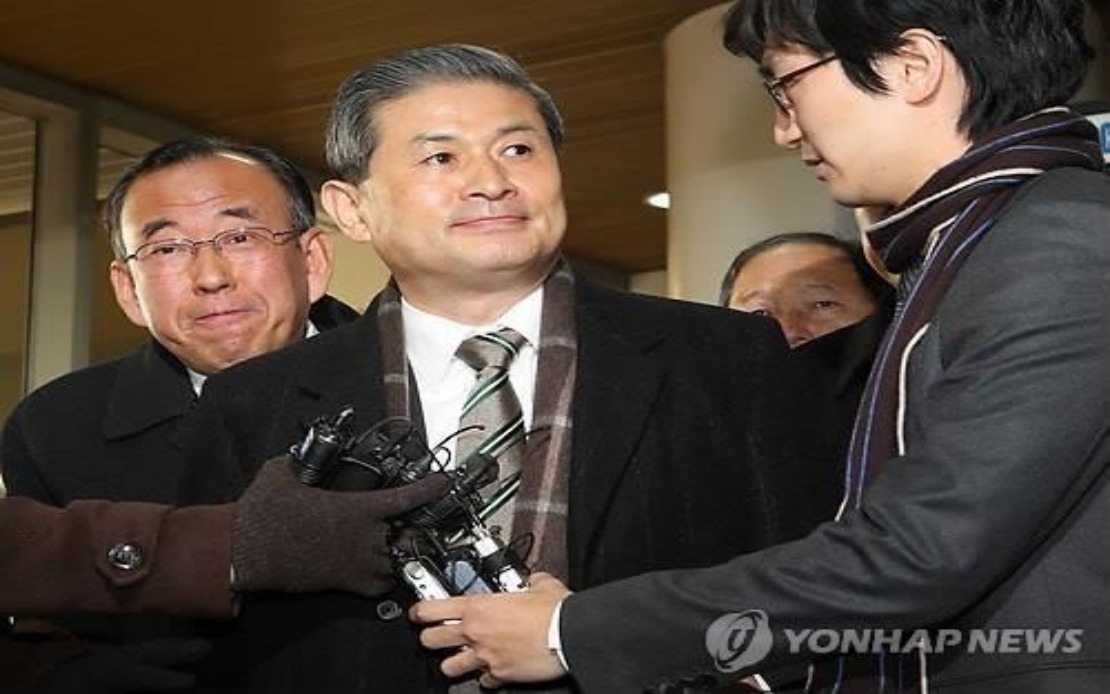
South Korea has taken the final step in withdrawing its most prestigious science and technology honour from Hwang Woo-suk, the disgraced stem cell researcher whose career collapsed following the discovery of fabricated data in his landmark 2005 paper. The government formally revoked the Top Science and Technology Award on Wednesday following presidential approval granted the previous day, bringing to a close a lengthy institutional reckoning with one of the nation's most significant scientific frauds in recent history.
Hwang received the presidential honour in 2004, along with a monetary prize valued at 300 million won (approximately US$201,200), in formal recognition of his purported advances in human embryonic stem cell research. At that time, his work was celebrated domestically and internationally as a major breakthrough in biotechnology. The award represents one of South Korea's most esteemed recognition for scientists and technologists whose accomplishments have substantially advanced the nation's scientific and technological standing on the global stage.
The unravelling of Hwang's fraudulent work became apparent within months of the award's presentation. In 2005, investigators discovered that the scientific paper on which his international reputation had been built contained extensively forged data. Most critically, the celebrated claim of having created the world's first cloned human embryo proved to be entirely fabricated. This revelation sent shockwaves through South Korea's scientific community and dealt a significant blow to the nation's international scientific credibility during a period when the country was positioning itself as a biotechnology powerhouse.
The consequences for Hwang himself were severe and swift. Seoul National University dismissed him from his professorship in 2006, formally ending his academic career in South Korea. Beyond institutional punishment, Hwang faced legal jeopardy as authorities investigated the full scope of his scientific misconduct. The swift institutional response reflected the gravity of the fraud, which had not only deceived the global scientific community but had also misled South Korean policymakers and the public about genuine scientific achievements.
The path to this week's final revocation has itself been complicated by bureaucratic and legal complexities. The government had previously moved to revoke the award in 2020, nearly 16 years after the initial fraud was exposed. However, a court subsequently ruled that the 2020 revocation procedure was procedurally defective and therefore invalid. This decision forced the government to undertake the revocation process anew to ensure legal soundness and prevent any possibility of future challenge.
The Science Ministry formally requested the Interior Ministry in March of this year to revoke the award, initiating the current round of administrative proceedings. The Interior Ministry then sought and obtained presidential approval on Tuesday for the revocation, completing the formal governmental steps necessary for the award to be stripped permanently from Hwang's name and record. This layered approval process underscores the significance of such decisions in South Korea's governmental structure, where the highest honours require corresponding levels of formal authorization to rescind.
For Malaysian and Southeast Asian observers, the Hwang case carries important implications regarding scientific integrity and institutional accountability in the region. As Southeast Asian nations increasingly invest in biotechnology and stem cell research to position themselves as regional innovation hubs, the Hwang case serves as a cautionary reminder of the catastrophic consequences of scientific fraud at the highest levels. South Korea's determined pursuit of rectifying its institutional error, despite procedural complications, demonstrates a commitment to maintaining the integrity of its scientific recognition systems.
The prolonged timeline between initial fraud discovery (2005) and final award revocation (2024) also highlights how scientific misconduct can create lingering institutional complications. For research-focused institutions and governments across Southeast Asia, this suggests the importance of establishing clear, legally robust procedures for addressing scientific fraud from the outset, rather than dealing with procedural defects years later. The lesson applies equally to universities, research councils, and funding agencies throughout the region.
Hwang's trajectory from celebrated scientist to cautionary tale reflects broader questions about scientific oversight, peer review processes, and institutional credibility. His case contributed to global discussions about the vulnerabilities in scientific publication systems and the mechanisms by which fraudulent research can gain traction even among experienced scientists. The international scientific community subsequently implemented stricter protocols for verifying claims in high-impact publications, particularly in fields such as stem cell research where stakes and potential applications are substantial.
The formal revocation this week provides South Korea with a clear institutional closure on a chapter that had overshadowed its scientific reputation for nearly two decades. By ensuring the revocation procedure was legally unassailable following the earlier court challenge, the government has prevented any possibility of the award being reinstated through future legal technicalities. This thoroughness reflects an understanding that the credibility of national science awards depends on the finality and integrity of the revocation process itself.
For South Korea's international standing as a scientific nation, putting this matter definitively to rest through proper legal channels allows the country to move forward with its current biotechnology initiatives without the persistent shadow of unresolved institutional failure. The nation has since developed genuine strengths in stem cell research and regenerative medicine through legitimate research programmes at institutions including Seoul National University itself, demonstrating that institutional rehabilitation is possible when proper corrective measures are implemented systematically.

