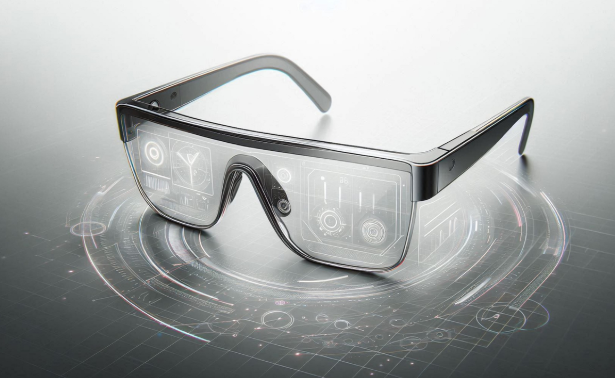
South Korean authorities have taken their opening legal stand against a novel form of examination fraud, indicting a man in his 40s for deploying artificial intelligence-enabled glasses during a national qualification exam—a watershed moment that underscores how rapidly emerging technologies are outpacing traditional safeguards in academic testing. The Gwangju District Prosecutors' Office filed charges against the individual last month under provisions of the National Technical Qualification Act, making this the first formal prosecution of its kind in the country and signalling a harder line against technologically-sophisticated cheating methods.
The defendant was apprehended in May while attempting the fire protection facilities engineer certification examination in Gwangju. What initially aroused suspicion was deceptively simple: an exam monitor noticed unusual light reflection bouncing off the lenses of his eyewear, a telltale sign that prompted closer examination. This tactile observation—the kind of vigilance that traditional invigilation protocols rely upon—proved crucial in unmasking a scheme that might otherwise have evaded detection through purely technological countermeasures.
During police questioning, the suspect acknowledged his involvement in the fraudulent attempt. His stated motivation, however, suggested a troubling blend of technical experimentation and deliberate misconduct. The man claimed he had personally engineered an artificial intelligence application specifically configured to work in tandem with the glasses, and that his primary intention was to verify whether the system could accurately display correct answers during the examination. This rationale—testing functionality rather than outright academic gain—raises complex questions about intent, though prosecutors clearly viewed the conduct as unambiguous violation regardless of underlying motive.
Yet this case represents merely the visible surface of a broader problem. Two additional men in their 20s were detained after employing identical technology at separate national technical qualification examination venues in Seoul and Mokpo during the same month. The geographic spread and near-simultaneous emergence of similar tactics suggest either rapid information sharing among potential cheaters or, more troublingly, the commercial availability of ready-made systems designed specifically for this purpose. These parallel incidents indicate that AI glasses fraud is not an isolated incident but part of an emerging pattern requiring systematic institutional response.
The phenomenon extends beyond technical qualification exams. South Korean authorities have documented multiple cases involving the same technology in TOEIC examinations, international standardized tests widely taken by professionals and students seeking to enhance career prospects. Two individuals were caught deploying AI glasses during TOEIC testing in May, followed by another caught in June. The penetration of this cheating method into English proficiency testing—arguably more consequential for career mobility in an increasingly globalized economy—underscores the scope of the challenge facing examination administrators.
The rapid escalation prompted what amounts to a crisis response from the ecosystem of organizations responsible for administering South Korea's major national qualification programmes. On July 10, just weeks after the initial prosecutions became public, officials convened an emergency meeting to devise protective strategies. This gathering brought together representatives from multiple agencies tasked with overseeing different certification and qualification systems, reflecting the recognition that no single organization could address the problem independently.
The discussions produced two principal lines of attack. First, administrators proposed explicit codification of AI glasses and related emerging technologies within existing lists of prohibited examination materials. Currently, most exam room protocols specify banned items such as mobile phones, smartwatches, and conventional electronic devices. The proposed amendment would ensure that newer technologies cannot exploit definitional gaps or ambiguity about what constitutes permissible eyewear. Second, and potentially more significant, officials debated substantially escalating penalties imposed on individuals caught cheating. The rationale underlying this approach is straightforward: if existing sanctions proved insufficient deterrent against fraudulent behaviour, increasing their severity might reshape the cost-benefit calculation motivating potential offenders.
For Malaysian and regional observers, the South Korean experience carries important cautionary implications. Southeast Asia's rapid economic growth and competitive job markets have intensified demand for professional qualifications and certifications. In Malaysia, Singapore, and throughout the region, standardized examinations—from professional engineering credentials to international language proficiency tests—represent critical gateways to employment advancement and mobility. As AI technology becomes cheaper, more sophisticated, and increasingly accessible, the methods that emerged in South Korea will inevitably migrate regionally.
The challenge facing examination authorities is fundamentally one of technological arms race dynamics. Traditional invigilation—human supervisors observing test-takers—relies on behavioral cues and visible anomalies. AI glasses, by design, aim to minimize such detection vectors. They are innocuous in appearance, plausible as legitimate eyewear, and leave no obvious traces of their operational function. This poses particular difficulties in large-scale examination settings where supervisory ratios are already stretched and individual scrutiny necessarily limited.
Moreover, the motivational landscape differs significantly from older cheating methods. The individuals caught in South Korea appear less driven by desperation than by either technical curiosity or calculated assessment that detection risk was manageable. This psychology may prove more difficult to deter through sanctions alone, particularly if cheating via AI glasses becomes normalized within certain peer networks or professional communities.
The South Korean prosecution therefore represents both a necessary institutional response and an acknowledgment of systemic vulnerability. As examination authorities across the region evaluate their own preparedness, they must grapple with questions transcending mere regulatory updates. How rapidly can formal rules adapt to technological change? What role should technological countermeasures—biometric verification, shielded examination spaces, or AI detection systems themselves—play relative to rule-based approaches? And critically, what constitutes proportionate punishment for a conduct category that may quickly multiply beyond prosecutorial and judicial capacity?
For now, South Korea has signalled its intention to prosecute and penalize offenders aggressively. Whether this approach succeeds in deterring widespread adoption of AI glasses for examination fraud, or merely accelerates technological adaptation by prospective cheaters, remains to be seen. The coming months will likely prove instructive for examination authorities throughout Asia as they prepare defenses against a form of academic misconduct that technology has now made disturbingly practical.

