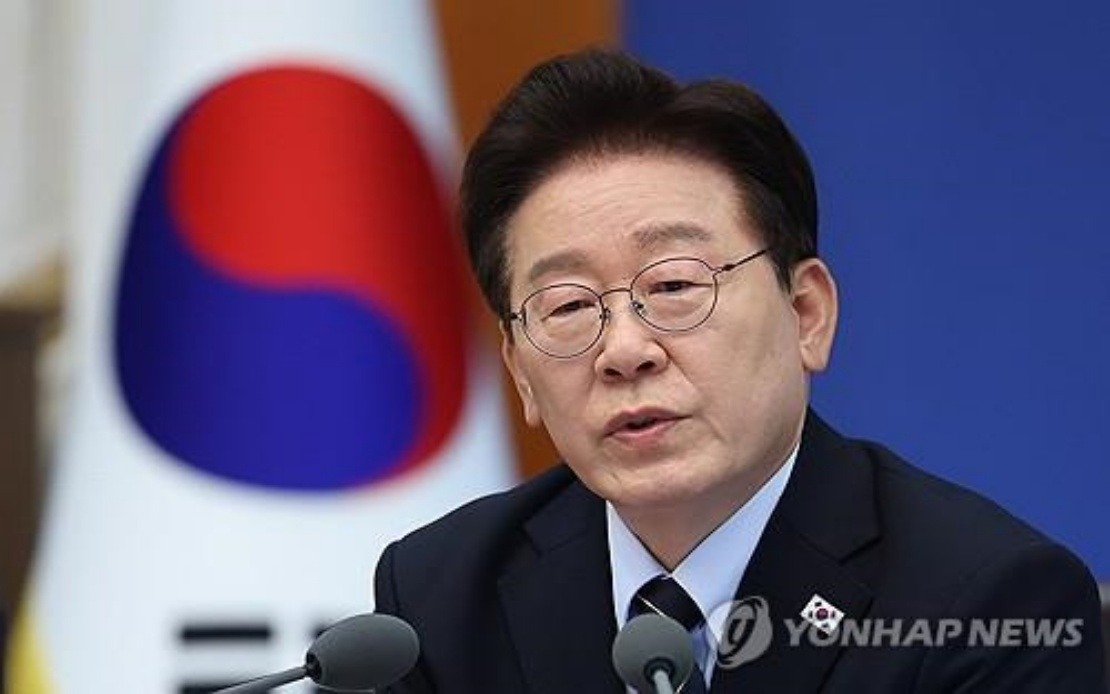
South Korea is charting a new course for its military structure, with President Lee Jae Myung directing senior officials to accelerate defence reforms that pivot away from traditional manpower-intensive models towards a leaner, technology-centric force. The initiative represents a fundamental rethinking of how the nation sustains its security posture amid one of the world's most pressing demographic crises—a persistently collapsing birth rate that threatens the viability of current military staffing arrangements.
At a high-level meeting at Cheong Wa Dae, Lee articulated the rationale behind the overhaul with remarkable clarity. South Korea cannot indefinitely maintain a military infrastructure built on mass conscription and infantry-heavy deployment when the population of young men eligible for service continues to shrink. The president characterised the existing system as fundamentally "inefficient," implying that throwing greater numbers of personnel at defence challenges no longer represents sound strategy or resource allocation. This acknowledgement reflects a growing acceptance among policymakers that quantitative approaches to military readiness must give way to qualitative excellence underpinned by cutting-edge technology.
The proposal for selective conscription represents the most significant departure from South Korea's post-war security model. Since the Korean War armistice, the nation has maintained universal male conscription, requiring all able-bodied men to serve a minimum of 18 months, with some receiving exemptions or being directed towards alternative civilian service. Moving to a selective system would allow the military to choose recruits based on aptitude, specialisation requirements, and technological proficiency rather than demographic accident. This shift mirrors approaches taken by several developed democracies that have either abolished conscription entirely or maintained it in highly selective form, concentrating military personnel in specialised roles where training intensity and technical knowledge are paramount.
Crucially, Lee framed the reform not merely as a military efficiency question but as a social contract issue affecting millions of Korean youth. The government recognises that mandatory service imposes substantial opportunity costs on young men, interrupting their education and career trajectories during formative years. By emphasising that defence reforms must "redesign the system so that youth can plan a better life," the president tacitly acknowledged public frustration with conscription as a brake on personal advancement. This rhetorical shift is significant: rather than presenting military service as an unquestionable national duty to be endured, the government is attempting to reframe it as an opportunity compatible with individual aspirations.
To make selective conscription politically and socially viable, Seoul plans to link military service directly to tangible personal benefits. The government intends to ensure that conscription experiences translate into employment prospects, educational advancement, and wealth-building opportunities. Lee characterised this as a "big responsibility," reflecting awareness that Korea's youth increasingly view military service with ambivalence, particularly when comparing their compulsory service obligations against opportunities available to peers in countries without conscription. By guaranteeing that service leads to job placement assistance, skills training, and financial stability, the government hopes to transform conscription from a lost opportunity into a platform for advancement.
The technology-first approach represents perhaps the most transformative element of the proposed reforms. Rather than maintaining large standing forces of conscripts receiving basic training, South Korea would concentrate resources on developing autonomous systems, advanced surveillance capabilities, artificial intelligence integration, and precision-guided weaponry. For a nation facing a far larger neighbour with substantial ground forces, this technological edge offers potential force multiplication—allowing a smaller, better-trained, more specialised military to maintain deterrence through qualitative superiority. The approach also aligns with broader global trends in defence modernisation, particularly among wealthy democracies seeking to sustain military capability whilst reducing personnel dependence.
These defence proposals emerged alongside Lee's presentation of housing policy initiatives, reflecting the interconnected nature of contemporary governance challenges. Both conscription reform and housing supply shortages touch upon demographic and quality-of-life issues confronting Korean society. The government's plan to supply more than 230,000 additional homes in the Seoul metropolitan area through accelerated public land development and greenbelts conversion seeks to address young adults' concerns about housing affordability and ownership prospects. When considered together, the defence and housing initiatives represent coordinated attempts to improve conditions for the generation whose military service and residential aspirations shape their life satisfaction and economic mobility.
Regionally, South Korea's military modernisation strategy holds implications for security dynamics across Northeast Asia and the broader Indo-Pacific. The pivot towards technology-intensive defence echoes similar moves by Japan, Australia, and other regional powers seeking to maintain security postures without proportional increases in military personnel. It also reflects broader anxieties about sustaining military readiness in an era of demographic decline affecting East Asia. Malaysia and other Southeast Asian nations watching these developments may consider how South Korea's approach to selective conscription and technological military enhancement might inform their own defence planning, particularly as regional militaries modernise and adapt to evolving security environments.
Implementing selective conscription faces substantial domestic political hurdles. Conservative constituencies have traditionally viewed universal conscription as sacrosanct, equating it with national security and social cohesion. Young men exempted from service under a selective system could face social stigma, creating resentment. Gender equality advocates have long argued that universal male-only conscription represents an archaic form of gender discrimination, and selective service could intensify those debates. The government must navigate these competing pressures whilst maintaining public confidence in military capability during a period of heightened tensions on the Korean Peninsula.
The timeline for implementing these reforms remains unclear, though Lee's instruction to "swiftly pursue" them suggests urgency. The government recognises that demographic trends are inexorable—the eligible military-age population continues declining, making delay increasingly costly. Legislative action will likely be required to modify conscription statutes, and parliamentary debate could prove contentious. Successful implementation would require sustained political commitment beyond the current administration, making education of opposition parties and civil society essential.
Fundamentally, South Korea's defence reform initiative reflects a mature assessment of what military security means in a technologically advanced, demographically challenged society. Rather than clinging to conscription structures inherited from the Cold War, Seoul is attempting to build a force aligned with 21st-century technological realities and population constraints. Whether this transition succeeds will depend partly on execution—translating military service into genuine opportunities for youth—and partly on whether the technology-intensive approach can maintain deterrence against potential adversaries who may pursue different strategic paths.

