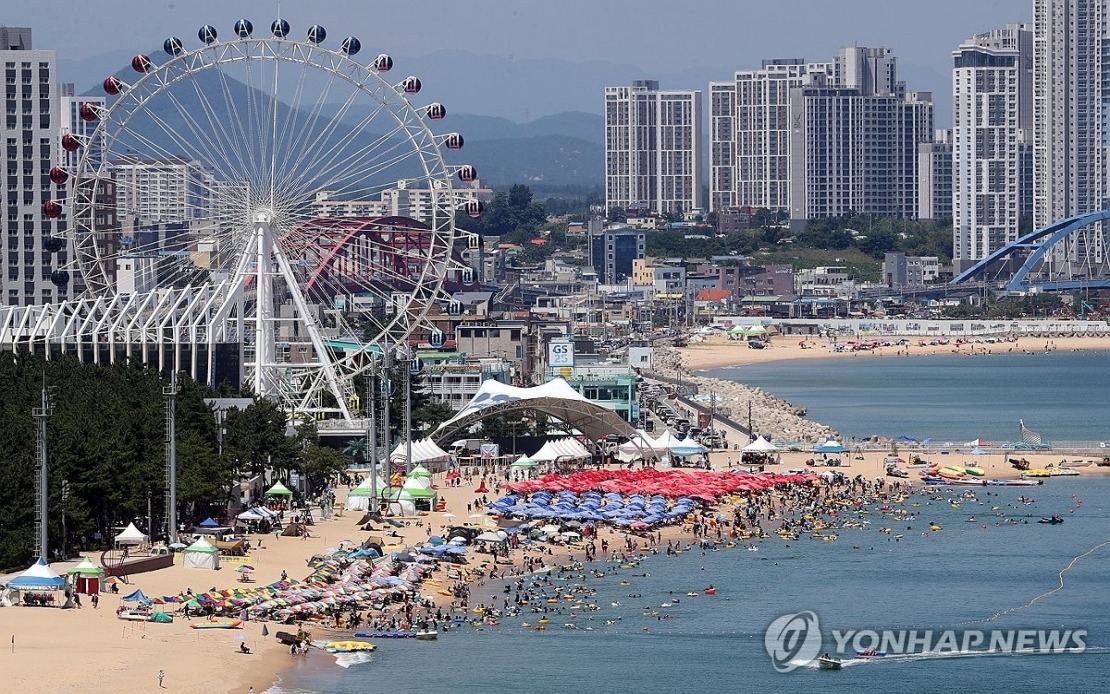
South Korea is grappling with a dangerous and historic heat wave that has pushed temperatures to unprecedented levels across the country's southeastern regions. On Sunday, the city of Yangsan, located roughly 310 kilometres from the capital Seoul, recorded a sweltering 42.5 degrees Celsius—a milestone that shatters all previous temperature records kept since modern meteorological observations commenced on the Korean Peninsula in 1904. The Korea Meteorological Administration documented this extraordinary peak at 1:26 p.m., just ten minutes after the mercury had already climbed to 42 degrees at 1:16 p.m., underscoring the rapid and relentless nature of the heat surge.
The intensity of this heat wave has created a worrying pattern across the region, with temperatures consistently exceeding 40 degrees Celsius for the fifth consecutive day in Yangsan alone. What makes this phenomenon particularly alarming is the timing of when peak temperatures are being reached each day—they are occurring progressively earlier as atmospheric heat continues to accumulate in the region. This trend has prompted meteorologists and climate experts to warn that temperatures could potentially breach the 43-degree threshold in the coming days if conditions persist. The cumulative nature of such extreme heat poses serious risks to public health and infrastructure across the affected areas.
Nearby Gyeongju, situated approximately 240 kilometres southeast of Seoul, also shattered its own temperature records on the same day. The city recorded 40.2 degrees Celsius at 1:55 p.m., representing the first time this year that mercury in Gyeongju has climbed above the 40-degree mark. More significantly, this reading marks the highest temperature documented in Gyeongju over the past eight years, surpassing the previous record of 39.8 degrees Celsius set back in 2018. These parallel peaks across multiple cities suggest that this is not a localized phenomenon but rather a broader regional climatic event affecting an expansive geographic area.
The severity of the situation has prompted an immediate and comprehensive governmental response. South Korea's administration activated a "Level 2" emergency operation at its disaster response headquarters starting at 1 p.m. on Sunday, signalling the nation's recognition of the crisis as a serious threat to public welfare. This escalated alert level represents a significant step up in the government's coordinated response mechanisms and reflects the potential for widespread harm if the heat wave continues unabated. Prime Minister Han Seong-sook issued direct emergency orders to all relevant government ministries and provincial authorities, instructing them to prioritize vulnerable populations and maintain critical services.
These emergency directives specifically target enhanced safety monitoring for heat-sensitive demographics, including the elderly, young children, outdoor workers, and individuals with pre-existing health conditions. The government has also emphasized the critical importance of maintaining stable supplies of both electricity and fresh water, recognizing that extreme heat dramatically increases demand for cooling and hydration while simultaneously straining power grids and water infrastructure. Public health authorities have issued explicit guidance urging citizens to avoid unnecessary outdoor activities and to strictly adhere to safety protocols designed to minimize heat-related illness and injury.
For Malaysian and broader Southeast Asian observers, this South Korean experience carries significant implications. The region already experiences high ambient temperatures and humidity levels, and climate scientists have long warned that heat waves of increasing intensity and duration are becoming more frequent across Asia due to shifting atmospheric patterns and long-term warming trends. While Malaysia's tropical climate means that absolute temperature records like South Korea's 42.5 degrees are less common—owing to the moderating influence of moisture and maritime effects—the underlying mechanisms driving these extreme events are global in nature. The pattern of record-breaking heat waves seen in South Korea mirrors concerning trends documented elsewhere in Asia, from India's devastating heat events to record temperatures in Southeast Asia during recent years.
The South Korean government's swift institutional response offers a potential model for other Asian nations grappling with similar challenges. The activation of emergency protocols, the coordination across multiple government agencies, and the explicit focus on protecting vulnerable populations represent a comprehensive approach that recognizes heat waves as legitimate public health emergencies rather than mere weather phenomena. Many developing nations in Southeast Asia still struggle to formalize such coordinated responses, often treating extreme heat as a seasonal inconvenience rather than a critical risk factor that can cause excess mortality and strain healthcare systems.
The scientific data underlying these record temperatures also merits careful attention. The Korea Meteorological Administration's 97 long-term observation stations provide a robust baseline for detecting genuine temperature trends across the Korean Peninsula, and the unambiguous nature of the new record—surpassing previous highs by clear margins—leaves no room for statistical ambiguity. This contrasts with some historical records that might be affected by changes in measurement methodology or urban heat island effects. The consistency of record-breaking temperatures across multiple cities on the same day further strengthens the conclusion that this represents a genuine climatic event rather than localized measurement anomalies.
Looking forward, the trajectory of this heat wave remains uncertain, though early warning systems suggest that conditions may persist for several additional days. The cumulative accumulation of atmospheric heat visible in the progressively earlier timing of daily temperature peaks indicates that energy is building in the regional climate system. If this pattern continues, South Korea may face not only broken temperature records but also compounded stress on public health infrastructure, particularly if electricity supply constraints limit cooling capacity or if sustained heat triggers cascading failures in other systems dependent on reliable power supplies. The situation underscores the urgent need for long-term climate adaptation strategies across Asia.
For policymakers across Southeast Asia and beyond, the South Korean experience serves as a cautionary reminder that climate change is not a distant, abstract threat but rather a present-day challenge requiring immediate institutional and infrastructural adaptation. The cost of emergency responses to heat waves—medical treatment, power grid reinforcement, water supply management—pales in comparison to the cost of failing to respond adequately. As temperatures continue to climb globally, the experiences of nations like South Korea confronting unprecedented heat become increasingly relevant to the broader region, highlighting the interconnected nature of climate systems and the shared vulnerability of Asian populations to extreme weather events.

