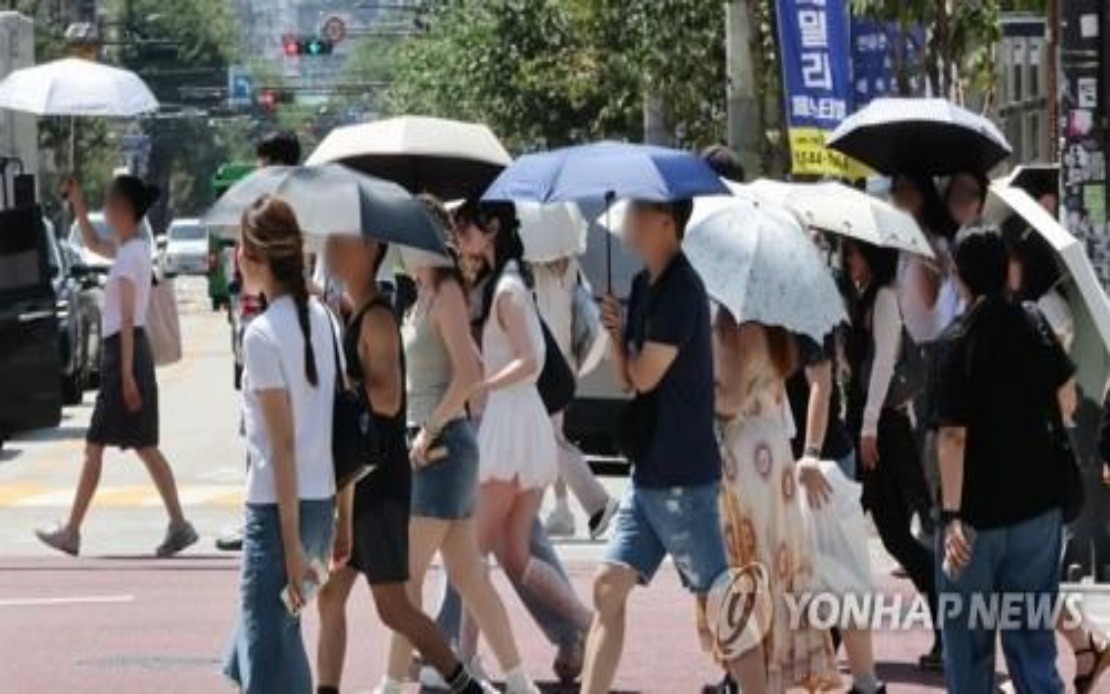
South Korea is experiencing one of its most punishing heat episodes in recent years, with the capital Seoul and neighbouring cities all registering temperatures exceeding 40 degrees Celsius on Friday. The Korea Meteorological Administration confirmed that an automatic weather station in Seoul's Nowon district in the north of the city recorded 40.2°C at 3.28 pm local time, making it the hottest reading the capital has experienced since August 1, 2018, when the thermometer climbed to 41.8°C.
The intensity of this latest extreme weather event extends far beyond Seoul itself. Hanam's Deokpung district, situated just to the southeast of the capital, experienced even more severe conditions, with temperatures peaking at 40.7°C at 2.32 pm. Gwangyang, a major industrial city approximately 300 kilometres south of Seoul, also crossed the 40°C threshold, recording 40.2°C at 2.37 pm. These concurrent readings across multiple population centres underscore the scale and geographic breadth of the current heat wave, indicating that this is not a localised phenomenon but rather a region-wide meteorological crisis affecting millions of residents simultaneously.
Temperatures in other localities, while marginally below the 40°C mark, remain dangerously elevated. Yeongweol county in Gangwon Province and Yeoju in Gyeonggi Province both reached 39.8°C, demonstrating that extreme heat continues to pervade South Korea's major demographic and economic zones. This distribution of readings reveals how comprehensively the heat wave has saturated the country's geography, leaving few refuges from the oppressive conditions.
The persistence of these extreme conditions has already produced notable climatic markers that signal the severity of the situation. From June 1 through the Thursday preceding this record-breaking Friday, South Korea experienced an average of 14.8 days classified as heat wave days, defined as periods when daytime temperatures reach 33°C or higher. This figure represents the fourth highest count for this period since the nation's weather observation network was expanded nationwide in 1973, placing the current episode among the most significant on record. More striking still is the record number of tropical nights the country has endured, with minimum temperatures remaining at or above 25°C for an unprecedented 13 consecutive nights.
For Southeast Asian observers, the South Korean experience carries important implications. As climate patterns shift across the wider Asian region, the acceleration and intensification of heat waves like this one demonstrate how rapidly baseline expectations are changing. Malaysia and other tropical nations, already accustomed to sustained high temperatures, face the prospect of conditions that could exceed even the severe baseline to which populations have adapted. The breakdown of the traditional distinction between tolerable and extreme heat threatens to reshape daily life, public health infrastructure, and economic productivity across the entire region.
The response from South Korean authorities reflects the gravity with which such conditions are now treated. The Korea Meteorological Administration initially maintained serious heat wave warnings for Seoul and the eastern and southwestern regions of the country, representing the most elevated alert status available. These warnings, triggered when apparent temperatures are projected to reach 38°C or higher, or when daily maximums exceed 39°C in areas already experiencing perceived temperatures of 35°C or higher for two or more consecutive days, indicate that public health officials determined conditions posed direct risk to vulnerable populations. Seoul had remained under this top-tier warning since Tuesday, a duration reflecting the relentless nature of the heat episode.
However, marginal relief is expected as the meteorological pattern begins to shift slightly. The Korea Meteorological Administration provided a forecast predicting that weekend conditions would ease somewhat, with morning lows ranging between 21°C and 26°C nationwide and daytime highs varying from 26°C to 35°C. On the basis of this modestly improved outlook, authorities downgraded the serious heat wave warnings for Seoul and the eastern and southwestern regions to ordinary warnings effective from 6 pm on Friday. This downgrade, while reflecting a genuine improvement, still indicates that dangerous conditions are anticipated to persist throughout the weekend, merely at a marginally reduced intensity.
For Malaysian readers and policymakers, the South Korean heat crisis offers a cautionary case study in how rapidly climate conditions can exceed historical norms and challenge existing response infrastructure. The implications extend beyond immediate human discomfort to encompass public health systems, electricity grids strained by cooling demands, and labour productivity across sectors dependent on outdoor work. The record-breaking tropical nights are particularly concerning, as they prevent human bodies from recovering during nighttime hours, a physiological reality that compounds the health risks associated with sustained extreme heat.
The meteorological trajectory evident in South Korea's data—where heat waves are becoming more frequent, more intense, and arriving earlier in the calendar year—mirrors trends observed across East and Southeast Asia. Climate scientists have long predicted that the already-warm tropical and subtropical regions would experience disproportionate impacts from global temperature increases, pushing conditions from merely hot to actively dangerous for human habitation and economic function. The South Korean example demonstrates this transition occurring in real time, with measurable impacts on daily life and government response protocols.
Looking forward, both individual preparedness and regional coordination on climate adaptation become increasingly crucial. The heat wave affecting South Korea today serves as a rehearsal for conditions that could become more routine across the broader Asian region within coming decades. Public health infrastructure, urban design, workplace standards, and energy systems will require fundamental reimagining to accommodate a climate reality where temperatures consistently exceeding historical maximums become normal rather than exceptional. The South Korean meteorological administration's response mechanisms, even when effective, reveal the strains that extreme conditions place on existing systems designed for an earlier climatic regime.

