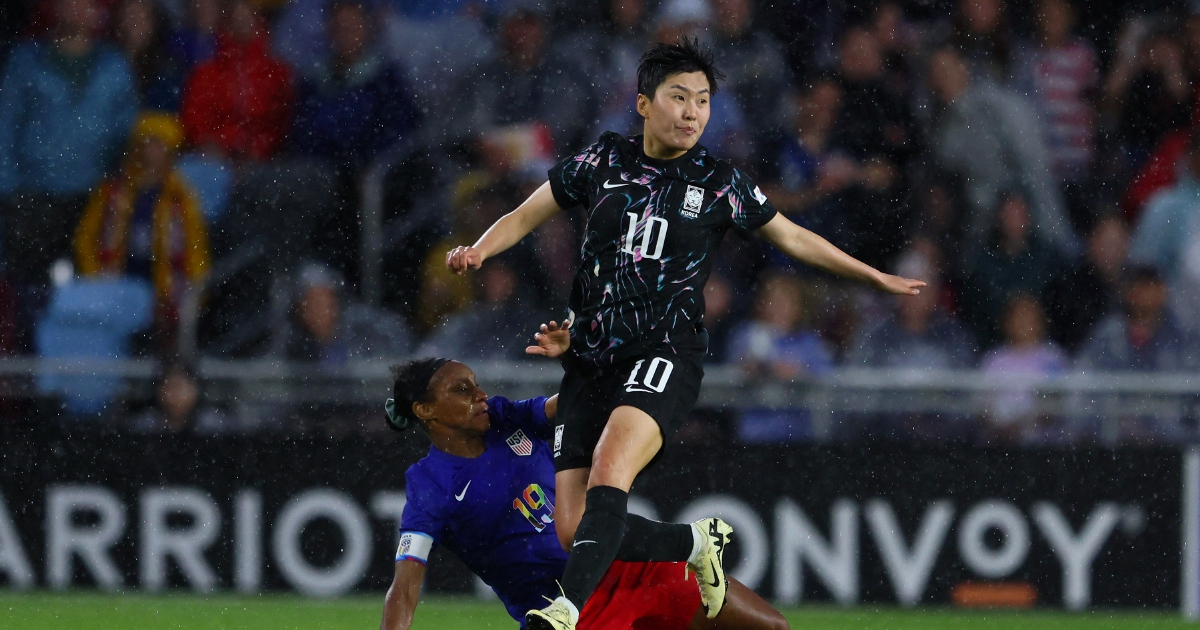
South Korea's governing body for women's football announced the launch of a formal investigation on Monday into allegations concerning a referee's conduct during a domestic match, following claims that a female official made derogatory remarks about menstruation directed at Ji So-yun, a prominent midfielder with an extensive international pedigree and prior experience at English club Chelsea.
The incident, which centred on the alleged use of menstruation as a basis for disparagement, represents a significant moment for professional women's football in the country. Such allegations touch on broader issues of gender-based commentary and the working environment for female athletes competing at the highest domestic levels. The timing of the federation's investigation underscores growing scrutiny of conduct standards within the sport as participation and professionalization of women's football continues to expand across Asia.
Ji So-yun's profile extends well beyond domestic Korean competition. Her tenure at Chelsea, one of the world's most prominent women's clubs, established her as a player of considerable technical skill and international standing. The fact that an experienced athlete of her calibre became the subject of such remarks suggests that problematic attitudes may persist across institutional levels of the sport, regardless of players' accomplishments or status within the game.
The investigation's focus on a female referee's conduct adds complexity to discussions around gender dynamics in football administration and officiating. While increased representation of women in refereeing roles has been celebrated as a positive development for the sport, this incident raises questions about whether institutional training, mentoring, and accountability systems keep pace with workforce expansion. The federation's response will likely signal whether existing safeguarding measures prove adequate or require strengthening.
Such incidents carry particular resonance in South Korea's sports environment. The country has invested considerably in developing women's football infrastructure and talent pathways over recent years, seeking to build competitive teams and a sustainable domestic league. Allegations of unprofessional conduct by officials risk undermining these efforts by creating hostile environments that discourage participation and retention of talented athletes, particularly those who have achieved recognition on the international stage.
The nature of the alleged insult—invoking menstruation as a basis for mockery or disparagement—reflects a pattern of gendered language that female athletes across multiple sports have long documented. Such commentary not only represents a breach of professional conduct but also reinforces outdated and discriminatory assumptions about women's bodies and athletic capability. In football specifically, where physicality and endurance form central components of performance assessment, such remarks carry additional significance by appearing to question an athlete's fundamental ability to compete.
For Malaysian and broader Southeast Asian observers, the case illustrates challenges that extend across regional women's sports development. As countries throughout the region prioritize expansion of women's football leagues and international participation, establishing robust standards for professional conduct—including referee behavior and accountability—becomes increasingly critical. South Korea's handling of this investigation may set precedents that influence how similar matters are addressed elsewhere in Asia.
The federation's decision to investigate publicly rather than dismissing the allegations suggests at least a baseline commitment to addressing concerns about officiating standards. However, the substantive outcomes—whether they include disciplinary measures, retraining requirements, or systemic reforms—will ultimately determine whether the process effects meaningful change or functions primarily as reputational management. Given Ji So-yun's standing both domestically and internationally, the spotlight on this case creates pressure for the federation to demonstrate that such conduct carries genuine consequences.
The broader implications extend to how women's football organizations across Asia approach questions of equality and dignity in professional environments. Recruitment and retention of talented female athletes depends partly on assurance that they will be treated with respect by colleagues, officials, and administrators. Incidents like the one under investigation, when not addressed comprehensively, can prompt top performers to seek opportunities elsewhere—a particular concern for smaller football markets competing for elite talent.
Regulatory frameworks and investigative processes themselves merit scrutiny. Questions arise about whether existing mechanisms for reporting such incidents prove accessible and trustworthy to athletes, and whether investigations proceed with appropriate independence and thoroughness. As women's football continues its ascent in South Korea and elsewhere in the region, institutions must demonstrate that grievance procedures function effectively and that outcomes reflect genuine accountability rather than mere procedural compliance.
The investigation also occurs within broader conversations about fostering inclusive sporting environments where all participants—athletes, officials, and administrators—maintain professional standards. In women's football particularly, where participants have historically faced various forms of marginalization and stereotyping, establishing clear expectations around respectful conduct becomes essential to legitimacy and long-term institutional health. South Korea's response to this specific case will resonate across regional football communities closely watching how senior sporting bodies address allegations of inappropriate gendered commentary.

