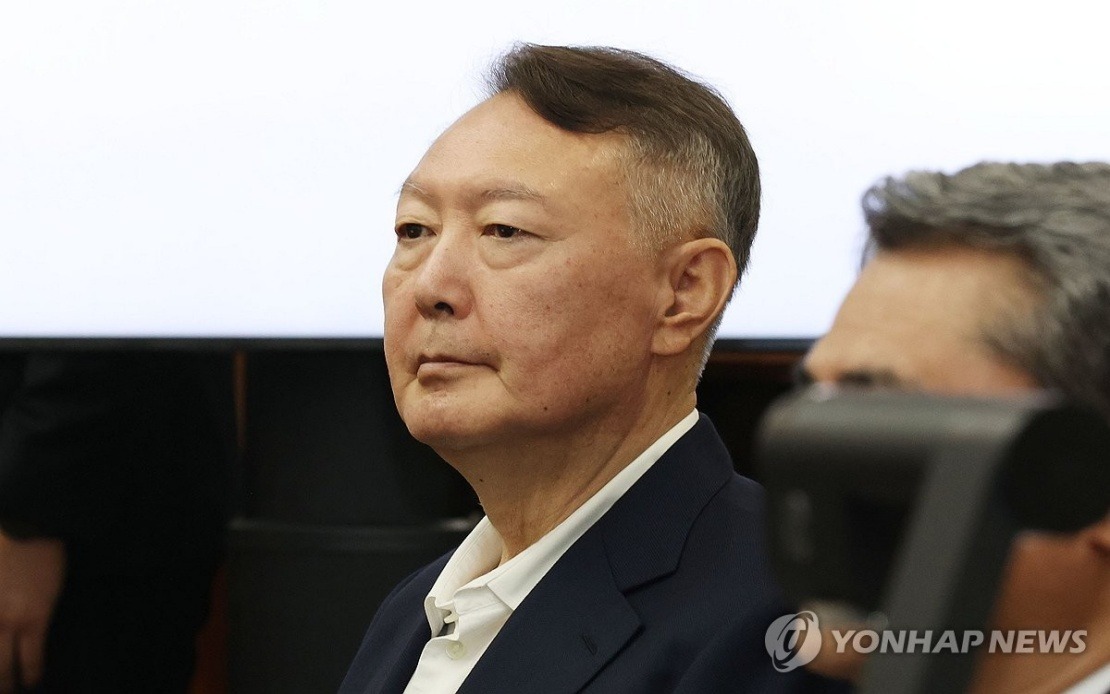
Former South Korean President Yoon Suk Yeol has been convicted of election law breaches by Seoul's central district court, delivering a significant blow to his conservative People Power Party (PPP) and potentially triggering a major financial penalty for the political movement. The court determined that Yoon made false public statements while functioning as the PPP's presidential candidate ahead of the March 2022 election, resulting in an 18-month prison sentence that has been suspended for three years. This ruling, delivered on July 27, represents the latest in a mounting series of legal challenges confronting the former leader, whose political fortunes have deteriorated markedly following his unsuccessful December 2024 martial law declaration.
The immediate consequence of the conviction extends beyond Yoon's personal legal jeopardy to threaten the financial foundation of his political party. Should the verdict survive the appellate process and become final, the PPP will be compelled to surrender 39.7 billion won, equivalent to approximately US$27.3 million, that was reimbursed by South Korea's election authorities following Yoon's successful 2022 presidential campaign. This reimbursement system represents a cornerstone of South Korea's campaign finance framework, designed to support major presidential candidates who achieve sufficient electoral support. However, the legal architecture contains a safeguard mechanism requiring parties to forfeit such funds if their candidate receives a finalised prison sentence or substantial monetary fine for violations of electoral regulations.
The underlying legal violations centre on Yoon's public statements regarding his connections to controversial figures whose relationships with political circles had attracted significant media and voter scrutiny. During a December 2021 press event, Yoon falsely claimed never to have introduced a lawyer to a former tax official, a statement that special counsel Min Joong-ki's investigation team later determined to be demonstrably untrue. In a subsequent January 2022 interview, Yoon further misrepresented his interactions with shaman Jeon Seong-bae, denying that he had met this figure alongside his wife, Kim Keon Hee, despite evidence establishing that his wife had facilitated the introduction. The court accepted the prosecution's evidence that Yoon had indeed introduced the lawyer to the former tax official and had encountered the shaman through his wife's connection, rendering both statements legally false under South Korean election law.
The judicial panel articulated a notably stern assessment of the offences, emphasising that the gravity of Yoon's misconduct stemmed from his deliberate dissemination of false information regarding matters that commanded substantial voter attention and concern. The court's language reflected its view that misleading the electorate on issues directly relevant to candidate credibility and personal judgment constitutes a serious breach of democratic principles underlying electoral integrity. Such judicial reasoning resonates with broader concerns about the trustworthiness of candidates and the sanctity of the information voters rely upon when making consequential electoral decisions. The special counsel's office had initially sought a two-year custodial sentence, meaning the court's imposed term fell somewhat short of the prosecution's request, though still substantial enough to trigger the campaign fund forfeiture mechanism.
Yoon's legal team has signalled their intention to appeal the conviction, asserting that the trial court committed multiple interpretative and evidentiary errors in reaching its judgment. This appeal will proceed through South Korea's appellate court system, with the special counsel law imposing strict temporal constraints on the proceedings. Should the case ultimately reach the Supreme Court, final adjudication is anticipated by January of the following year, as the special counsel law mandates that appellate proceedings conclude within three months at each successive judicial level. These compressed timelines reflect South Korea's determination to resolve high-profile cases involving state leadership with relative expedition, though such compression inevitably creates pressure on appellate courts to maintain rigorous review standards while adhering to statutory deadlines.
The current conviction represents only one facet of Yoon's expanding legal troubles, which have intensified dramatically following his December 2024 declaration of martial law, a constitutional authority he invoked then immediately withdrew after facing immediate political opposition and judicial intervention. In February of this year, a different court sentenced Yoon to life imprisonment for his role in leading the insurrection connected to that failed martial law declaration, with that judgment currently subject to appeal as well. The proliferation of criminal charges and convictions against a sitting or recently departed head of state stands as an extraordinary circumstance in South Korean politics, reflecting both the country's robust institutional mechanisms for holding leaders accountable and the profound constitutional crisis precipitated by Yoon's attempted martial law deployment. The cumulative legal exposure facing Yoon raises fundamental questions about presidential accountability and the limits of executive authority in democratic systems.
For Malaysian observers and policymakers, the South Korean proceedings illuminate both the strengths and vulnerabilities of democratic systems when confronting high-level political malfeasance. South Korea's ability to indict, prosecute, and convict a former president demonstrates institutional independence from executive influence and judicial willingness to apply the law uniformly across all social strata, hallmarks of mature democratic governance. However, the sheer proliferation of cases targeting a single individual, while legally proper, also raises questions about whether democratic systems adequately balance accountability mechanisms with the need for political stability and the danger of instrumentalising courts for partisan purposes. Regional neighbours grappling with their own challenges regarding separation of powers and political accountability might usefully examine how South Korea navigates these tensions.
The specific election law provisions underlying Yoon's conviction merit particular attention, as they establish that candidates and parties bear significant legal obligations regarding truthfulness in public statements during electoral campaigns. South Korea's regulatory framework recognises that false statements by candidates directly undermine informed voter choice and the legitimacy of electoral outcomes, justifying stringent legal consequences. The automatic forfeiture of campaign reimbursements upon conviction adds a financial deterrent dimension, rendering violations costly not merely for the individual candidate but for the entire political organisation dependent on such subsidies. This multilayered enforcement approach—combining criminal penalties, financial sanctions, and institutional consequences—reflects a sophisticated understanding that electoral integrity requires mechanisms operating simultaneously at individual, organisational, and systemic levels.
The implications for the PPP are particularly acute, as the party now faces reputational damage compounded by potential substantial financial losses. In South Korean politics, where the party system remains relatively concentrated and where government resources significantly advantage governing parties, losing 39.7 billion won represents a meaningful diminishment of organisational capacity for future political campaigns. The PPP's positioning as the main opposition party, combined with these mounting legal and financial penalties, creates tactical complications for conservative political forces seeking to mount effective challenges to whatever government emerges from the ongoing constitutional and political turbulence. The party must simultaneously manage its association with Yoon's constitutional overreach while distancing itself from his legal liability, a balancing act that will fundamentally shape conservative politics throughout the remainder of this parliamentary term.
As Yoon's various appeals proceed through the court system over the coming months, South Korea will continue navigating the extraordinary constitutional territory created by his December 2024 martial law declaration. The accumulation of convictions, whether ultimately upheld or overturned, has already reshaped South Korean political discourse and revealed both institutional capabilities and limitations in managing crises of executive overreach. The election law conviction, apparently narrow in scope compared to the insurrection charges, nonetheless carries profound significance for South Korea's democratic architecture by establishing that candidates cannot misrepresent facts with impunity and that political parties share consequences for their nominees' legal violations. These precedents will likely influence South Korean political behaviour for years to come, as candidates and parties calculate the legal risks attending any deviation from truthfulness in campaign communications.

