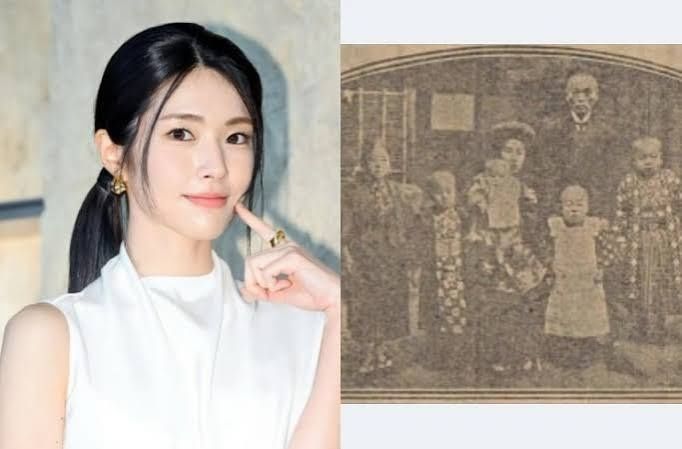
South Korea's genealogy-tracing community has witnessed an unprecedented surge in digital traffic this month, triggered by a high-profile celebrity scandal that has forced broader conversations about colonial complicity and historical accountability. The controversy centres on actress Ahn Ha-young, whose family background became the subject of intense public scrutiny after allegations emerged linking her great-grandfather to individuals with pro-Japanese sympathies during the 1910–1945 period when Korea remained under Japanese imperial control. The unexpected spike in genealogy research has overwhelmed server infrastructure across multiple platforms, with South Korea's premier ancestry website—colloquially known as a repository for tracing family origins—experiencing significant technical disruptions over successive days in mid-August.
The genealogy portal, which maintains detailed records spanning 287 distinct family lineages prevalent throughout South Korea, provides users with comprehensive information about ancestral origins, generational structures, and historical demographic patterns. Its database serves as the primary resource for Koreans seeking to verify family histories and connect with broader historical narratives. When Ahn Ha-young publicly discussed her great-grandfather Ahn Sang-ho during a television appearance, describing him as a pioneering physician who had established Seoul's first Western-style medical clinic and provided medical services to Emperor Gojong—the late-19th and early-20th century Joseon ruler who reigned from 1852 to 1919—she inadvertently triggered waves of historical investigation. Users began searching not merely for genealogical verification, but to cross-reference family records against databases of individuals documented as collaborators with Japanese colonial authorities.
The actress's initial account presented her ancestor in an unambiguously positive light, celebrating his medical contributions and proximity to Korean royal circles. However, the moment that online communities began raising questions about potential connections between Ahn Sang-ho and networks of colonial-era collaborators, the narrative shifted dramatically. These allegations prompted hundreds of thousands of searches as public curiosity transformed into historical detective work. The actress's management agency initially responded by denying the claims, a defensive posture that paradoxically intensified scrutiny rather than quelling it. In the digital age, where information spreads instantaneously across social media platforms and discussion forums, attempts to suppress such allegations frequently backfire, converting what might have remained a localised conversation into nationwide debate.
On August 12, website servers buckled under unprecedented demand, experiencing complete outages lasting several hours during evening peak traffic periods before continuing to suffer intermittent crashes throughout the following day. The technical failures underscore how thoroughly this particular controversy has captured South Korean public attention. Millions of citizens appeared simultaneously motivated to examine their own family genealogies, perhaps anxious about discovering uncomfortable truths embedded within their own ancestral records. The website crash became itself newsworthy, functioning as a visible indicator of societal preoccupation with this historical reckoning.
Ahn Ha-young ultimately issued a public apology on August 12, acknowledging that she had been uninformed regarding her family's historical complexities and expressing regret about having spoken pridefully concerning her ancestry without possessing complete factual understanding. This mea culpa reflected a broader recognition that defending incomplete or misleading family narratives could prove untenable when confronted with documented historical evidence. Her statement tacitly acknowledged that ignorance of one's family history, while perhaps understandable, does not insulate public figures from accountability when that history intersects with a nation's most traumatic historical periods.
The timing of this controversy carries particular symbolic weight within South Korea's annual calendar. Liberation Day, observed annually on August 15, commemorates the peninsula's emancipation from Japanese colonial administration in 1945, marking the endpoint of 35 years of imperial occupation. For South Koreans, this remains not merely a historical milestone but an event that fundamentally shaped national identity, institutional structures, and collective memory. The nation's foundational narratives emphasise resistance against occupation and the recovery of sovereignty, making questions about individual collaboration during this period exceptionally fraught with moral significance.
The scandal highlights a persistent challenge confronting South Korean society: the incomplete historical reckoning with colonial-era complicity. Unlike post-war Germany's systematic efforts to document and commemorate those who collaborated with Nazi authorities, South Korea has struggled with comprehensive accountability mechanisms addressing those who cooperated with Japanese imperial rulers. Families of known collaborators have sometimes enjoyed significant wealth and social position accumulated during the colonial period, creating ongoing tensions between historical justice and contemporary social hierarchies. This unresolved tension periodically resurfaces when public figures inadvertently reveal family connections to colonial networks.
For Malaysian readers and Southeast Asian observers, the Ahn Ha-young controversy demonstrates how colonial legacies continue shaping contemporary politics and social dynamics in East Asia, nearly eight decades after decolonisation. The intensity of public reaction to allegations of historical complicity reflects how thoroughly colonialism remains embedded within national consciousness. Where Malaysia similarly experienced colonial occupation and continues processing that historical experience, the South Korean case illustrates how even prominent public figures cannot escape scrutiny regarding ancestral entanglement with imperial power structures. The genealogy website surge paradoxically reveals both a population keenly interested in historical accountability and a society still grappling with mechanisms for achieving it.
The episode also underscores how digital technology has transformed historical investigation. Where previous generations might have accessed genealogical records through physical archives requiring significant time and institutional connections, contemporary citizens can instantaneously query databases spanning centuries of family records. This democratisation of historical research capability means that public figures face substantially heightened exposure regarding ancestral histories. The accessibility of genealogical information transforms what were once private family matters into potential subjects of mass scrutiny, particularly when those family histories intersect with documented patterns of collaboration or complicity.
Moving forward, the Ahn Ha-young controversy will likely influence how South Korean entertainers and public figures discuss their family backgrounds, encouraging greater caution and pre-emptive historical verification. For the genealogy website operators, the server overloads paradoxically represent both a technical crisis and evidence of profound public engagement with historical understanding. Whether this momentary spike in genealogy research translates into sustained public interest in comprehensive historical accountability remains uncertain. Nevertheless, the incident demonstrates that colonialism's shadows continue elongating across contemporary East Asian societies, touching even celebrity culture and requiring periodic reckoning with uncomfortable historical truths.

