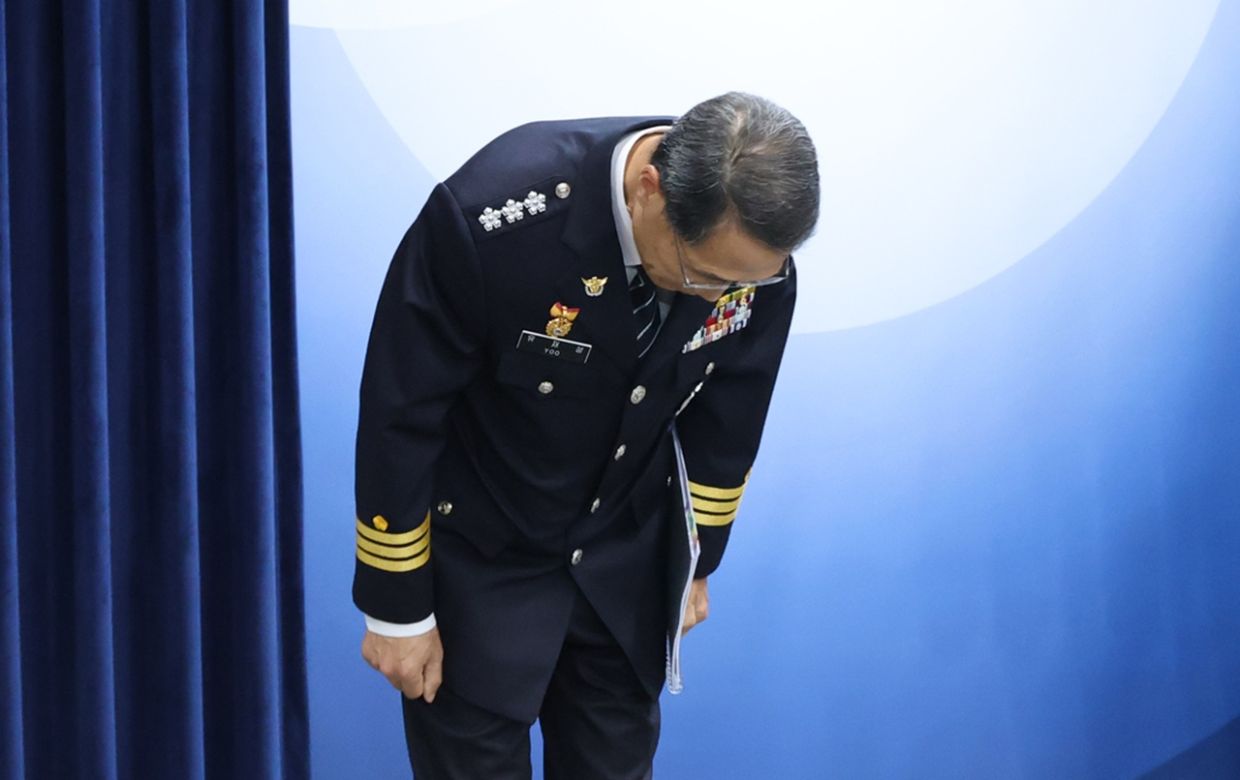
South Korea's acting National Police Agency Commissioner Yoo Jae-sung has committed to an extensive overhaul of investigative procedures and internal accountability mechanisms, marking an attempt to contain a deepening institutional crisis within the country's police force. The announcement during a July 20 press briefing at the Government Complex Seoul came as public anger intensified over accusations that police mishandled their investigation into Jang Yoon-gi, who stands accused of murdering a teenage girl in Gwangju in May.
The case has exposed what critics describe as systemic vulnerabilities within the Korean National Police Agency, particularly regarding the potential for impropriety when officers' relatives become subjects of investigation. Allegations surfaced that investigators disclosed sensitive details of their inquiry to Jang's father, a serving police officer, and that crucial evidence was not properly secured during the investigation. Such breaches have triggered widespread public disquiet about whether the police service can credibly investigate its own members and whether procedural safeguards exist to prevent conflicts of interest.
Yoo's proposed reforms represent an acknowledgment of institutional failings and an effort to restore credibility through structural change. At the centre of the reform package is a new investigative reform task force, scheduled to begin operations before the end of July. This body will comprise between seven and ten members, with external specialists comprising more than half the membership. By recruiting outside expertise, the police service appears intent on signalling independence from internal compromises and demonstrating openness to external scrutiny and guidance.
The task force will tackle two distinct but interconnected problems. First, it will examine personnel systems that might inadvertently facilitate inappropriate relationships between officers and communities they serve, creating conditions for corruption or preferential treatment. Second, it will review administrative procedures specifically governing investigations involving vulnerable populations, a particularly sensitive issue given that the Jang case involved a teenage victim. This dual focus suggests the police recognise that reform must address both structural incentives and operational protocols.
Paralleling these efforts, an internal affairs investigation unit operating under the National Office of Investigation will commence operations shortly with a mandate to examine serious crimes committed by police personnel regardless of rank. This represents a departure from previous practice where seniority might have provided implicit protection, and signals intent to establish institutional mechanisms where accountability operates uniformly across hierarchical boundaries. The creation of such a unit, however, will ultimately depend on whether it possesses sufficient independence and resources to investigate matters that may implicate influential figures within the police hierarchy.
Yoo also announced plans for a civilian oversight body operating under the Korean National Police Commission, comprising approximately one hundred civilian investigators tasked with examining alleged human rights violations and misconduct in police investigations. This initiative requires amendment to the Police Act, with relevant legislation already submitted to the National Assembly. The commissioner stressed that this body's effectiveness hinges on its authority to recommend personnel changes and disciplinary action, indicating that cosmetic oversight without genuine enforcement power would fail to satisfy public demands for accountability.
The proposed reforms must be understood within the context of broader public confidence in institutions. The Jang case has crystallised existing anxieties about whether police can credibly investigate their own, particularly when cases involve officers' family members. South Korea's experience mirrors concerns across East Asia regarding institutional independence and the potential for patronage networks to undermine impartial administration of justice. For Malaysian and Southeast Asian observers, the Korean response offers instructive lessons about the difficulty of implementing meaningful oversight of security forces and the importance of establishing mechanisms with genuine independence from operational hierarchies.
Yoo acknowledged substantial practical obstacles accompanying proposed reforms. The ministry has contemplated expanding the police rotation system beyond its current application to superintendent-level officers and some senior inspectors. However, extending rotations to all ranks presents fiscal and logistical challenges. Currently, official residences are provided to senior officers undergoing transfers, a cost structure that becomes unsustainable when applied across lower ranks. Yoo indicated the police would consult rank-and-file officers before advancing expansion plans, recognising that broad-based rotation could impose significant burdens on personnel and families without corresponding institutional support.
This pragmatic approach to reform implementation suggests recognition that institutional change requires buy-in from the officers whose conduct such reforms aim to regulate. Yoo stated the agency would implement measures capable of immediate introduction while allowing the task force additional time to examine more complex systemic questions. This phased approach acknowledges that sweeping changes implemented without adequate preparation or stakeholder engagement risk generating institutional resentment that ultimately undermines reform objectives.
Regarding Jang's father specifically, Yoo stated the police would await final conclusions from the special investigation team before concluding their internal examination and determining follow-up measures. This disciplinary restraint may reflect uncertainty about the extent to which the father actively facilitated information leakage or represents a case of investigators exercising poor judgment in communication. The decision to defer final action pending external investigation findings also protects the police from accusations of predetermined outcomes, though it risks perceptions of institutional self-protection.
Yoo's repeated emphasis that he would "faithfully carry out his duties without clinging to his position" carries particular significance in a Korean context where leadership transitions frequently follow institutional crises. Such language suggests an openness to departure should public opinion or political circumstance demand it, potentially reducing organisational resistance to his reform agenda. Whether these announced measures ultimately satisfy public demands for accountability or whether they represent insufficient institutional reform remains uncertain. The coming months will reveal whether the new investigative units and civilian oversight bodies genuinely constrain police discretion or whether they function merely as procedural additions to entrenched practices.

