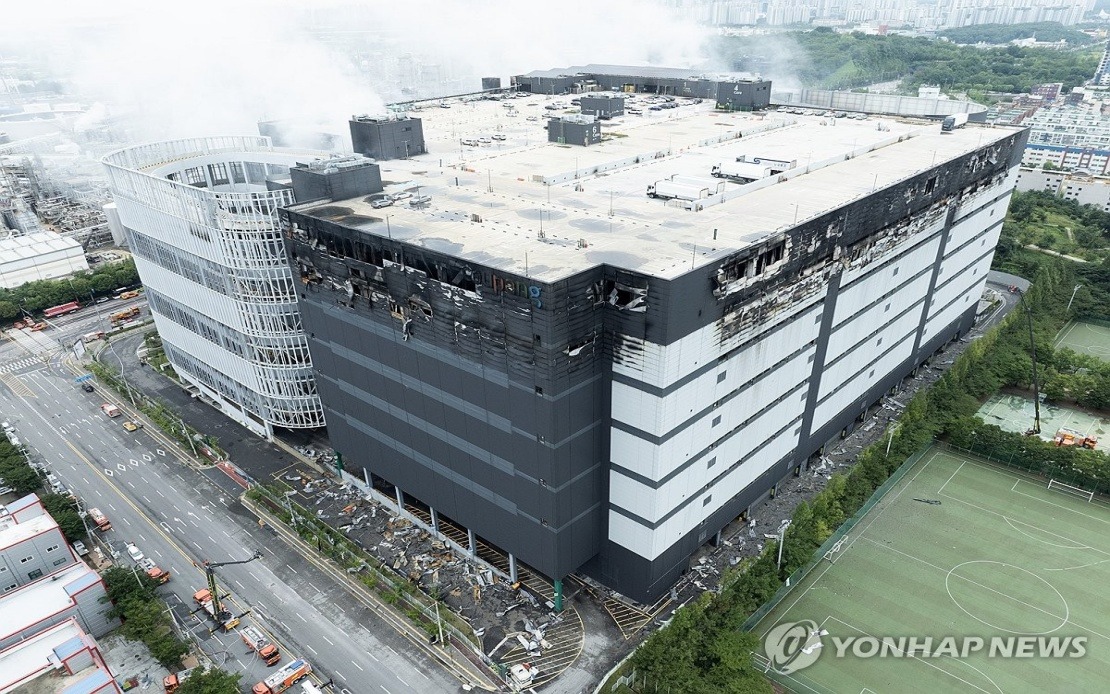
A significant warehouse fire at a Coupang logistics facility in Incheon, located west of Seoul, has been declared under initial control following a gruelling three-day firefighting operation that tested South Korean emergency response capabilities. The blaze, which ignited Saturday, was finally subdued on Monday evening at 8 p.m. local time, marking the end of one of the country's more challenging recent industrial fires. The declaration came after 61 consecutive hours of intensive firefighting efforts that drew national resources and coordination at the highest level.
The scale of the response underscored the severity of the incident. Authorities mobilised 812 firefighters alongside 231 pieces of specialized equipment, representing a substantial commitment of the nation's firefighting infrastructure. The deployment was coordinated through a national order issued Saturday morning, indicating that regional capacity alone proved insufficient to manage the crisis. This level of mobilisation reflects both the size and complexity of the facility involved and the potential danger posed by the materials stored within its walls.
The structural characteristics of the logistics centre created formidable obstacles for firefighting teams. The complex building design, combined with the presence of vast quantities of flammable materials typical of e-commerce warehouse operations, significantly impeded conventional firefighting tactics. Firefighters struggled to access certain zones and control the spread of flames through the multi-level structure. The difficulty in suppressing the fire over the extended period highlights a recurring challenge in fighting large industrial blazes in densely constructed facilities—once fire takes hold in such environments, containment becomes exponentially more difficult.
Monday's breakthrough in controlling the flames benefited from natural assistance. Rainfall during the day provided supplementary cooling and moisture that complemented firefighting efforts, offering relief to exhausted teams who had been battling the fire around the clock. This meteorological fortune allowed crews to finally gain the upper hand against the inferno, demonstrating how environmental factors can prove decisive in industrial firefighting scenarios where human effort alone might be insufficient.
The human cost of the evacuation extended well beyond the immediate danger zone. Local authorities ordered the evacuation of residents living within 116 metres of the warehouse's ramp zone, a precaution that proved necessary given the intensity of the fire and concerns about potential structural collapse or toxic fume dispersal. This decision, announced late Sunday, displaced a significant residential population in what is a densely populated urban area adjacent to South Korea's capital region.
The evacuation's impact on the community became immediately apparent in disruptions to essential services. A total of 178 people sought temporary shelter at nearby schools that were hastily converted into emergency accommodation centres. The local government subsequently advised daycare centres and elementary schools throughout the affected area to remain closed on Monday, ultimately resulting in the closure of one primary school and 14 daycare facilities. This cascading effect on childcare and education services illustrates how industrial emergencies create ripple effects across civilian infrastructure and family routines.
The incident raises important questions about industrial safety standards and emergency preparedness in South Korea's logistics sector, a critical component of the country's booming e-commerce economy. Coupang, one of Asia's most successful online retail platforms, operates numerous distribution centres across the nation, and the vulnerability exposed by this fire may prompt reviews of fire prevention measures and emergency protocols at similar facilities. The logistics industry's reliance on high-density storage of combustible goods creates inherent risks that require constant vigilance and investment in safety infrastructure.
For Malaysian observers, this incident carries relevant lessons regarding warehouse safety and disaster management. As Southeast Asian economies increasingly embrace e-commerce and rapid logistics networks, the construction and operation of mega-warehouses mirror those in South Korea. The challenges faced by Incheon firefighters—complex building layouts, vast quantities of flammable inventory, and difficulties evacuating surrounding residential areas—are not unique to South Korea but represent systemic vulnerabilities present across the region's emerging logistics hubs.
The successful ultimate containment of the Incheon fire, despite its duration and intensity, reflects well on South Korean emergency response coordination and the resilience of its firefighting personnel. However, the 61-hour duration also suggests that even with national mobilisation and advanced equipment, controlling such fires remains extraordinarily time-consuming and resource-intensive. This reality underscores the importance of prevention over response—investing in fire detection systems, compartmentalisation, and safer storage practices offers more cost-effective protection than managing catastrophic blazes after they ignite.
Looking forward, the incident will likely drive policy discussions in Seoul regarding facility inspections, safety standards for e-commerce warehouses, and coordination protocols for responding to major industrial emergencies. The temporary closure of schools and disruption to thousands of residents' lives demonstrates that industrial safety failures carry broad social costs extending far beyond the facility itself. For logistics operators throughout Asia, including those in Malaysia, the Incheon fire serves as a stark reminder of the potential consequences of inadequate fire safety measures and the critical importance of proactive risk management in an industry characterised by rapid growth and sometimes rushed expansion.

