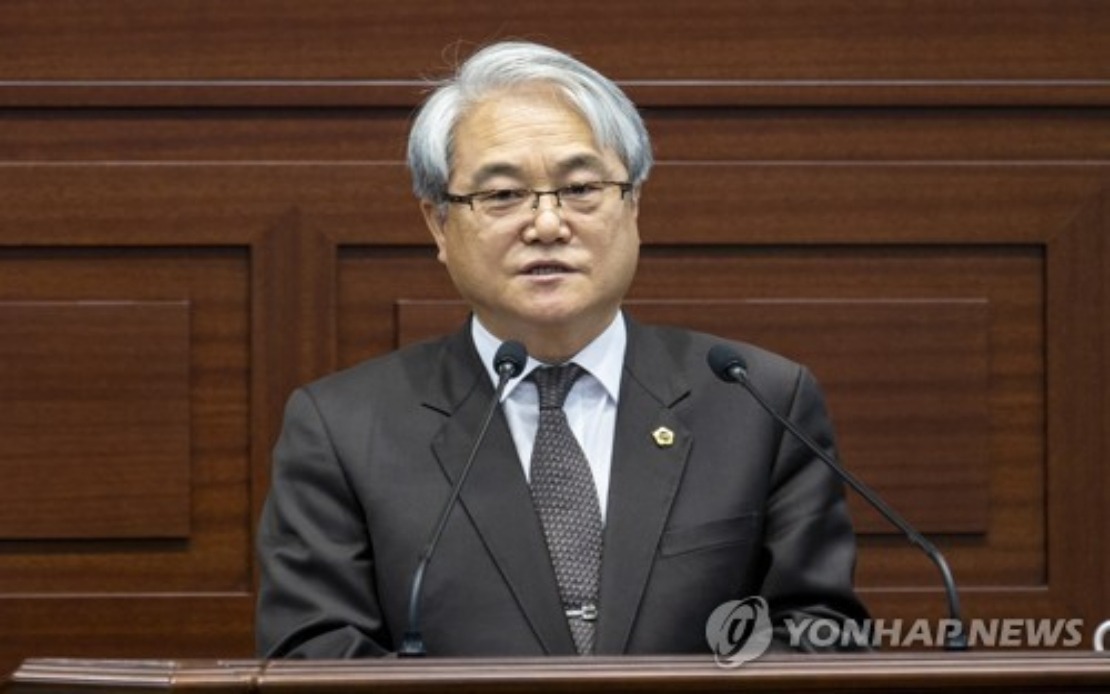
A former administrator of South Korea's Cheongdo County was discovered dead on a mountainside Monday morning as authorities pursued corruption-related investigations into his conduct while in office. The body of Kim Ha-soo was recovered by rescue workers around 7 a.m. in the southeastern region, accompanied by what appeared to be a handwritten note. Police confirmed the discovery but declined to provide additional specifics regarding the circumstances or contents of the note found at the scene.
Kim's death marks a dramatic conclusion to an ongoing legal ordeal that had intensified scrutiny on administrative integrity within South Korea's local government structures. The former county chief had held the position from 2022 until earlier this year, a tenure that became clouded by allegations of serious misconduct. Prosecutors had documented evidence suggesting that Kim received improper payments from a public servant in return for facilitating a career advancement, a transaction that constitutes a fundamental breach of the public trust and administrative ethics.
The corruption investigation extended beyond simple bribery allegations. Kim had also been referred to the prosecution office on a separate matter involving charges that he forcibly entered the residence of a nursing home director in January. The combination of these allegations painted a picture of an official willing to abuse his position for personal gain and to resort to intimidation when obstacles arose. This dual-front legal battle suggested a pattern of concerning behaviour that had prompted official action at multiple levels.
The situation took an additional dark turn when investigators discovered that a man suspected of serving as the intermediary in the bribery scheme had already died before the full scope of the inquiry could be explored. The death of the alleged bribe courier complicated the investigation and eliminated a potential witness who might have provided crucial testimony regarding the quid pro quo arrangement and the identities of other officials potentially involved. Such losses of key figures in ongoing probes often leave prosecutorial teams struggling to establish complete evidentiary chains.
South Korea has long grappled with public sector corruption despite successive administrations' efforts to strengthen governance mechanisms and accountability measures. Local government structures, in particular, have periodically become flashpoints for misconduct, given the considerable authority wielded by county and municipal leaders over public resources and personnel decisions. High-profile cases involving administrative misconduct tend to erode public confidence in institutional impartiality and merit-based advancement systems.
The discovery of Kim Ha-soo's body resurrects broader questions about the psychological and professional pressures that accompany corruption investigations in South Korea's relatively transparent bureaucratic environment. Public officials facing serious charges face not only legal jeopardy but also intense media scrutiny and social stigma. The manner in which Kim's investigation concluded—and the presence of an apparent note—suggests an individual confronting mounting consequences with few viable options remaining.
For Malaysian observers and regional administrators, the case illustrates dynamics common across East and Southeast Asian governance contexts. Local officials occupying mid-level positions often command sufficient discretionary authority to extract illegal benefits, yet simultaneously remain vulnerable to investigation once allegations surface. The Cheongdo case underscores how administrative appointment and promotion systems, unless rigorously insulated from political manipulation and personal enrichment, can become conduits for systematic corruption that undermines institutional legitimacy.
South Korea's institutional response mechanisms, including referrals to prosecution offices and coordinated investigations involving multiple agencies, demonstrate procedural frameworks designed to prevent corruption from spreading unchecked. However, the apparent lack of personal accountability mechanisms and psychological support for officials facing serious charges presents a concerning gap in how such investigations are managed. The outcome suggests that detention, investigation, and social ostracisation can combine in ways that push vulnerable individuals toward irreversible decisions.
Regional governments and civil service commissions throughout Southeast Asia and East Asia might consider whether current investigation protocols adequately balance the imperatives of accountability with humane treatment of suspects, particularly regarding mental health support and fair process guarantees. The Cheongdo incident serves as a cautionary reminder that transparency and rule of law, while necessary, require accompanying structural safeguards that preserve human dignity throughout investigative procedures.

