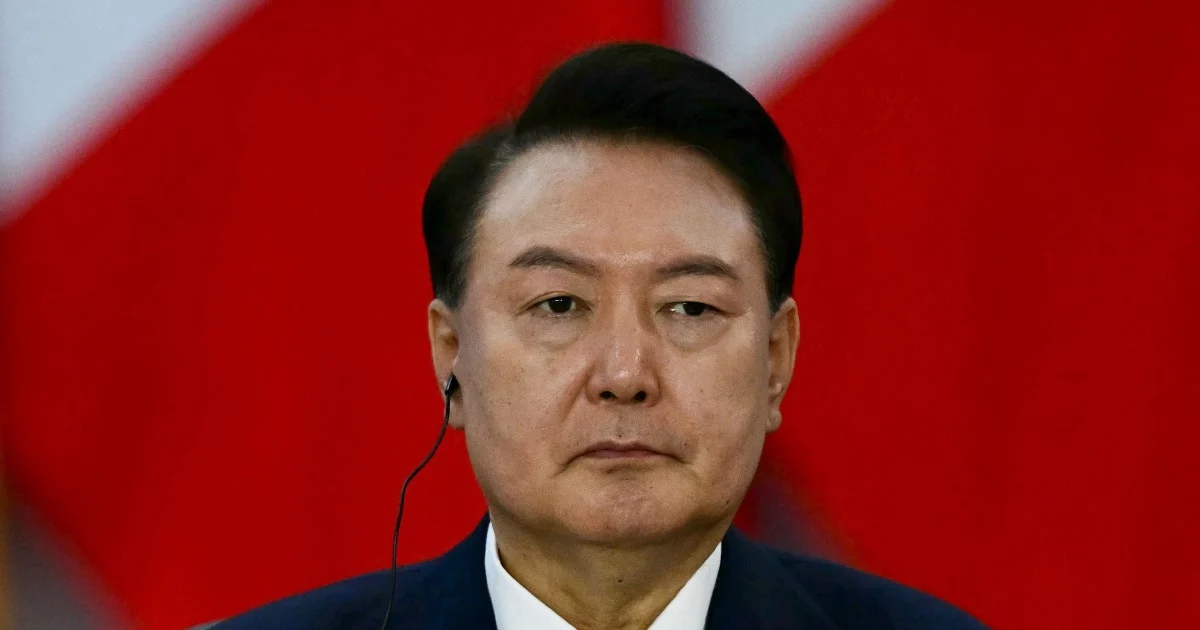
South Korea stands at a critical juncture as its Constitutional Court prepares to announce a decision that will shape the nation's constitutional order and presidential accountability standards. The court is scheduled to deliver its verdict Thursday regarding charges levelled against former president Yoon Suk Yeol arising from his December 3 martial law declaration and the civil unrest that engulfed the country in its immediate aftermath.
Yoon's martial law announcement triggered one of the most tumultuous political episodes in contemporary South Korean history. The former leader, who served until March 2023, had issued the declaration amid escalating tensions with parliament and legislative gridlock over his government's policy agenda. Rather than stabilising the political environment, the move sparked nationwide demonstrations, constitutional confrontations, and a dramatic military intervention that ultimately led to the martial law being rescinded within hours.
The charges against Yoon encompass multiple alleged violations of the country's constitutional framework and criminal statutes. Prosecutors have accused the former president of orchestrating an attempt to subvert democratic processes, abuse of power, and insurrection—the most serious allegations that carry potential life imprisonment or capital punishment under South Korean law. These charges represent an unprecedented level of legal jeopardy for a sitting former head of state in the nation's recent democratic history.
The Constitutional Court's decision carries significance far beyond the immediate case. South Korea's constitutional system places this court as the ultimate arbiter of whether the actions of the nation's elected leaders conform to constitutional limits. A guilty verdict would mark a historic moment in establishing that even former presidents remain accountable to the law, potentially setting precedent for how future administrations exercise emergency powers. Conversely, an acquittal or dismissal of charges would send a different signal about the boundaries of presidential prerogative.
The case has captivated South Korean public attention because it tests fundamental questions about executive power and democratic safeguards. Martial law provisions exist in many democracies as emergency instruments, yet their invocation remains extraordinarily contentious. Yoon's declaration attempted to deploy this mechanism during what critics argued was a political dispute rather than a genuine national security emergency—a distinction that observers suggest the court must now carefully delineate.
For Malaysia and other Southeast Asian democracies, the proceedings offer instructive lessons about judicial independence and constitutional constraints on executive authority. Many regional governments possess similar constitutional emergency provisions, and how South Korea's courts interpret and apply accountability standards may influence how other Asian democracies approach comparable constitutional challenges. The verdict will demonstrate whether robust judicial institutions can effectively constrain even powerful political figures after they leave office.
The international dimension should not be overlooked. South Korea's handling of this case will be observed closely by democratic allies and adversaries alike. The decision will signal whether the nation's democratic institutions can manage internal political crises through law rather than force, and whether its constitutional framework is sufficiently resilient to survive serious challenges from within the political establishment itself.
Yoon's legal ordeal began immediately following his martial law declaration. Military units were deployed to parliament, though legislators ultimately convened and voted to rescind the emergency measure. The swift political and military response underscored the extraordinary nature of the declaration and set the stage for the extensive criminal investigation that followed. Tens of thousands of demonstrators took to South Korean streets protesting both the martial law itself and government responses to the unrest.
The Constitutional Court's deliberations have unfolded over many months, with extensive testimony from political figures, military officials, and constitutional scholars. The court faced the delicate task of evaluating whether Yoon's actions constituted a justifiable exercise of constitutionally vested emergency powers or an unconstitutional seizure of authority. This distinction demands careful analysis of presidential intent, the circumstances surrounding the declaration, and whether legitimate grounds existed for invoking such extraordinary measures.
Thursday's verdict will likely spark immediate political reactions and potentially lengthy legal appeals or constitutional discussions. Depending on the outcome, the decision could influence upcoming South Korean elections and the direction of its political system for years to come. The ruling will establish important precedent regarding how far sitting presidents can go in deploying emergency powers before crossing into unconstitutional territory.
Foregn observers from democracies across Asia and beyond have noted that South Korea's response to this constitutional crisis—relying on judicial review rather than military or legislative force—demonstrates institutional strength. However, the ultimate test comes with Thursday's verdict. A robust application of constitutional law, regardless of the specific outcome, will reinforce South Korean democracy's capacity for self-correction.
Beyond the immediate charges against Yoon, this case represents South Korea's effort to establish that constitutional government requires accountability from all persons, including those who have held the highest office. How the Constitutional Court calibrates this principle will resonate throughout South Korea's political system and offer valuable examples to constitutional democracies across Asia navigating similar tensions between executive authority and institutional constraints.

