South Korea's decades-long tradition of consuming dog meat is heading toward extinction. Come February 2027, the country's groundbreaking ban on breeding, slaughtering and selling dogs for consumption will become fully enforceable, effectively ending an industry that has operated for centuries and reshaping eating habits across the nation. The legislation, enacted in January 2024 after sustained advocacy from animal welfare groups and shifting public attitudes, represents a decisive cultural and legal turning point for a country where culinary traditions have remained remarkably resilient despite modernisation and globalisation pressures.
The journey toward this prohibition reflects the growing influence of animal welfare movements in East Asia and changing generational attitudes toward pets. Musician Annie Ko's experience exemplifies this shift. When she encountered DeeJay, a Labrador puppy trembling in a cramped cage at a Wonju dog meat farm in 2015, she made the decision to rescue him despite having no prior pet ownership experience. DeeJay had spent his first three months confined alongside six siblings on the farm, destined for slaughter. Ko was then working with Humane World for Animals, a non-profit that has successfully rescued approximately 2,800 dogs from such facilities, facilitating their relocation to adoptive homes in the United States, Britain and Canada. DeeJay remains the sole survivor from his litter to remain in South Korea—a symbolic representation of the dramatic reversal unfolding across the country.
The legislative framework provides a three-year transition period for the industry to wind down operations. Government data reveals the pace of this transformation: as of May 2026, more than 80 per cent of South Korea's approximately 1,500 known dog meat farms had ceased operations, leaving fewer than 300 still active. This rapid industrial collapse demonstrates either genuine acceptance of the ban among farmers or economic pressures that have made continued operation increasingly unviable. The government has implemented financial incentives to accelerate the shutdown, offering compensation of up to 600,000 won (US$426) per dog, alongside low-interest loans and comprehensive support programmes designed to assist farmers in transitioning to alternative livelihoods through job counselling and reemployment assistance.
The restaurant sector tells a parallel story of declining viability and market contraction. While comprehensive national closure figures remain unavailable, interviews with restaurant proprietors and meat vendors reveal a consistent pattern: business volumes have collapsed to roughly one-third of historical levels. At Seoul's Gyeongdong Market, one of the few remaining retail locations where dog meat remains obtainable, prices have surged dramatically—tripling from approximately 20,000 won per kilogram in 2024 to 60,000 won currently. This price escalation reflects both scarcity as farms close and the reduced willingness of suppliers to continue operations in an increasingly hostile regulatory and social environment.
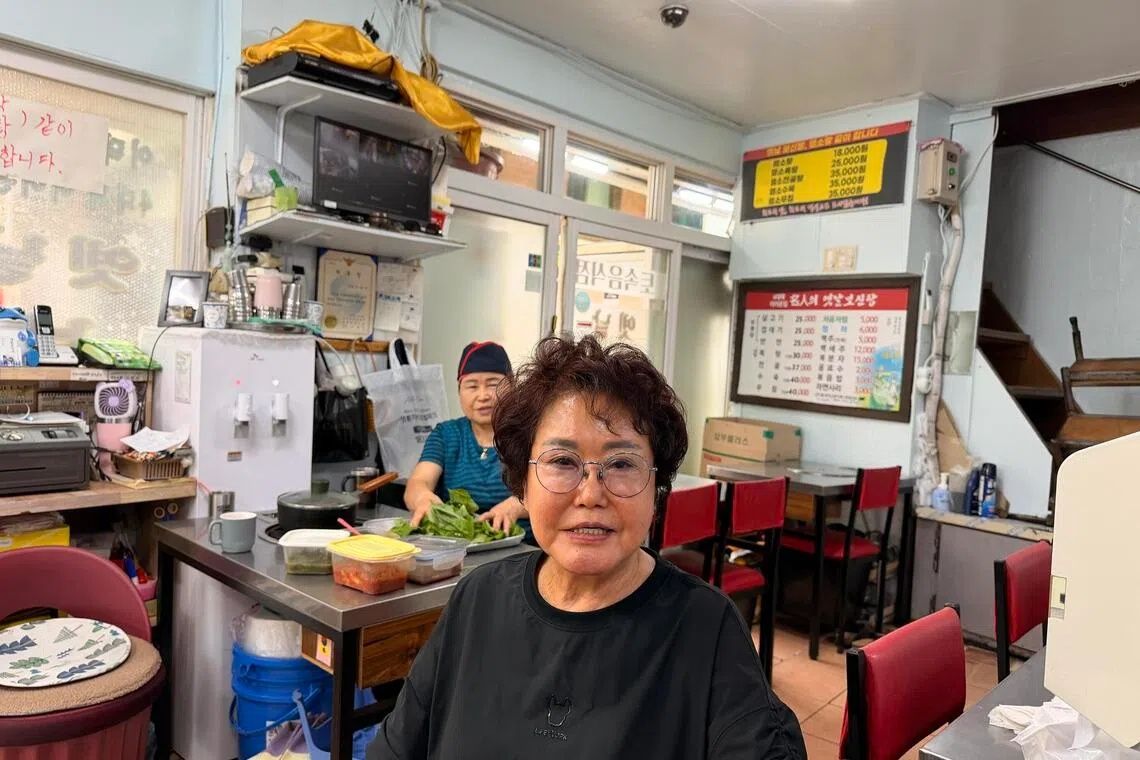
The traditional consumption calendar centred on summer's hottest days presents a poignant final chapter for this culinary practice. Boshintang, or dog meat stew, has historically been consumed during South Korea's boknal period—the three most sweltering days of summer—based on traditional beliefs that the dish provides nutritional replenishment and restores stamina depleted by heat stress. This year's boknal dates, falling on July 15, July 25 and August 14, will represent the last such occasions before the ban's full implementation. Lee Deok-sung, who has operated a dog meat stew restaurant adjacent to Seoul's busy Dongdaemun Market for 45 years, described this summer as a commercial catastrophe. With unsold meat languishing on display trays, she has been forced to increase prices from 16,000 won to 25,000 won per bowl simply to break even on daily operations—yet customers continue dwindling. Her existential anxiety about post-ban survival is palpable and widespread across the remaining establishments.
Adapting to alternative proteins has proven unexpectedly difficult for entrenched businesses lacking the flexibility or customer loyalty to pivot successfully. Lee Kyung-ja, who has operated a neighbouring boshintang restaurant for over four decades, attempted diversification by introducing black goat stew earlier in 2026. Black goat meat theoretically serves as a substitute due to textural and flavour similarities to dog meat. However, the strategy has failed to generate meaningful traction with customers. The 75-year-old proprietor reports that some days pass without any customers whatsoever. Long-term patrons who do visit explicitly prefer dog meat, citing superior taste, while others reference continued recommendations from traditional Korean medicine practitioners who prescribe dog meat to patients recovering from serious illness. The prospect of rebuilding her customer base through product substitution at her advanced age appears daunting and potentially futile.
The cultural roots of dog meat consumption run extraordinarily deep within Korean society, complicating the transition despite legislative action. Historical documentation suggests the practice originated during the Joseon Dynasty, with particularly notable references appearing in the Donguibogam, a 17th-century medical compendium compiled by royal physician Heo Jun. This authoritative medical text characterised dog meat as a warming substance believed to replenish energy and vitality—framing consumption within a therapeutic rather than purely culinary context. The consumption pattern intensified dramatically during Japan's colonial occupation from 1910 to 1945 and in the devastated years following the Korean War, when endemic poverty and catastrophic food shortages transformed dog meat into an accessible protein source for desperate populations. These historical layers have embedded the practice within Korean identity and memory in ways that legislative prohibition cannot simply erase.
The ban's implementation nevertheless reflects profound generational and demographic shifts in South Korean society. Younger urbanised populations, increasingly exposed to international attitudes toward dogs as companion animals rather than livestock, have substantially rejected the consumption tradition. Pet ownership rates have climbed dramatically, with dogs now occupying prominent roles in Korean households and popular culture. This demographic realignment has created the political space for legislation that would have faced insurmountable opposition merely two decades prior. The government's financial support for affected farmers acknowledges both the economic disruption caused by prohibition and an implicit recognition that market forces alone might prove insufficient to drive complete industry closure without incentive structures.
For regional observers, South Korea's trajectory carries instructive implications for animal welfare advancement across East Asia. The country's experience demonstrates that deeply entrenched cultural practices can be substantially transformed through coordinated legislative action, market pressure, and generational value shifts—though not without significant transition costs for displaced workers and business operators. The ban does not represent an overnight transformation but rather a managed decline of an entire industry over a defined period, with explicit acknowledgment of stakeholder hardship. As February 2027 approaches, the remaining dog meat farms and restaurants face their final accounting. The industry's demise will leave behind complicated legacies: relief for animal advocates, economic distress for remaining proprietors, loss of historical culinary tradition, and broader questions about how societies negotiate the intersection of cultural preservation and ethical evolution in increasingly pluralistic contexts.

