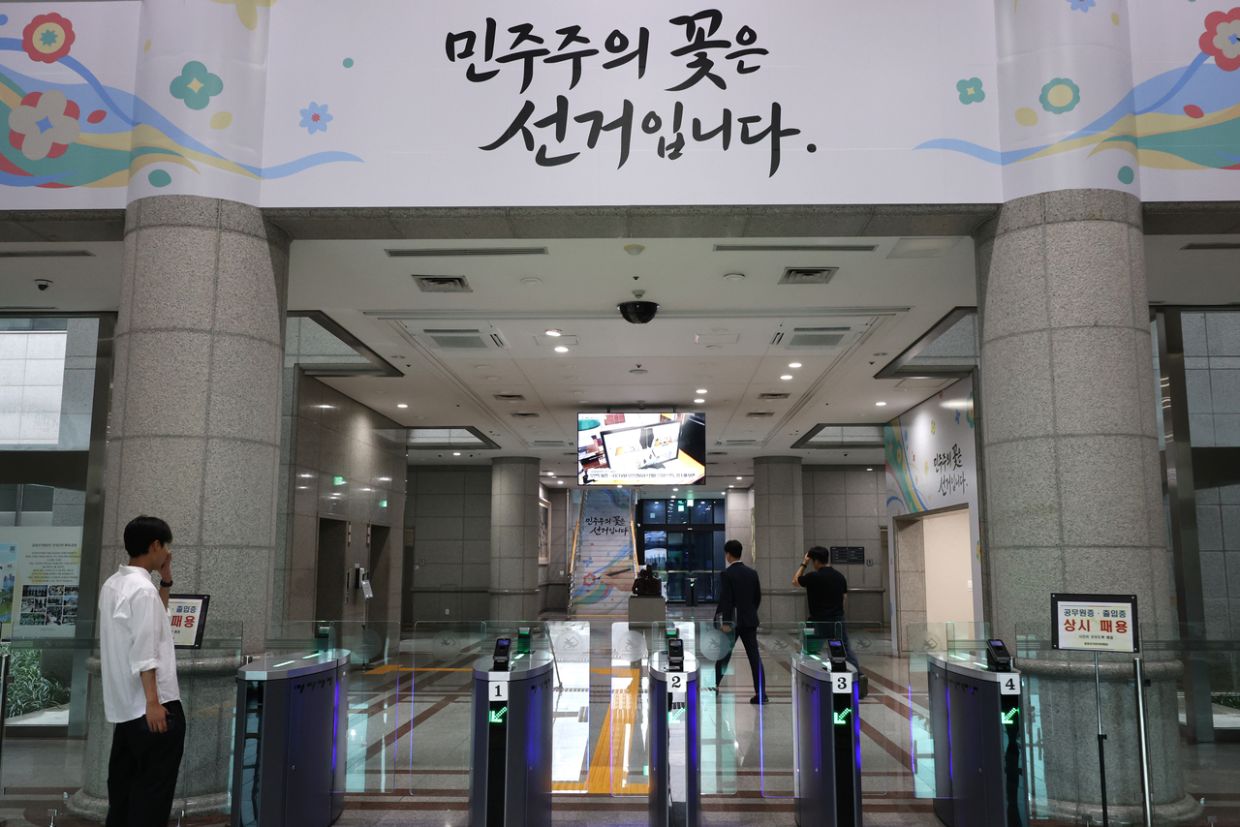
South Korean authorities have launched a significant enforcement action against the National Election Commission, the nation's electoral oversight body, following emerging evidence that agency staff systematically altered internal records to mask operational failures during the June 3 local elections. Prosecutors and investigators from a combined prosecution-police task force executed a search warrant at the NEC's Gwacheon office, located south of Seoul, to gather evidence for an escalating inquiry into how ballot shortages at polling stations were subsequently handled and reported by election officials.
The investigation centres on allegations that employees within the election watchdog deliberately modified statistics stored in their computer systems to obscure mathematical discrepancies in voter tallies. Rather than transparently documenting the problems that emerged on election day, investigators contend that agency personnel took steps to alter records in ways that would minimise the appearance of administrative dysfunction. This practice, if substantiated, would represent a serious breach of institutional integrity at an organisation responsible for maintaining public confidence in democratic processes.
During the June 3 local elections, numerous polling stations across South Korea encountered significant shortages of physical ballots, a operational problem that directly disrupted voting for citizens attempting to participate in the electoral process. Voters at affected locations were forced to leave without casting their ballots, unable to exercise their fundamental democratic right. The scale of this logistical failure became apparent only after the voting day had concluded, raising questions about the election commission's planning and preparation procedures.
The ballot shortage incident itself would constitute a notable failure of institutional competence, yet the alleged subsequent manipulation of records represents a potentially more serious transgression from a governance perspective. Systematic falsification of data by a government body responsible for electoral integrity strikes at the heart of democratic accountability. When citizens discover that their electoral institutions have not merely failed operationally but have then attempted to conceal evidence of those failures through document alteration, public trust in democratic institutions faces direct damage.
For Malaysian observers, this development carries particular relevance as Southeast Asian democracies grapple with maintaining public confidence in electoral processes. South Korea's well-resourced and technologically sophisticated election infrastructure has generally been regarded as a regional model, making these allegations especially significant. If an election commission in a mature democracy with substantial institutional capacity can be implicated in data manipulation, the implications extend beyond Seoul's immediate political circles.
The formation of a joint prosecution-police task force to investigate these matters indicates that authorities regard the allegations with sufficient gravity to warrant coordinated high-level scrutiny. Such arrangements typically emerge when investigators suspect systemic rather than isolated misconduct. The decision to execute a physical raid on the commission's headquarters, rather than pursuing evidence through administrative channels, suggests prosecutors possess concrete indicators pointing toward deliberate institutional wrongdoing rather than mere human error or poor record-keeping practices.
The timing of this investigation carries political weight within South Korea's current context. Local elections serve as crucial barometers of public sentiment regarding the ruling administration and legislative opposition, making electoral integrity a matter of intense partisan concern. Any suggestion that election officials have engaged in cover-ups inevitably invites suspicion that political considerations influenced the alleged manipulation, regardless of the actual motivations involved. This dimension threatens to entrench political divisions around perceptions of institutional trustworthiness.
The digital nature of the alleged manipulation—involving computer system alterations rather than physical ballot tampering—reflects contemporary vulnerabilities in electoral administration. As election commissions worldwide increasingly rely on electronic record-keeping and digital data management, ensuring the integrity of these systems becomes crucial. Auditable electronic records should theoretically enhance transparency compared to paper-based systems, yet the allegations against South Korea's election commission demonstrate how technological sophistication can equally facilitate sophisticated concealment if institutional safeguards prove inadequate.
The investigation will likely examine not only which specific individuals engaged in record alteration but also whether systematic institutional pressure or directives encouraged such conduct. Understanding whether data manipulation represented isolated acts by rogue employees or reflected organisational culture carries profound implications for remedial measures. If the commission's leadership structure created environments where covering up failures seemed preferable to transparent acknowledgment, institutional reform would need to address those underlying dynamics.
For electoral administration specialists throughout Southeast Asia, the South Korean case underscores the necessity of robust internal oversight mechanisms, strict audit protocols for digital systems, and clear whistleblower protections that encourage rather than discourage disclosure of institutional problems. Democracies depend fundamentally on public acceptance that electoral results reflect genuine voter preferences, a confidence that deteriorates rapidly when citizens perceive that election management bodies would manipulate records. South Korea's experience demonstrates that maintaining institutional credibility requires immediate, transparent acknowledgment of operational failures rather than attempts at concealment.
As the investigation proceeds, prosecutors will face pressure to demonstrate whether their inquiry remains focused on factual accountability or becomes entangled in partisan political disputes. The broader Korean public's assessment of how thoroughly this matter is pursued and how transparently findings are communicated will significantly influence perceptions of prosecutorial independence and the election commission's capacity for genuine institutional reform. These considerations resonate across the region, where building robust democratic institutions remains an ongoing challenge for mature and emerging democracies alike.

