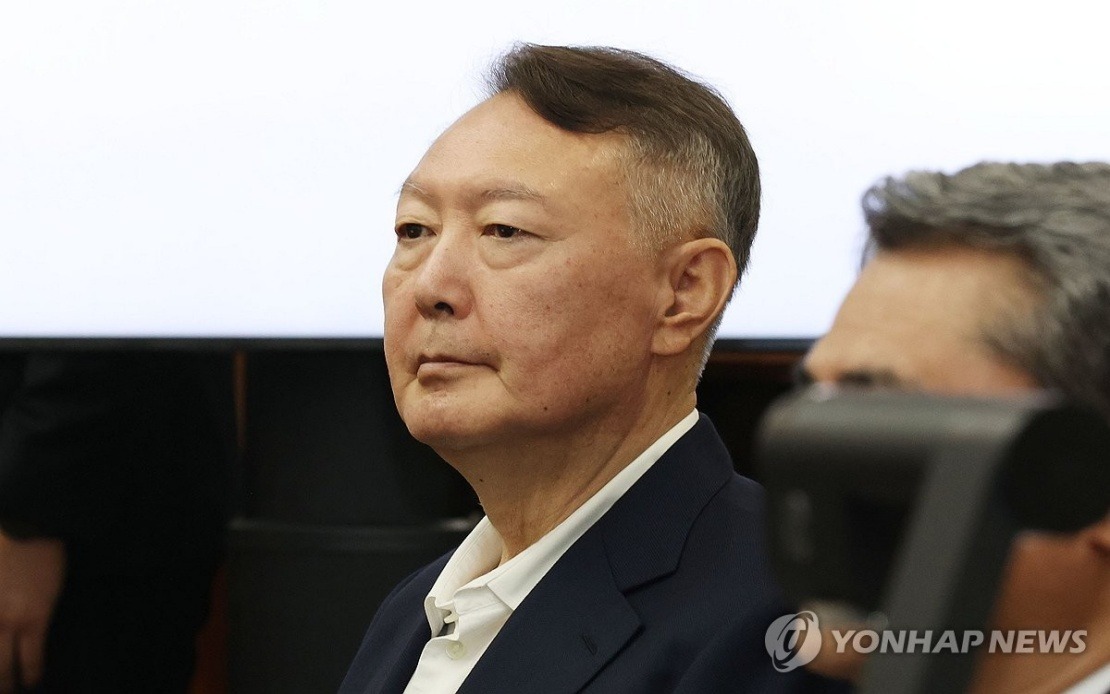
South Korea's former President Yoon Suk Yeol has been handed a two-year prison sentence by Seoul Central District Court for accepting illicit campaign support through complimentary opinion polling services. The July 13 ruling finds Yoon partially guilty of breaching the Political Funds Act, marking another significant legal setback for the jailed former leader who faces multiple concurrent trials stemming from his aborted martial law declaration last year.
The conviction centres on allegations that Yoon received 14 free opinion polls, valued at approximately 270 million won (US$180,100) in total, from Myung Tae-kyun, a self-styled political operative, during the period between April 2021 and March 2022. Rather than straightforward cash payments, the mechanism for this alleged bribery involved the provision of polling data—a scheme that prosecutors and the court characterised as a sophisticated attempt to circumvent campaign finance regulations. The court additionally ordered Yoon to forfeit 13.96 million won and sentenced Myung himself to 18 months imprisonment on related charges.
According to the court's findings, Yoon had pledged political backing for former Representative Kim Young-sun's candidacy in the conservative People Power Party's parliamentary by-election campaign in June 2022. In exchange, prosecutors argue, Myung supplied valuable polling intelligence that would ordinarily cost substantial sums to commission. The arrangement represented what the bench characterised as a quid pro quo arrangement masked by the ostensibly non-monetary nature of the transaction. Prosecutors had originally sought a four-year sentence for Yoon and three years for Myung, making the court's decision a partial concession to the defence.
This conviction carries particular significance when juxtaposed against the divergent outcome in a related case involving Yoon's wife, former First Lady Kim Keon Hee. In April, the Seoul High Court acquitted Kim on identical charges, ruling that the couple could not reasonably be said to have unlawfully enriched themselves through the polls, given that Myung had distributed similar services to multiple other individuals. Prosecutors have appealed that acquittal, continuing to contest the court's reasoning. The split verdicts underscore the complexity of prosecuting campaign finance violations when the illicit benefit takes non-traditional forms and involves multiple recipients.
The opinion poll case represents merely one facet of the legal jeopardy surrounding the former president. In February of this year, Yoon received a life sentence for orchestrating an abortive martial law declaration that destabilised the nation for several hours in December 2024. That conviction addressed charges of insurrection and rebellion, considered far more grave than the financial impropriety at issue in the present case. The accumulation of substantial prison sentences across multiple trials raises questions about potential consecutive versus concurrent sentencing should final appellate rulings consolidate his convictions.
The broader context of South Korean presidential politics looms large over these proceedings. Yoon's downfall represents a dramatic reversal of fortune for a leader elected in 2022 on a conservative platform emphasising stern governance and security concerns. His attempted martial law invocation triggered constitutional crisis, leading to impeachment, imprisonment, and the subsequent criminal trials that continue to occupy Seoul's judicial system. For observers across Asia, including Malaysia, the case illustrates the volatility inherent in presidential politics when institutional checks fail to contain executive overreach.
From a comparative governance perspective, the opinion poll scandal reveals sophisticated attempts to obscure campaign finance violations through indirect mechanisms. Rather than crude cash transfers, the scheme substituted valuable services—polling data that campaigns require for strategic decision-making—creating ambiguity about whether an actual financial transaction had occurred. This methodological creativity in circumventing transparency rules mirrors patterns seen in campaign finance violations across various democracies and reflects the ongoing cat-and-mouse dynamic between regulators and those seeking to evade such oversight.
The court's willingness to convict despite the indirect nature of the benefit signals a determination by South Korea's judiciary to enforce campaign finance standards strictly. The decision to find Yoon partially rather than wholly guilty on all charges, however, suggests the bench recognised genuine ambiguity regarding the precise value delivered and the intentionality behind certain aspects of the arrangement. This nuanced approach contrasts with the complete acquittal granted to his wife, though prosecutors contest that outcome.
For Southeast Asian observers, particularly those in Malaysia where political funding controversies have surfaced periodically, the South Korean case offers cautionary lessons about the need for robust campaign finance transparency mechanisms and the challenges courts face in prosecuting sophisticated schemes designed to appear legitimate. The willingness of South Korea's prosecutors and courts to pursue a former president demonstrates institutional resilience, though questions remain about whether such prosecution would have proceeded identically against sitting officials or those wielding greater political protection.
Yoon's legal trajectory continues downward as appellate processes unfold across his multiple cases. Whether concurrent or consecutive sentencing ultimately applies, the former president faces years of incarceration absent successful appellate reversals. The opinion poll conviction, while less weighty than the insurrection charge, adds another layer of legal liability and reinforces the principle that even former chief executives remain accountable to the law—a principle that reverberates across East Asia's political establishments.
The case also illuminates how campaign finance violations persist despite regulatory frameworks. South Korea's Political Funds Act clearly prohibits the acceptance of contributions in any form, yet the subtle substitution of polling services for monetary payment nearly succeeded in evading detection. Only through sustained investigation by special counsel Min Joong-ki's team and rigorous judicial examination did the arrangement unravel. This underscores the resource demands and institutional commitment necessary to maintain campaign finance integrity in competitive democracies.

