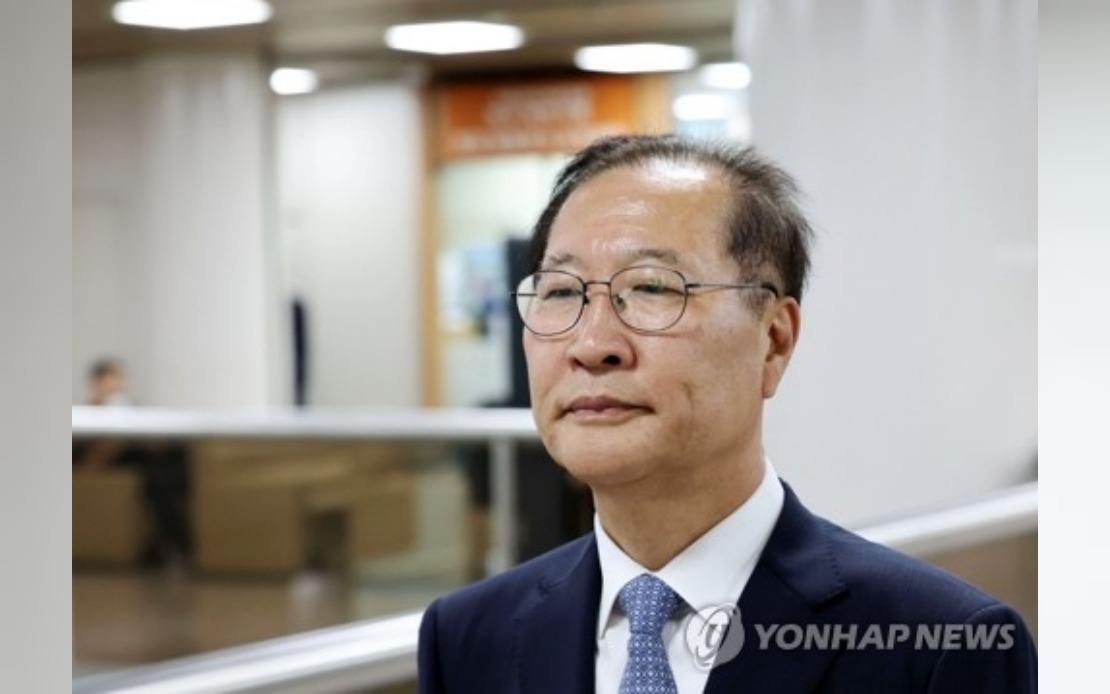
South Korea's former Justice Minister Park Sung-jae faces a quarter-century behind bars after a Seoul court convicted him of backing an insurrection through his participation in ex-President Yoon Suk Yeol's aborted martial law declaration last December. The Seoul Central District Court imposed the 25-year sentence on Monday, surpassing the prosecution's recommendation of two decades, and immediately remanded him into custody on concerns he might tamper with evidence.
The conviction represents another significant development in the unfolding constitutional crisis that gripped South Korea following Yoon's sudden declaration of martial law on December 3, 2024. Park's culpability hinged on actions he took immediately after the proclamation, when he convened a gathering of senior ministry officials to coordinate responses that would facilitate the martial law directive. Prosecutors portrayed these actions as deliberate coordination with the insurrection rather than neutral administrative response to an extraordinary governmental situation.
Court documents reveal Park's involvement extended to several calculated measures designed to support the martial law framework. He allegedly directed officials to assess whether correctional facilities possessed sufficient capacity to house detainees expected to be arrested under martial law powers, including politicians and prominent figures deemed threatening to the emergency regime. Additionally, he orchestrated arrangements for prosecutors to be dispatched to entities supporting the martial law implementation and instructed officials managing travel restrictions to remain on standby to enforce those orders. These actions, prosecutors argued, demonstrated Park's conscious participation in the insurrection rather than mere administrative duty.
The judicial verdict explicitly addressed the moral and constitutional calculus underlying Park's conduct. The court determined that Park "ultimately turned his back on his duty of upholding the Constitution at the idea that the insurrection could succeed, choosing instead to take part in it." This language underscores how South Korean courts are framing these cases as profound breaches of constitutional loyalty, where officials abandoned their institutional obligations when confronted with an opportunity to facilitate authoritarian consolidation of power. The ruling establishes that awareness of the insurrection's illegality, combined with voluntary participation, constitutes culpability regardless of whether officials held formal command positions.
Park now joins a growing roster of Yoon's cabinet members convicted under martial law-related charges. Former Prime Minister Han Duck-soo and former Defence Minister Kim Yong-hyun have both received convictions for playing key roles in the insurrection, though their sentences differed. This pattern of senior administration convictions demonstrates the systematic nature of the alleged conspiracy and suggests the court found widespread coordination among top officials rather than isolated misconduct. The breadth of prosecutions signals South Korean judicial determination to hold the entire institutional apparatus accountable for the constitutional breakdown.
At the apex of this crisis stands Yoon himself, who received a life sentence in February for orchestrating the martial law declaration that precipitated these cascading convictions. Yoon has lodged an appeal against his conviction, maintaining contestation over both the factual findings and legal characterization of his actions as insurrectionary. His ongoing legal battle creates uncertainty about whether the life sentence will withstand appellate scrutiny, though the pattern of convictions at lower institutional levels reinforces the prosecution's narrative of calculated unconstitutional action.
Notably, the court dismissed separate charges against Park involving alleged abuse of power and corruption related to attempts to obstruct a prosecution investigation into allegations against Yoon's wife, Kim Keon Hee. Prosecutors had contended that Park, responding to requests from the presidential spouse, improperly directed subordinates to suppress or limit inquiry into corruption charges she faced. The court ruled these charges fell beyond the special counsel's investigative scope, creating a procedural barrier to prosecution despite apparent judicial skepticism regarding their merit. This dismissal suggests the legal framework governing special prosecutors contains jurisdictional limitations that might shield certain misconduct from accountability.
Park's defense team immediately signaled their intention to challenge the conviction through appeal, characterizing the judgment as divorced from factual evidence and sound legal reasoning. This appellate positioning mirrors broader patterns in South Korean politics where major constitutional crises generate protracted litigation spanning multiple court levels and extended timeframes. Given South Korea's recent history of presidential convictions subsequently overturned or substantially modified on appeal, the appellate process could significantly alter the ultimate disposition of charges and sentences.
In contrast, the special counsel's office indicated minimal likelihood of appealing Park's sentence, suggesting prosecutors view the conviction as adequately vindicating their core contentions regarding the justice minister's institutional betrayal. The prosecution's framing emphasizes that the ruling establishes fundamental principles about ministerial responsibility to prevent unconstitutional governmental actions and safeguard constitutional order. This prosecutorial restraint indicates confidence that appellate courts will probably sustain the conviction's essential findings, even if sentence modifications occur.
For Southeast Asian observers, South Korea's handling of this constitutional crisis offers instructive lessons about institutional resilience and judicial independence. The rapid succession of trials and convictions of high-ranking officials, culminating in life imprisonment for a sitting or recently-departed president, reflects judicial willingness to challenge executive overreach through established legal channels. However, the extended timeline of litigation and persistent appeals also highlight how constitutional crises generate prolonged uncertainty and institutional stress, even in democracies with seemingly robust checks and balances.
Park's conviction illustrates how courts may extend culpability beyond those formally authorizing unconstitutional actions to encompass subordinate officials who facilitate implementation. This expansive approach to insurrection charges potentially reaches throughout administrative hierarchies, creating incentive structures for lower-ranking officials to resist irregular orders despite hierarchical pressures and career vulnerabilities. The precedent established through these convictions may reshape how South Korean bureaucrats evaluate competing loyalties between institutional superiors and constitutional obligations.
The unresolved appellate dimension introduces persistent constitutional ambiguity into South Korean governance. While courts have demonstrated willingness to prosecute and convict senior officials for martial law-related conduct, appellate outcomes remain uncertain, potentially reshaping the factual record or legal conclusions underlying these judgments. This prolonged litigation phase extends the political crisis beyond the immediate moment of insurrectionary attempt into years of contested legal proceedings, potentially complicating South Korea's political recovery and institutional rebuilding.