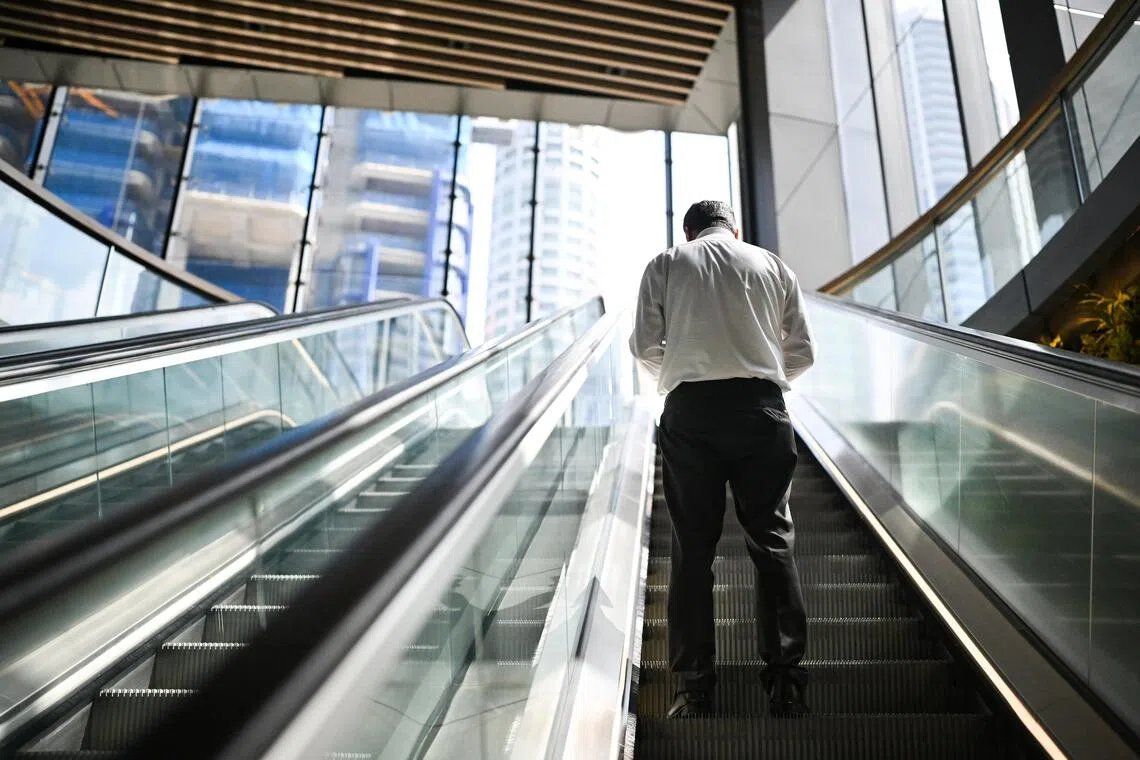
South Korea finds itself in the grip of an unexpectedly divisive public policy question: the proper way to ride an escalator. A recent government survey of 1,000 adults across seven major cities has laid bare a nation almost evenly fractured on the issue, with 50.1 per cent endorsing the practice of standing on one side to leave the other clear for those who wish to walk, while 49.9 per cent advocate for stationary passengers occupying both lines. This razor-thin margin has resurrected a contentious commuter debate that has simmered in South Korean society for decades, simultaneously challenging long-held assumptions about whether leaving one side free actually delivers promised time savings.
The intensity of official attention paid to this matter became apparent when the government convened a forum in Seoul on August 29, drawing approximately 200 citizens and expert analysts to deliberate the merits and drawbacks of each approach. Speakers examined whether escalator safety and passenger throughput improved when all users remained stationary or when one lane remained designated for walkers. The breadth of participation underscored how this question transcends mere commuter convenience, touching on fundamental issues of urban design, public health, and collective behaviour. Jang Gye-ryeon, a public administration researcher at the Korea Institute of Industrial Relations, reframed the entire discussion by arguing that the choice between one-line and two-line standing cannot be reduced to a simple binary preference. Rather, he contended, any policy prescription must account for whose efficiency matters most, and crucially, in which specific locations and at what times of day such arrangements would be implemented.
The efficiency question, while superficially straightforward, becomes remarkably complex under scrutiny. An individual passenger rushing to catch a connection clearly saves time by walking up or down a moving escalator rather than waiting passively. However, this individual benefit does not necessarily translate into optimal outcomes for the collective mass of commuters. Research cited at the forum, drawn from a crowded British railway station, demonstrated that passenger capacity increased by approximately 25 to 30 per cent when people stood on both sides of the escalator rather than clustering on one side. A smaller-scale trial conducted at Guri Station near Seoul yielded comparable findings, with 190 people using the escalator over an identical time period when both sides were occupied, compared to only 164 when a one-side-standing arrangement was enforced. Officials acknowledged that this Seoul experiment possessed limited scope and cautioned against drawing definitive conclusions, yet the evidence points toward a potential trade-off between individual speed and aggregate capacity.
Beyond mere passenger volume considerations, a significant safety dimension complicates the escalator etiquette equation. Sensor-based testing of escalator steps revealed that pedestrians walking downward experienced impact forces equivalent to approximately 2.01 times their body weight, while ascending walkers endured impacts of around 1.54 times body weight. Heo Yun-seop, a professor at Korea Lift College, emphasised that these repeated impacts from walking, combined with the uneven loading stresses generated when users concentrate their weight on a single side, could accumulate damage to escalator mechanisms over time. Such repetitive strain might compromise the equipment's operational lifespan and drive up maintenance expenses, though he acknowledged that existing evidence falls short of definitively proving that one-sided standing directly precipitates mechanical failures or malfunctions.
South Korea's own track record on this issue reveals how national guidance has shifted repeatedly in response to evolving priorities. Beginning in 1998, authorities actively promoted one-side standing as a means to accommodate passengers seeking rapid transit. This practice gained momentum and became virtually standardised nationwide around the 2002 FIFA World Cup, when facilitating the expeditious movement of international visitors became a priority. However, as accidents multiplied and maintenance concerns grew more pressing, the government reversed course, championing two-line standing arrangements between 2009 and 2014 as the safer and more sustainable option. Since 2015, officials have adopted a more cautious stance, declining to mandate either approach and instead offering three universal safety recommendations: passengers should maintain firm grip on handrails, refrain from walking or running, and position themselves within designated safety zones marked on each step.
This wavering policy history goes far toward explaining why contemporary commuters remain so internally divided on the question. Worrying accident statistics provide fresh impetus for government reconsideration of the matter. Records spanning from 1993 to 2025 indicate that user behaviour accounted for 72.3 per cent of all escalator accidents, while individuals aged 60 and older comprised 53.3 per cent of those injured, highlighting the vulnerability of ageing populations to escalator-related incidents. These figures suggest that neither approach offers complete safety guarantees, and that demographic factors substantially influence escalator risk profiles.
The August 29 forum itself produced intriguing shifts in participant opinion, suggesting that exposure to comprehensive information and expert testimony can meaningfully alter public preferences on the issue. Before discussions commenced, 45.9 per cent of attendees favoured standing still on two lines, while only 13.4 per cent backed the one-side-standing approach. Following hours of deliberation and evidence presentation, support for walking on one side surged to 29.9 per cent, though backing for two-line standing contracted to 31.4 per cent. Most strikingly, the largest constituency, representing 38.1 per cent of participants, emerged favouring a context-dependent solution that would vary rules based on specific location characteristics and real-time crowd density fluctuations.
This preference for situational flexibility points toward a pragmatic resolution that acknowledges escalators operate under vastly different conditions across Seoul's transportation network. During peak morning and evening rush hours in the subway system, when passenger volumes surge, two-line standing may indeed move maximum numbers efficiently. In contrast, airport terminals or shopping districts where commuter patterns disperse more evenly throughout the day might benefit from one-side-standing arrangements. Commercial centres, hospitals, and elderly care facilities might prioritise safety configurations over pure throughput optimisation. The notion of location-specific protocols thus reflects sophisticated understanding that no universal escalator policy can optimally serve all contexts and user populations simultaneously.
Interior Minister Yun Ho-jung signalled that the government intends to incorporate insights gathered during the August forum into future initiatives designed to enhance escalator safety across South Korean infrastructure. This measured commitment suggests authorities recognise that resolving the escalator question requires not a single prescriptive rule imposed uniformly nationwide, but rather a nuanced framework adaptable to local conditions and user demographics. For Malaysian and Southeast Asian policymakers grappling with similar urban mobility challenges, South Korea's extended deliberation offers instructive lessons about the complexity lurking beneath seemingly simple behavioural questions, and the importance of grounding public policy in robust empirical evidence rather than entrenched custom or convenience.

