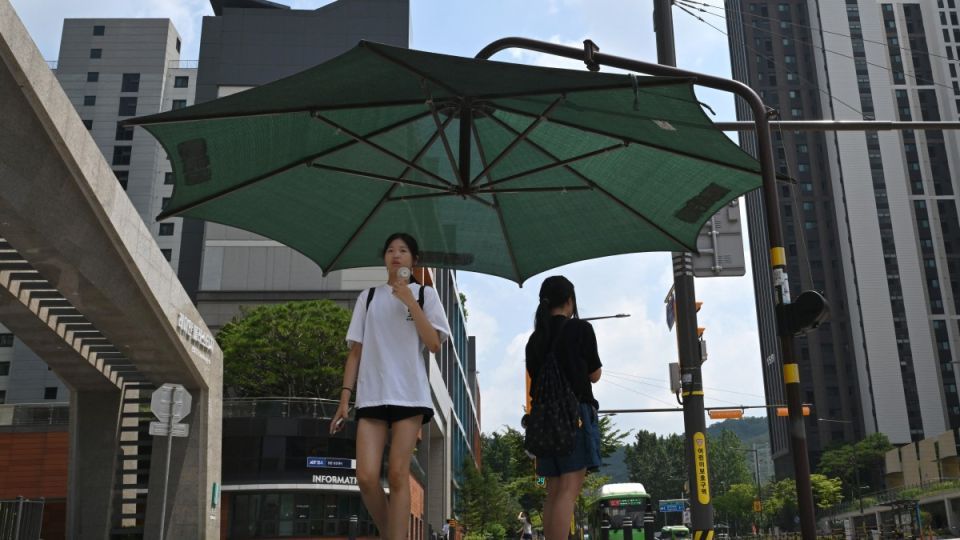
Record-breaking temperatures sweeping across South Korea have prompted major corporations to overhaul workplace practices, yet the response has starkly illustrated how industrial safety protections remain stratified along company size and worker status. While conglomerates invest millions in cooling infrastructure and reorganised work schedules, smaller employers and seasonal labourers—who face disproportionate heat-related risks—struggle to implement even basic protective measures. This disparity threatens to entrench existing inequalities in one of Asia's most industrialised economies.
The urgency of South Korea's heat crisis became impossible to ignore as temperatures soared to unprecedented levels this year. Yangsan in South Gyeongsang Province recorded a national high of 42.5 degrees Celsius, while Seoul endured an extended highest-level heatwave warning that persisted for multiple days. Such extremes are no longer anomalies but represent the new baseline against which employers must calibrate their operations. The Korea Workers' Compensation and Welfare Service documented 195 heat-related occupational accidents between 2022 and June 2024, including 20 fatalities—a sobering reminder that workplace heat exposure translates directly into injury and death.
The acceleration of heat casualties carries particular weight given that the deadliest period typically arrives in July and August. By the end of June alone, thirteen heat-related incidents had been recognised, with four proving fatal. This trajectory suggests the 2024 summer season could surpass previous years in severity unless protective measures prove effective. The data underscores that heat-related workplace injuries are not confined to isolated incidents but represent a systematic occupational health challenge that demands comprehensive policy responses.
Legal accountability has emerged as a crucial catalyst for corporate action. A watershed moment occurred when a district court convicted a construction company under the Serious Accidents Punishment Act for the heatstroke death of a subcontractor's employee—the first conviction of its kind. This legal precedent has sent powerful signals throughout South Korea's construction sector, which already shoulders disproportionate shares of industrial fatalities. Facing potential criminal liability alongside civil penalties, large construction firms have moved rapidly to implement layered protection strategies that extend far beyond voluntary compliance.
Major construction and industrial companies now deploy sophisticated heat-management systems. Lotte E&C monitors perceived temperatures every five minutes across approximately 80 construction sites, automatically classifying heat risks into five distinct levels to trigger proportionate responses. Hyundai Engineering & Construction incentivises workers to use designated rest areas, while Daewoo E&C eliminates penalties for workers who stop working when experiencing physical distress. These approaches recognise that effective heat protection requires both technological infrastructure and cultural shifts that empower workers to prioritise their wellbeing without fearing wage reductions or job security threats.
Specialised protections for migrant workers reveal growing recognition that heat vulnerability intersects with immigration status and language barriers. Hyundai E&C distributed emergency reporting guides in 22 languages and provided cooling vests with integrated fans, acknowledging that foreign workers often lack equal access to information and equipment. Similarly, Kumho E&C partnered with beverage manufacturer Lotte Chilsung to supply bottled water, sports drinks, cooling towels and portable shelters across construction sites through September. These initiatives address practical needs but also signal corporate acknowledgment that migrant workers constitute a particularly exposed population requiring targeted intervention.
Heavy industrial operations that cannot suspend production during heatwaves have restructured work-rest ratios to manage thermal stress systematically. Posco, whose blast furnaces operate continuously, mandates fifteen-minute rest breaks after every forty-five minutes of work when perceived temperatures exceed 35 degrees Celsius, with slightly less stringent requirements at lower thresholds. Hyundai Steel follows comparable protocols, ensuring that workers rotating through high-temperature environments receive regular recovery periods. This scheduling approach acknowledges a physiological reality: continuous exposure to extreme heat exhausts workers' thermoregulatory capacity, and periodic rest allows temporary recovery that prevents cumulative thermal damage.
Shipbuilding firms have extended this logic to leisure periods. Hanwha Ocean doubled morning and afternoon breaks from ten to twenty minutes through August and lengthens lunch periods when temperatures surpass 28 degrees Celsius, with hour-long extensions when heat reaches 31.5 degrees or higher. HD Hyundai Heavy Industries stretches lunch breaks from one to ninety minutes during summer peaks while operating over 270 cooling facilities across shipyards, distributing cooling vests and electrolyte supplements. Samsung Heavy Industries established a dedicated heat-response task force, while SK hynix and Coupang expanded air-conditioning and ventilation infrastructure. These moves reflect resource-intensive commitments that smaller employers simply cannot sustain.
The concentration of protective measures among major companies creates a two-tier system where workplace safety depends fundamentally on employer size and capital availability. Official data reveals that more than half of the 195 heat-related accidents between 2022 and June 2024 occurred at workplaces with fewer than fifty employees, while forty-two incidents struck businesses with fewer than five workers. These small enterprises typically lack dedicated safety personnel, cooling equipment budgets and flexible scheduling options. Employees at such workplaces labour under conditions their counterparts at Samsung or Hyundai would find unacceptable, yet receive minimal legal or practical protection.
Migrant agricultural workers face perhaps the starkest vulnerability. These seasonal labourers—predominantly from Thailand, Vietnam and other Southeast Asian nations—work in outdoor environments without adequate shelter, hydration or medical supervision. Last month alone, a Thai seasonal worker collapsed fatally while labouring in fields near Haenam, South Jeolla Province, while a Vietnamese national died similarly in Goesan, North Chungcheong Province. Their deaths occurred entirely outside South Korea's industrial safety framework, neither documented in workers' compensation statistics nor addressed by corporate heat protocols. These deaths represent the human cost of a protection system that functions only for workers integrated into formal employment relationships.
Policymakers and labour advocates increasingly recognise that voluntary corporate measures, however well-intentioned, cannot address systemic inequities. Rep. Kim Wi-sang of the ruling People Power Party has called for the government to move beyond focusing on large workplaces and instead strengthen inspections and practical protections specifically targeting seasonal migrant workers and outdoor workers at small businesses. This reframing shifts responsibility from individual employer discretion to government mandate, suggesting that heat safety should become a baseline regulatory requirement rather than a competitive advantage available exclusively to workers at major corporations.
The South Korean heat crisis offers instructive lessons for Southeast Asian nations where similar temperature extremes increasingly occur amid growing populations of vulnerable workers. The South Korean experience demonstrates both the possibilities and limitations of corporate-driven responses to climate-related occupational hazards. While large firms can absorb costs associated with cooling infrastructure, extended breaks and monitoring systems, smaller employers and informal workers remain exposed unless governments establish and enforce minimum standards applicable across all workplace categories. Without such intervention, heat-related workplace injuries will remain a feature of economic inequality, claiming lives disproportionately among those with least bargaining power.

