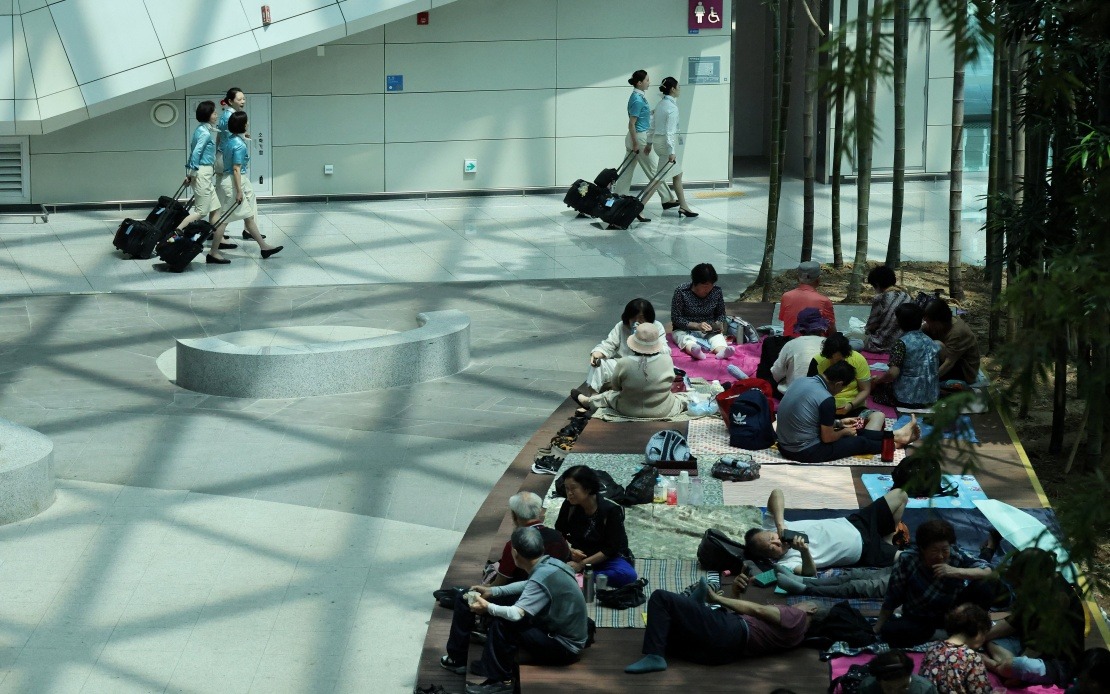
South Korea faces an accelerating public health crisis driven by heat-related illnesses, with the number of patients presenting to hospitals during late summer nearly tripling over the past ten years. Government analysis released this week underscores how climate patterns are placing increasing strain on the nation's healthcare infrastructure and raising alarm among health authorities about the trajectory of heat-induced medical emergencies.
According to data from the Korea Disease Control and Prevention Agency, the baseline period of 2011 to 2015 saw an annual average of 215 heat-related illness cases reported between ipchu—the traditional calendar date marking autumn's astronomical start, which fell on August 7 this year—and the end of August. This figure surged to 658 cases annually in the 2016-2020 period before stabilising slightly at 638 cases in the most recent five-year span from 2021 to 2025. The persistence of elevated figures in recent years suggests that South Korea has entered a new normal characterised by prolonged and more intense heat stress affecting the population.
The mortality trajectory associated with these illnesses reveals an even more troubling trend. Deaths attributed to heat-related causes have climbed from an annual average of 3.3 between 2012 and 2015 to over four deaths per year during the 2016-2025 decade. This escalation, while modest in absolute numbers, represents a concerning shift given that fatal outcomes concentrate among vulnerable populations including the elderly, outdoor workers, and those with pre-existing conditions. The mortality data suggests that rising case numbers are not merely statistical artefacts but reflect genuine intensification in heat severity and duration.
The 2024 data provides a sharp illustration of current pressures. From ipchu through late August alone, South Korean hospitals treated 1,299 patients for heat-related complaints, with twelve deaths recorded during this period. On a single Friday in August, emergency departments nationwide admitted 202 heat-illness patients, three of whom died. These figures, captured during what officials characterise as a typical late-summer window, demonstrate how routinised extreme heat has become within the Korean summer calendar and the consistent demand it places on emergency medical services.
South Korea's government has responded to this challenge by establishing a dedicated heat-related illness monitoring system operational since mid-May. Since its establishment, the system has documented 3,089 cases across the monitoring period, including 26 deaths. The surveillance framework allows health authorities to track geographic hotspots, identify at-risk populations, and coordinate response measures. However, the system's scope is deliberately limited to specific seasons, raising questions about whether year-round monitoring might capture a fuller picture of heat-related health impacts.
Meteorological forecasts indicate that extreme heat will persist across South Korea through late August, with daytime temperatures anticipated to range between 31 and 35 degrees Celsius nationally. This sustained warmth extends the period during which heat-related illnesses pose acute risk, compressing the nation's recovery window before autumn properly arrives. The temperature range, while not exceptional by regional standards, represents stress for a population and infrastructure partly adapted to more moderate summer conditions. Urban heat island effects, concentration of elderly residents, and outdoor occupations compound these challenges across different regions.
The surge in heat-related illness cases carries implications for Malaysia and Southeast Asia more broadly. The region has long experienced high ambient temperatures, but the South Korean experience demonstrates how climate variability and gradual warming can fundamentally alter the burden and seasonality of temperature-related health outcomes. Malaysia's tropical climate keeps temperatures elevated year-round, yet the increases observed in South Korea suggest that even within warm regions, thresholds for physiological stress can shift, and populations may become less rather than more resilient over time. Healthcare systems across Southeast Asia would benefit from examining South Korea's monitoring approaches and emergency response protocols.
The demographic dimension of South Korea's heat crisis warrants particular attention. As the nation ages, the proportion of vulnerable elderly citizens exposed to heat stress grows, amplifying the public health impact of rising temperatures. Malaysia faces a comparable demographic transition, with increasing shares of older residents. The South Korean experience suggests that adapting healthcare capacity and emergency response systems ahead of demographic shifts could prevent cascading pressures on hospitals during summer months. Urban planning that prioritises cooling infrastructure and community spaces may offer preventive value alongside medical interventions.
From a workers' perspective, the data hints at occupational vulnerability to heat illness. South Korea's construction, agricultural, and manufacturing sectors employ substantial numbers of outdoor and heat-exposed workers. The consistency of heat-related cases across the past decade suggests endemic occupational exposure rather than isolated extreme events. Malaysian employers and occupational safety regulators should consider whether workplace heat stress protocols adequately account for longer and more intense exposure periods, particularly given that many Southeast Asian economies employ substantial informal sector workforces with minimal protections.
Government coordination represents another lesson from South Korea's experience. The integration of national disease control, interior ministry research capacity, and emergency medical services into a unified surveillance and response framework enabled the detailed epidemiological picture now available. Malaysia's institutional structures differ, but developing inter-agency coordination mechanisms for heat-related health surveillance could improve early warning and resource allocation. Current systems may fragment heat-related illness data across multiple reporting pathways, obscuring the true trend and extent.
The economic dimensions of rising heat-related illness extend beyond direct medical costs. Productivity losses from worker illness, absences, and mortality carry downstream economic consequences. Heat-induced medical crises also divert emergency capacity from other urgent conditions, potentially degrading care quality. South Korea's precise quantification of cases and deaths enables policymakers to justify preventive investments. Malaysian health authorities might pursue similar systematic data collection to build the empirical case for heat-adaptation spending.
Looking forward, South Korea's trajectory suggests that heat-related illness management will remain a permanent fixture of public health planning rather than an occasional seasonal concern. The stabilisation of case numbers at elevated plateaus in recent years, rather than dramatic continued increases, may indicate that some adaptive capacity exists within populations and healthcare systems. However, without deliberate interventions—from urban cooling strategies to workplace protections to elderly population support—further deterioration remains plausible. The South Korean example provides both cautionary insight and a template for systematic response that regional policymakers should study closely.

