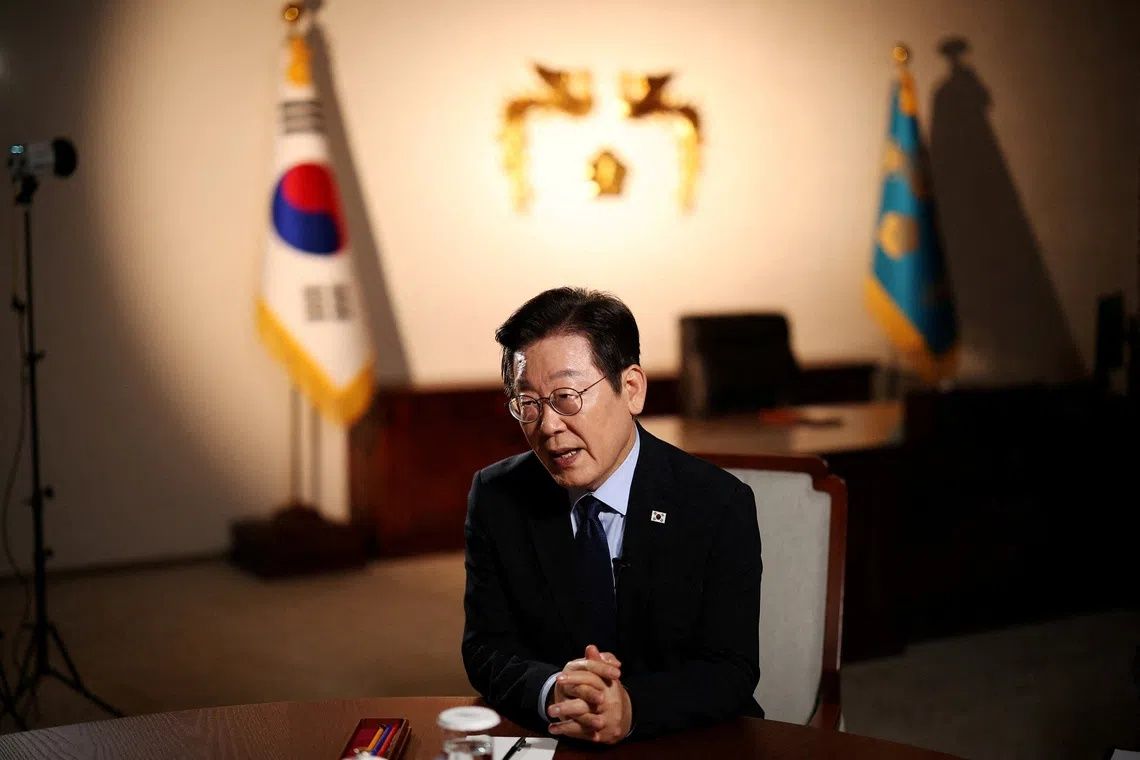
South Korean President Lee Jae Myung has indicated backing for a significant constitutional overhaul that would fundamentally reshape the nation's executive structure, according to statements from his office released on Friday. The proposed reform would replace the current single five-year presidential term with a renewable four-year term, while simultaneously transferring considerable authority from the presidency to the National Assembly. The shift represents a deliberate attempt to address longstanding concerns about the concentration of executive power that has characterised South Korean politics for decades.
A senior official from the presidential Blue House disclosed the position to news agency Yonhap, emphasising that this constitutional model enjoys the widest appeal among the South Korean electorate. The proposal addresses a tension that has plagued South Korean governance: the need to provide sufficient time for a president to implement policy while preventing the accumulation of excessive personal power. Under the existing framework, presidents have faced mounting legal and political vulnerabilities upon leaving office, a pattern that has repeatedly destabilised Korean politics and frequently resulted in prosecutions of former chief executives.
The Lee administration's willingness to champion this reform carries particular significance given the historical resistance of sitting presidents to voluntarily diminish their own authority. Lee's public endorsement of parliamentary strengthening acknowledges growing criticism that South Korea's presidential system has evolved into what detractors describe as an "imperial presidency", where executive dominance overshadows legislative oversight. This characterisation reflects concerns shared across the political spectrum about the need for institutional checks on presidential power that extend beyond the current five-year term limit.
Implementing such constitutional amendments in South Korea requires navigating formidable procedural obstacles. Constitutional changes demand approval from at least two-thirds of the 300-member National Assembly, meaning a minimum of 200 lawmakers must support any proposal. This supermajority requirement ensures that major constitutional revisions cannot be achieved through simple partisan majorities, forcing genuine cross-party negotiation and compromise. The Blue House official's statement underscores this reality, emphasising that meaningful constitutional reform must emerge from authentic political consensus rather than unilateral presidential initiatives.
The emphasis on the National Assembly's role reflects an important structural consideration for Malaysia and other Southeast Asian democracies observing South Korean governance patterns. Constitutional reforms that require legislative approval rather than executive decree provide institutional safeguards against power consolidation. In South Korea's context, this requirement has proven both frustrating for reformers and protective of democratic principles, ensuring that fundamental changes to the political system cannot be imposed by a dominant president but must reflect broader societal agreement.
Lee's proposal also implicitly acknowledges the self-limiting vulnerabilities inherent in the current presidential system. Since South Korea's democratisation in 1987, the five-year single-term structure has created perverse incentives, with presidents frequently using their final years in office to secure political advantage for favoured successors or to shield themselves from post-presidency prosecution. The pattern has repeatedly erupted into scandal, undermining public confidence in political institutions. A renewable four-year term could theoretically provide presidents with sufficient runway to pursue coherent policy agendas while subjecting them to periodic electoral accountability that the current system lacks.
Regional observers, particularly those in Southeast Asia managing their own constitutional arrangements, should note the practical implications of such reform. Malaysia's own federal structure, with separate state and federal authorities and a constitutional monarchy, operates under fundamentally different constraints than South Korea's presidential system. Nevertheless, the broader principle of balancing executive efficiency against institutional checks remains relevant across diverse democratic contexts. South Korea's ongoing constitutional debate reflects universal tensions about how to structure executive power in ways that enable effective governance while preventing authoritarian drift.
The political feasibility of Lee's proposal remains uncertain despite apparent public receptiveness. Opposition parties may resist changes perceived as advantageous to an incumbent president, even if the reforms theoretically benefit all future executives. Historical precedent in South Korean politics demonstrates that constitutional amendments frequently become entangled in partisan calculations, with opposition parties fearing that accepting any presidential initiative strengthens the incumbent politically. Previous attempts at constitutional reform have repeatedly foundered on such mutual suspicions, despite general agreement that the existing system requires modification.
The timing of Lee's position announcement carries strategic implications within South Korea's current political landscape. Presenting constitutional reform as driven by principled concern for institutional balance rather than narrow presidential advantage represents a calculated effort to build broader political consensus. By emphasising the concentration of power as the core problem requiring remedy, rather than framing reform as beneficial specifically to the current administration, the Blue House attempts to elevate the discussion above partisan competition and position itself as defending democratic principles.
For Malaysia and the broader Southeast Asian region, South Korea's constitutional deliberations offer instructive lessons about the persistent challenge of designing executive systems that remain responsive yet constrained. While Malaysia's unique constitutional monarchy and federal arrangement create a fundamentally different governance ecosystem, the underlying questions about balancing executive authority with legislative oversight and periodic accountability remain eternally relevant. South Korea's ongoing debate about presidential powers and term limits reflects the universal democratic tension between enabling effective government and preventing power concentration.
The path forward for South Korean constitutional reform will ultimately depend on whether political consensus can coalesce around shared institutional interests transcending immediate partisan advantage. The requirement for supermajority legislative approval ensures that any amendment will reflect genuine cross-party agreement rather than executive imposition. As Korea's political parties engage with these proposals in coming months, the outcome will demonstrate whether democratic institutions can successfully reform themselves through persuasion and negotiation rather than through constitutional crisis or political dysfunction.

