South Korean President Lee Jae Myung is navigating a delicate political tightrope following the troubled June 3 local elections, simultaneously validating public frustration over ballot distribution failures while drawing a firm boundary against what he characterises as baseless claims of electoral manipulation. His carefully calibrated statements reveal the tensions confronting democracies when institutional failures collide with public scepticism and grassroots movements demanding accountability.
The core issue stems from documented shortages of ballot papers and various administrative mishaps on election day that forced authorities to temporarily suspend or postpone voting at numerous polling stations across South Korea. Rather than dismissing these as minor technical glitches, Lee has publicly acknowledged that such failures represent a fundamental breach of voters' constitutional rights, describing the situation as "truly absurd and bewildering." This recognition validates the legitimate grievances of citizens whose ability to participate in democratic processes was compromised through no fault of their own—a particularly sensitive issue in a nation where electoral integrity forms the bedrock of democratic legitimacy.
Yet Lee's acknowledgment of institutional failure comes paired with stern warnings against what he terms "baseless conspiracy theories" alleging that the election itself was rigged or deliberately manipulated. In remarks made during a video address from the Vatican, the President explicitly cautioned that some groups were opportunistically leveraging the genuine ballot shortage problem to advance unfounded claims of election fraud. This distinction—between criticising poor administrative management and alleging deliberate electoral sabotage—represents a crucial political and legal demarcation that has become increasingly difficult to maintain as public anger intensifies.
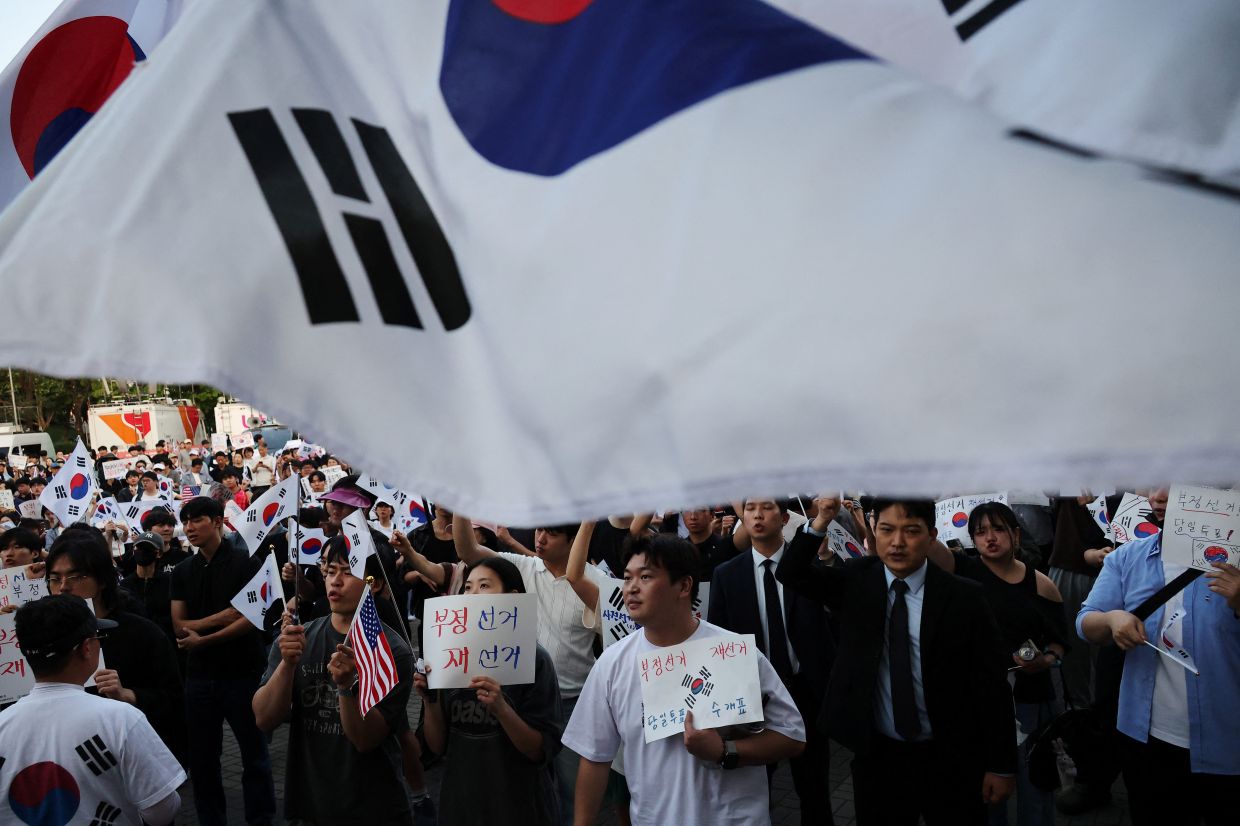
The ongoing protests centred at Olympic Park's handball arena, which served as the vote-counting facility, have evolved beyond peaceful demonstrations into actions that Lee considers problematic. Sports organisations with offices within the Olympic Park complex have reported significant disruptions to their operations as protesters have blocked facility access, hindering administrative work essential for South Korean athletes preparing for international competitions. Lee's instruction to police to conduct strict investigations into those who obstruct public services by force suggests authorities are preparing to draw a legal line between protected protest activity and conduct deemed to violate others' rights.
This tension between protecting protest rights and preventing disruption to public services reflects broader challenges facing democracies when managing post-election disputes. Lee's framing—that protesters "should be careful not to let their expressions of opinion go so far as to infringe on the rights of others"—implicitly acknowledges that while dissent is legitimate, it cannot be unlimited. The practical complications arise when determining where precisely that boundary lies, particularly when protesters view their actions as necessary pressure to force accountability for alleged institutional failures.
Lee has called for multiple parallel investigative tracks to address different aspects of the crisis. He has urged the National Election Commission to cooperate fully with parliamentary inquiries expected to commence within days, while simultaneously pressing prosecutors and police to accelerate their investigation into individual accountability for the administrative failures. Notably, he instructed investigators to pursue their work "without any sanctuary," signalling that even high-ranking officials implicated in mismanagement should face potential consequences. This multi-channel approach suggests recognition that single institutional investigations might lack sufficient public credibility to restore faith in electoral processes.
The President's insistence on a "transparent and thorough fact-finding process" directly addresses one of the core drivers of conspiracy theories: public perception that authorities lack genuine commitment to exposing the full scope of what went wrong. Opacity breeds suspicion; detailed, publicly documented investigations provide the empirical foundation for distinguishing between genuine concerns and unfounded allegations. For Malaysia and other Southeast Asian democracies wrestling with similar challenges, Lee's approach offers an instructive model for balancing accountability with institutional legitimacy.
Lee's invocation of "constructive alternatives" and the need for "healthy criticism" within the bounds of law and institutional frameworks reflects a sophisticated understanding that democratic resilience depends on channelling legitimate grievances through legitimate mechanisms rather than attempting to suppress them entirely. By validating public anger while insisting on lawful methods of expression, he seeks to demonstrate that democratic institutions can genuinely respond to failure—and therefore warrant continued confidence.
However, the political calculus remains precarious. For citizens whose votes were effectively nullified by administrative chaos, the distinction between condemning poor management and rejecting fraud claims may feel artificial rather than principled. The challenge for Lee's government involves delivering sufficiently credible accountability measures that defuse public anger before it metastasises into broader institutional distrust. In democracies across the region, similar tensions have occasionally escalated into constitutional crises when authorities appeared to dismiss rather than address legitimate concerns about electoral administration.
The broader Southeast Asian context amplifies the significance of how South Korea resolves this dispute. Regional democracies including Malaysia have periodically confronted questions about electoral integrity, and the approaches taken by established democracies like South Korea inevitably influence public expectations elsewhere in the region. If Lee's government successfully demonstrates that institutional failures trigger genuine, consequential investigations and reforms, it reinforces the principle that democratic systems self-correct. Conversely, if accountability measures appear performative or insufficient, the precedent undermines confidence in regional democratic institutions more broadly.
Looking forward, Lee's success in managing this crisis depends on delivering tangible institutional reforms that prevent recurrence of ballot distribution failures, combined with swift and visible accountability for those responsible for the administrative breakdown. The challenge of distinguishing legitimate accountability from conspiracy theories remains unresolved; the coming weeks of parliamentary and criminal investigations will largely determine whether his careful rhetorical balance translates into restored public confidence or further polarisation. For regional observers, the outcome offers crucial lessons about the institutional and political requirements for managing electoral crises while maintaining democratic legitimacy.