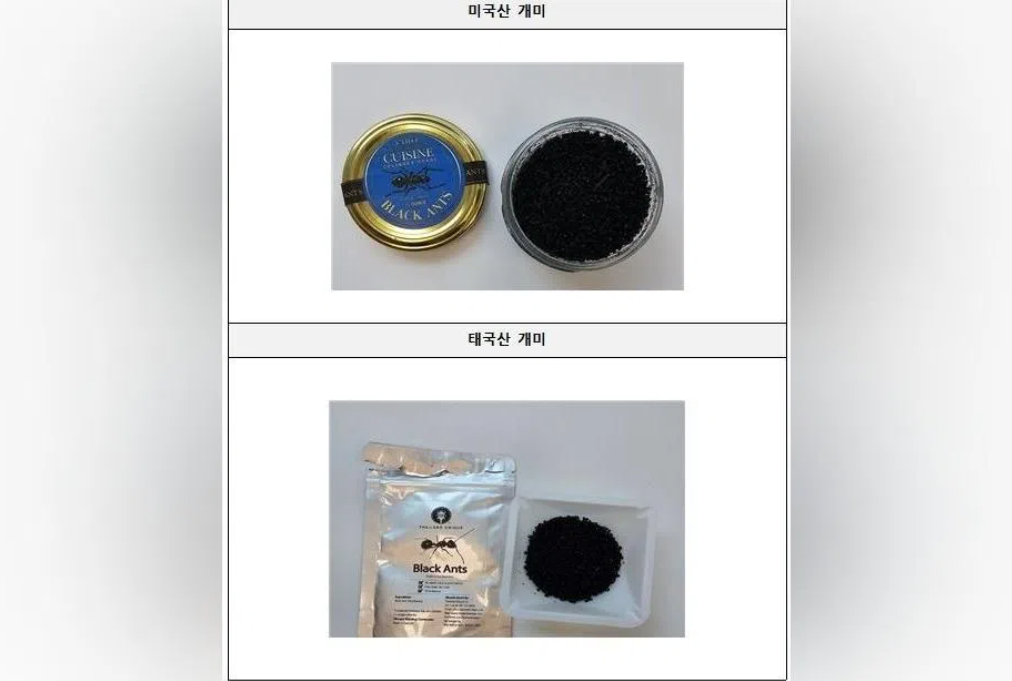
A South Korean Michelin-starred restaurant proprietor is confronting potential imprisonment following allegations that he flouted food safety legislation by adorning a frozen dessert with black ants imported from Thailand and the United States. Seoul prosecutors have requested a one-year custodial sentence for the owner of the two-star establishment, filed in an effort to maintain rigorous compliance with the nation's stringent food handling standards. The case, heard at a Seoul Western District Court session on Monday, represents an escalating scrutiny of high-end dining establishments over ingredient sourcing and menu safety.
South Korea maintains an exceptionally selective list governing which insects may be safely consumed by the public. Precisely ten insect species are authorised for culinary use under the country's regulations, with grasshoppers and brown mealworm larvae among the permitted options. This carefully curated inventory reflects decades of public health deliberation and scientific assessment. The black ants in question, however, fall outside this approved inventory, rendering their use in food service an infringement of established safety protocols regardless of the restaurant's prestigious standing or culinary intentions.
According to statements released by the food safety ministry, investigators determined the restaurant's proprietor utilised the prohibited insects as an unconventional garnish, strategically positioning between three and five ants atop each sorbet to impart an acidic dimension to the palate-cleansing course. This application occurred over an extended period spanning nearly four years and persisted until January 2025. The accumulated revenue generated through the sale of these insect-garnished confections exceeded 120 million won, equivalent to approximately US$81,000, demonstrating the practice's prevalence rather than an isolated experimental mishap.
The enforcement agency's investigation, initiated during the preceding year, uncovered documentation of the sourcing arrangements through photographic evidence presented to the court. Ministry officials recovered packaging bearing the label "Cuisine Black Ants" contained within a cylindrical tin, substantiating the intentional and deliberate procurement of these insects for culinary deployment. Such documentary evidence strengthened prosecutors' argument that this represented a knowing violation rather than an innocent misunderstanding of regulatory boundaries.
Beyond the imprisonment recommendation, legal authorities have pursued additional financial penalties to deter comparable infractions within South Korea's competitive fine-dining sector. Prosecutors formally requested that the court levy a fine of 20 million won alongside any custodial determination, creating a dual financial consequence for the establishment. The cumulative sanctions signal the prosecutorial commitment to enforcing food safety mandates uniformly across all restaurant categories, irrespective of culinary prestige or international recognition through accolades such as Michelin stars.
The defendant's legal representatives advanced a mitigation argument centred upon informed consumer consent, asserting that the ant-adorned desserts were exclusively provided to patrons who had previously agreed to their inclusion on the menu. This defence strategy attempted to reframe the violation as a matter of transparent customer choice rather than deceptive practice. However, such argumentation appears unlikely to nullify the fundamental regulatory breach, as South Korean food safety law establishes absolute prohibitions on non-approved insects regardless of advance notification or voluntary consumption.
During his concluding remarks to the tribunal, the restaurateur expressed remorse regarding the infraction, attributing the transgression to inadequate comprehension of applicable regulations. The defendant stated, "I apologise for this incident, which arose from my failure to fully understand the relevant regulations," a statement that simultaneously acknowledged culpability while suggesting possible negligence rather than intentional malice. Nevertheless, this acknowledgement does not diminish the technical violation or the extended timeframe across which the practice persisted.
The case carries significant ramifications for South Korea's haute cuisine landscape, where chefs frequently experiment with unconventional ingredients and plating techniques in pursuit of distinctive dining experiences. The prosecution signals that such experimentation must remain confined within regulatory frameworks, even when targeting elite clientele with presumed sophistication and adventurous palates. The ruling will establish jurisprudential precedent regarding the enforceability of food safety standards within premium establishments that might otherwise operate under assumptions of greater regulatory latitude.
For Malaysian and Southeast Asian food service operators, the South Korean enforcement action underscores the necessity of rigorous compliance with national food safety legislation across all business categories and price points. Individual nations throughout the region maintain their own approved insect and ingredient specifications, reflecting distinct public health priorities and cultural culinary traditions. The incident serves as a cautionary reminder that international prestige or culinary innovation cannot supersede fundamental safety requirements established by governmental health authorities.
The Seoul Western District Court is anticipated to render its decision during early September, concluding the judicial examination of this unprecedented case. The eventual ruling will clarify whether South Korea's courts view violations of insect-consumption restrictions as serious enough to warrant imprisonment even within gastronomically progressive establishments. Whether the defendant receives the full sentence recommended by prosecutors or a reduced penalty will substantially influence how the hospitality industry nationwide interprets and implements food safety obligations going forward.

