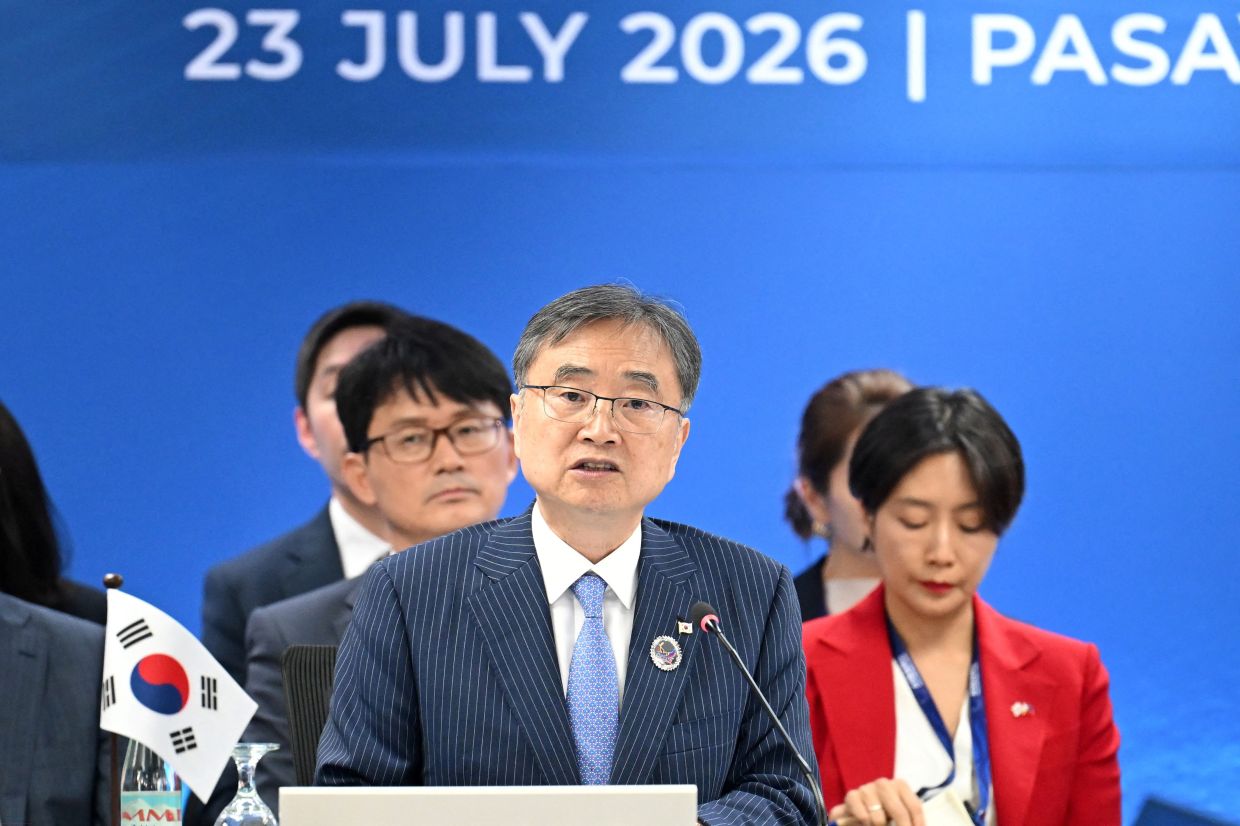
South Korea's bid to restart diplomatic contact with North Korea has collided with public disagreement between two of its most senior officials, exposing fault lines within President Lee Jae Myung's government at a delicate moment in negotiations. Foreign Minister Cho Hyun and Unification Minister Chung Dong-young clashed this week over the substance and feasibility of engagement proposals, signalling potential obstacles to Seoul's broader strategy of cautious reconciliation with the North.
The dispute emerged after Chung presented a slate of policy ideas to President Lee during a Wednesday meeting, including proposals to initiate four-party talks bringing together both Korean governments, the United States, and China. Cho subsequently dismissed these initiatives as overly optimistic, telling journalists that Chung had spoken in "idealistic terms" without securing consensus from other government agencies. The remark carried an implicit rebuke: that the Unification Minister had overreached beyond established departmental positions. Chung countered the next day that idealistic thinking was essential to break the current impasse, suggesting the disagreement reflects a fundamental philosophical gap between the two officials on how to approach a frozen diplomatic relationship.
This public discord arrives as Seoul attempts to breathe life into engagement efforts that have stalled for years. The Lee administration has deliberately repositioned South Korea's approach from demanding North Korean denuclearisation before any dialogue—the position of previous conservative governments—toward what officials term a "peace-first" framework. Under this doctrine, Seoul hopes to initiate lower-stakes conversations that might eventually lead to discussions on security matters. The government has simultaneously pressed Washington to encourage President Donald Trump to meet directly with North Korean leader Kim Jong Un, betting that a bilateral summit might provide momentum for broader negotiations.
Yet the ministers' public airing of disagreement immediately undermines Seoul's negotiating position. Observers in foreign capitals, particularly Pyongyang, typically scrutinise such rifts as indicators of political will and institutional cohesion. Lim Eul-chul, a Korea specialist at Kyungnam University, cautioned that the visible split sends a troubling signal to the North, suggesting that South Korea's government lacks unified purpose and that any agreements reached through dialogue could be vulnerable to reversal depending on domestic political shifts. Such perceptions of instability are precisely what makes Pyongyang reluctant to commit to engagement; previous experience has taught North Korean leadership that diplomatic gains can evaporate if South Korean administrations change course. The ministers subsequently issued pro-forma statements promising future coordination but declined to elaborate, a holding pattern that typically masks rather than resolves underlying disagreements.
The timing of this rift reflects mounting pressure on Lee's government to demonstrate diplomatic progress. Inter-Korean relations have deteriorated sharply since the COVID-19 pandemic disrupted regular contact. Kim Jong Un announced in 2024 that North Korea would abandon reunification as a policy objective and subsequently razed joint economic projects on its territory, effectively erasing symbolic infrastructure from earlier periods of detente. Dialogue has essentially ceased, and border security has tightened so considerably that defections have plummeted to negligible levels. Just 63 North Koreans managed to escape to the South during the first half of 2026, compared to 1,047 in 2019—a collapse that underscores the hermetic nature of current conditions.
Seoul's outreach efforts have included discontinuing practices it believes Pyongyang finds provocative, such as anti-regime loudspeaker broadcasts directed across the demilitarised zone. The government has also soft-pedalled international advocacy on human rights within North Korea, a significant shift that has disappointed international organisations and defector networks. Human rights groups have noted that the Lee administration suspended certain investigative reports and reduced broadcasting capacity dedicated to documenting abuses, moves designed to avoid antagonising the regime. Kim Tae-Hoon, who previously led the advocacy organisation PSCORE, observed that this reorientation has drained donor support for groups fighting for prisoner rights and documenting state atrocities—a trade-off many activists view as morally problematic even if strategically rational.
The philosophical tension between Cho and Chung mirrors a broader debate within Seoul's policy establishment. Proponents of engagement argue that sustained pressure has produced no tangible results over decades and that atmospherics of reconciliation might lower Pyongyang's defensive posture. Sceptics counter that abandoning advocacy on human rights and suspending pressure mechanisms amounts to capitulation without reciprocal concessions from the North, essentially rewarding intransigence. This debate has particular salience for South Korea's strategic position in Northeast Asia, where the country must balance its security partnership with Washington against the desire to reduce military tensions and the economic costs of sustained division.
The cabinet-level disagreement also reflects differing bureaucratic interests and institutional cultures. The Foreign Ministry typically emphasises diplomatic protocol and international law, viewing negotiations as delicate processes requiring careful sequencing and consensus-building. The Unification Ministry, by contrast, operates with a longer historical perspective on the two Koreas and often champions transformative initiatives aimed at fundamental reconciliation. These different orientations have collided repeatedly throughout South Korean history, particularly when administrations attempt to reorient policy toward engagement.
Pyongyang has shown minimal responsiveness to Seoul's conciliatory gestures thus far, a cold reception that suggests either deep scepticism about Lee's commitment to sustained engagement or calculation that the administration lacks sufficient political power to deliver on any agreements. North Korea has largely ignored South Korea's olive branches, continuing weapons development and maintaining stringent isolation policies. This apparent indifference itself becomes part of the negotiation, as it tests whether Seoul will persist with expensive engagement despite receiving nothing in return. The ministers' public disagreement may accelerate that test, signalling to Pyongyang that South Korea's resolve could fracture.

