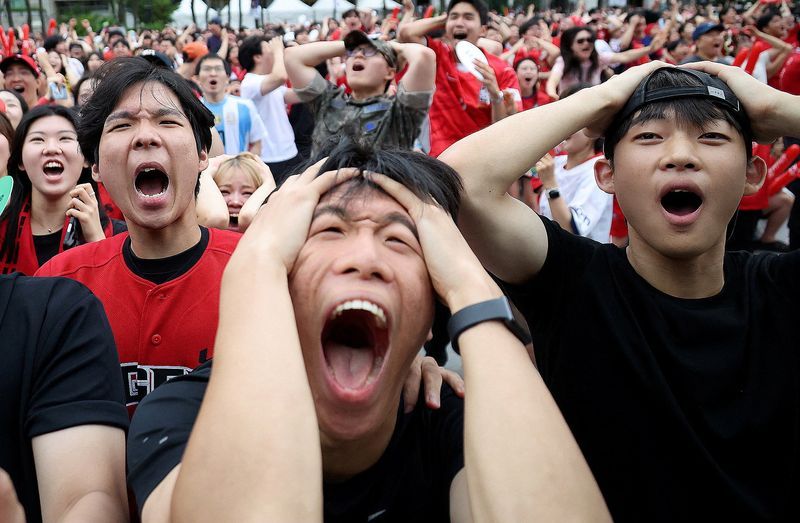
South Korea's presidential office has launched a formal push for governmental oversight of the national football team's disastrous World Cup campaign, with President Lee Jae Myung publicly expressing sharp frustration at what he characterises as systemic failures in appointment processes. The extraordinary intervention into sporting affairs reflects the depth of disappointment across the country following the team's premature departure from the tournament, a result that defied widespread pre-competition predictions of advancement from their pool.
In a statement posted on social media on Sunday, Lee articulated a broader critique extending well beyond the football pitch, using the World Cup debacle as a lens through which to examine governance vulnerabilities within South Korean institutions. His language conveyed genuine bewilderment at the outcome, positioning the team's failure as symptomatic of deeper organisational rot rather than mere tactical misfortune. The President's intervention signals how thoroughly football failure can become intertwined with questions of administrative competence and institutional legitimacy in the Korean political landscape.
The national team's campaign unravelled after consecutive defeats to Mexico and South Africa left them finishing third in Group A—a position that excluded them from the eight best third-place finishers who advanced to the knockout stage. The relatively straightforward nature of their group composition had generated considerable confidence among supporters and analysts that qualification would prove routine, making the early exit particularly stinging for a nation with football's passionate following.
President Lee's critique focused heavily on the appointment of coach Hong Myung-bo, whose re-hiring for the 2024 season had already drawn substantial controversy within South Korean sports circles. Korean media outlets had previously questioned the transparency of the selection process, with suggestions that personal connections and factional loyalty may have influenced the decision-making. Hong had consistently denied these allegations, yet the narrative of questionable appointment procedures had gained considerable traction before the World Cup campaign even commenced.
The presidential statement articulated a fundamental concern about how public institutions make leadership decisions when accountability mechanisms prove insufficient. Lee argued that the absence of effective oversight and monitoring systems creates conditions where incompetence can flourish in positions of responsibility, particularly when organisational cultures prioritise factional belonging over demonstrated capability. This framing transformed the World Cup disappointment into something more systemically troubling than a single tournament's sporting outcome.
The public backlash against Hong extended well beyond official channels. A petition circulating through the national assembly's official petition platform rapidly accumulated the necessary signatures to trigger initial parliamentary review procedures, indicating substantial cross-party concern about the coaching situation. Meanwhile, social media documented instances of South Korean business proprietors displaying signage prohibiting Hong from entering their establishments—an unusual manifestation of public displeasure that underscores how intensely some segments of the population view the coaching appointment.
The Ministry of Culture, Sports and Tourism now faces explicit presidential instructions to conduct a thorough examination of the circumstances surrounding the team's failure. The ministry's investigation is expected to move beyond simple performance analysis to examine the decision-making architecture that produced the coaching appointment and broader personnel structures within the national football association. This governmental engagement suggests that addressing the situation may require structural reforms rather than superficial adjustments.
For Malaysia and other Southeast Asian nations watching Korean football governance dynamics, the episode offers instructive observations about how sporting institutions can become entangled with broader questions of institutional accountability. The Korean experience demonstrates how appointment decisions in sporting organisations can trigger national debate about governance standards and merit-based advancement, issues that resonate across the region as various countries attempt to strengthen institutional integrity within their own football federations.
The investigation's scope and ultimate recommendations may reshape how South Korea structures its national football programme and establishes appointment procedures for senior coaching positions. If the inquiry identifies systemic vulnerabilities in oversight and accountability mechanisms, the resulting reforms could establish precedents that influence how other East Asian nations approach similar governance challenges within their sporting bodies. The situation also highlights how electoral politics and sporting outcomes become inseparable in contemporary democracies, where presidential statements on football matters carry implications extending far beyond the sporting realm.
President Lee's intervention reflects mounting political pressure to demonstrate governmental responsiveness to public disappointment, particularly as broader questions about institutional competence and meritocratic advancement have become increasingly salient in South Korean political discourse. Whether the investigation produces meaningful institutional reform or remains largely symbolic will significantly influence public confidence in the country's ability to address governance failures across multiple sectors, not merely within football administration.

