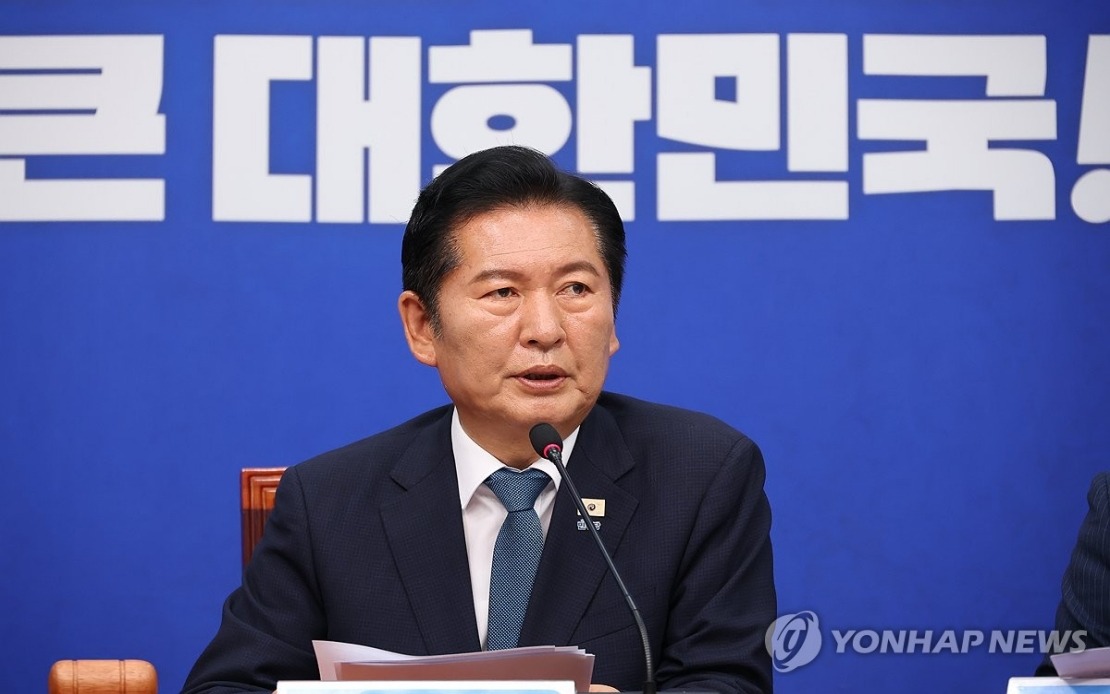
South Korea's ruling Democratic Party entered a period of transition on Wednesday as Chairman Jung Chung-rae stepped down from his post, a calculated move that observers interpret as clearing the path for him to contest the party's leadership election later this year. The resignation, announced during a session of the party's supreme council at the National Assembly in Seoul, marks a significant juncture for the governing coalition as it prepares for internal realignment under President Lee Jae Myung's administration.
In his remarks before party officials, Jung reflected on the personal toll of his leadership tenure, describing sleepless nights spent evaluating his political career and choices. He emphasized his consistent commitment to supporting Lee's presidency throughout his time as chairman, while also striving to forge unity between the ruling party apparatus, the government machinery, and the presidential office. The tone of his statement suggested someone defending his record against mounting pressure from various factions within the party structure.
Jung's departure arrives amid brewing discontent among certain Lee loyalists who contend that his stewardship has favoured hardline elements within the party at the expense of collaborative governance with the president. This internal friction reflects deeper ideological and strategic divisions that have simmered beneath the surface of the Democratic Party's public unity. The chairman's insistence that he carried out his responsibilities without complaint, despite facing resistance from multiple directions, underscores the challenging balancing act that party leaders must perform in managing competing interests.
The timing of Jung's resignation sets the stage for a competitive and potentially consequential party convention scheduled for August 17. Rather than a straightforward coronation or consensus choice, the Democratic Party faces a three-cornered contest involving heavyweight political figures with distinct constituencies and policy perspectives. This format mirrors similar internal party contests across East Asia, where leadership transitions often become proxy battles over party direction and presidential influence.
Prime Minister Kim Min-seok represents the establishment choice, enjoying close ties to President Lee and commanding significant institutional support through his government position. His candidacy embodies continuity with the current administration's priorities and reflects Lee's preference for allied leadership within the party structure. As a sitting prime minister, Kim carries both the advantages of executive experience and the baggage of responsibility for the government's record on economic policy and social issues.
Former Democratic Party leader Song Young-gil brings to the race his own organizational network and previous experience managing the party during different political circumstances. Recent reports indicate Song has signalled his intention to enter the race and has explored the possibility of a coordinated candidacy arrangement with Kim, according to statements made by DP lawmaker Park Jie-won in an interview with radio broadcaster CBS. This suggests potential fluidity in alliance-building, though such negotiations rarely proceed smoothly when multiple ambitious politicians compete for the same prize.
Meanwhile, Jung's candidacy carries distinct characteristics. Having just resigned from the chairmanship, he positions himself as a reformer willing to challenge the status quo, while simultaneously maintaining his credentials as someone deeply invested in Lee's success. His campaign would likely emphasize the need for stronger party organization and independence from government interference, themes that resonate with Democratic Party members concerned about institutional autonomy.
The convention process itself will involve party delegates and members voting according to procedures established by party rules. The outcome will likely influence not only the Democratic Party's internal dynamics but also the broader shape of South Korean politics, particularly as the country approaches mid-term elections and prepares for future presidential contests. For Malaysian observers of regional politics, this succession drama demonstrates how ruling parties across Asia navigate the tension between presidential authority and party institutional strength, a perpetual challenge for authoritarian-leaning democracies.
Until the August convention, DP floor leader Han Byung-do will assume the responsibilities of acting party leader, maintaining continuity in day-to-day operations while the party engages in its leadership selection process. This interregnum period allows candidates to campaign, build support, and negotiate with party factions. The roughly six-week timeframe between now and the convention provides sufficient runway for intense internal politicking and the crystallization of voting blocs along both ideological and personal loyalty lines.
The Democratic Party's leadership contest occurs against a backdrop of broader governance challenges facing the Lee administration, including economic concerns, labour disputes, and questions about executive accountability. Whoever emerges as the new party chairman will inherit responsibility for mobilizing party resources, coordinating with government institutions, and addressing growing public expectations. The party's choice will signal whether it prioritizes alignment with Lee's presidency or asserts greater institutional independence—a choice with profound implications for South Korea's political trajectory through the remainder of Lee's term.

