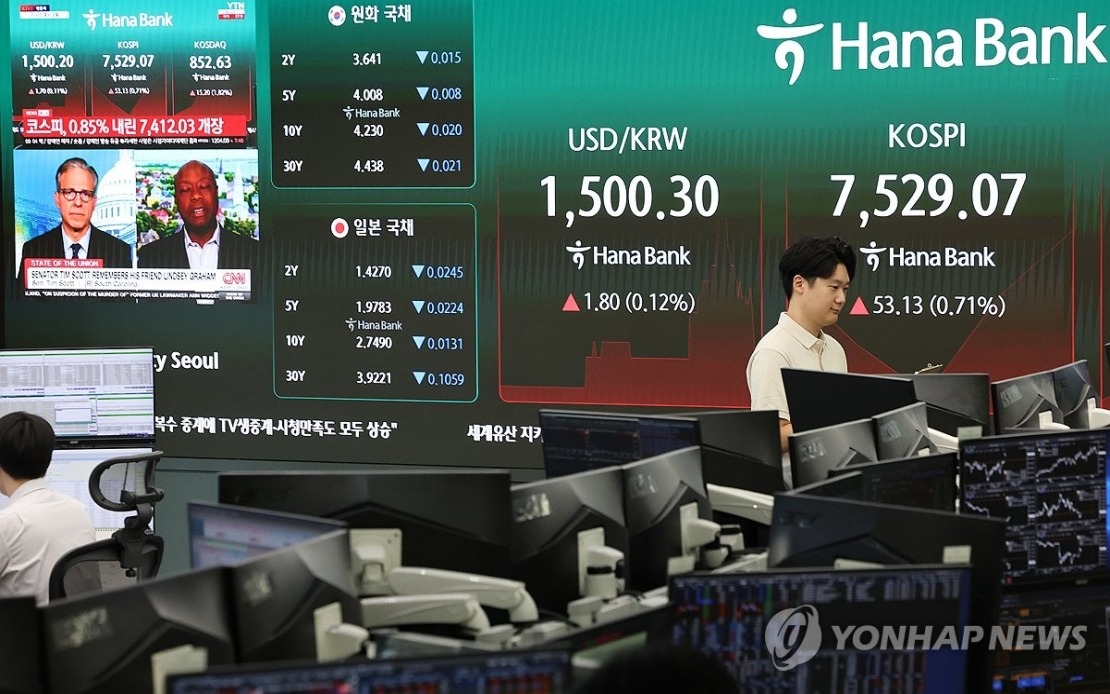
South Korea's bourse operator activated a circuit breaker mechanism on Monday as the nation's benchmark stock index experienced a sharp decline, reflecting broader investor anxiety over military tensions in West Asia. The Korea Exchange (KRX) suspended trading of KOSPI-listed shares for twenty minutes around 1:28 p.m. local time after the Korea Composite Stock Price Index (KOSPI) fell more than 8 percent from the prior session's closing level. The automatic halt represents a defensive measure built into modern financial markets to prevent panic selling and excessive volatility during periods of acute market stress.
The selloff came against a backdrop of renewed military confrontation between the United States and Iran, particularly regarding control and freedom of navigation through the Strait of Hormuz. This critical chokepoint handles a significant portion of global oil shipments, making any escalation in hostilities a matter of immediate concern for energy-dependent economies across the Asia-Pacific region. For South Korea, a nation heavily reliant on imported energy resources and deeply integrated into global supply chains, such geopolitical disruptions carry material implications for both macroeconomic stability and corporate profitability.
Circuit breakers function as automatic stabilisers within equity markets, designed to interrupt trading when indices experience movements beyond predetermined thresholds. By implementing a mandatory pause, regulators aim to provide participants with space to reassess market conditions and prevent herd-like behaviour that might amplify losses. The KRX's decision to trigger this mechanism underscores the severity of Monday's market reaction and the intensity of selling pressure that engulfed the exchange during morning hours.
This latest activation marked the seventh instance in 2024 that South Korea's exchange has been forced to halt trading due to sharp index declines. The frequency of circuit breaker deployments serves as a barometer of market volatility and investor confidence. The mounting number of such events within a single calendar year suggests that global markets remain fragile, susceptible to sudden shocks emanating from geopolitical flashpoints or macroeconomic concerns. For regional investors monitoring South Korean equities—a significant component of many Southeast Asian portfolios and pension funds—the pattern indicates persistent structural weakness beneath surface-level price movements.
The immediate trigger for Monday's decline centred on the escalation between Washington and Tehran. Military strikes and counter-strikes between these adversaries directly threaten maritime security in one of the world's most strategically vital shipping lanes. The Strait of Hormuz's critical role in global energy distribution means that any disruption to traffic flows automatically translates into upward pressure on oil prices. Rising energy costs ripple through supply chains, compress corporate margins, and weigh on consumer purchasing power—dynamics that equity investors immediately price into their valuations.
For Malaysian and broader ASEAN stakeholders, South Korea's market turmoil carries particular resonance. South Korean firms maintain substantial operational footprints across Southeast Asia, serving as major investors, manufacturers, and technology partners. The health of the Korean economy and confidence levels among Korean investors directly influences capital flows into the region. A sustained period of volatility in Seoul could prompt Korean institutional investors to repatriate funds or reduce overseas commitments, potentially dampening regional growth prospects.
The correlation between geopolitical risk and financial market performance has become increasingly pronounced in recent years. Investors no longer view military tensions in distant regions as isolated incidents; instead, they quickly assess potential transmission mechanisms to their portfolios. Oil price spikes, supply chain disruptions, insurance cost increases, and potential military escalation risks all factor into rapid repricing of equities. South Korean exporters, particularly those in technology, semiconductors, and petrochemicals, prove especially sensitive to energy price fluctuations and global demand uncertainties stemming from conflict.
Circuit breaker mechanisms, while necessary as circuit breakers, also reflect a broader tension within modern finance. They represent an acknowledgement that markets occasionally move so sharply that normal price discovery processes become unreliable. By temporarily halting trading, regulators essentially admit that instantaneous market prices no longer reflect genuine consensus about value. The twenty-minute pause allows news digestion, position reassessment, and emotional decompression—yet it cannot address fundamental uncertainties about geopolitical outcomes.
Investor behaviour during such episodes typically bifurcates between tactical traders seeking to exit volatile positions and longer-term allocators attempting to discern genuine value amid temporary dislocations. The presence of circuit breakers somewhat favours the latter group by preventing forced liquidations and panic cascades. However, markets that repeatedly activate such mechanisms may suffer reputational damage, potentially prompting multinational investors to diversify away from that particular exchange into competitors viewed as more stable.
Looking forward, the persistence of circuit breaker activations throughout 2024 signals that South Korean and global markets remain acutely sensitive to external shocks. The West Asian tensions demonstrate that traditional geographic distance no longer insulates financial markets from geopolitical risk. For Malaysian investors and policymakers tracking regional development, the Korean experience serves as a sobering reminder that portfolio and economic resilience require active attention to global flashpoints and their potential transmission channels into local markets. The interconnectedness of modern finance means that conflicts anywhere ultimately reverberate everywhere.

